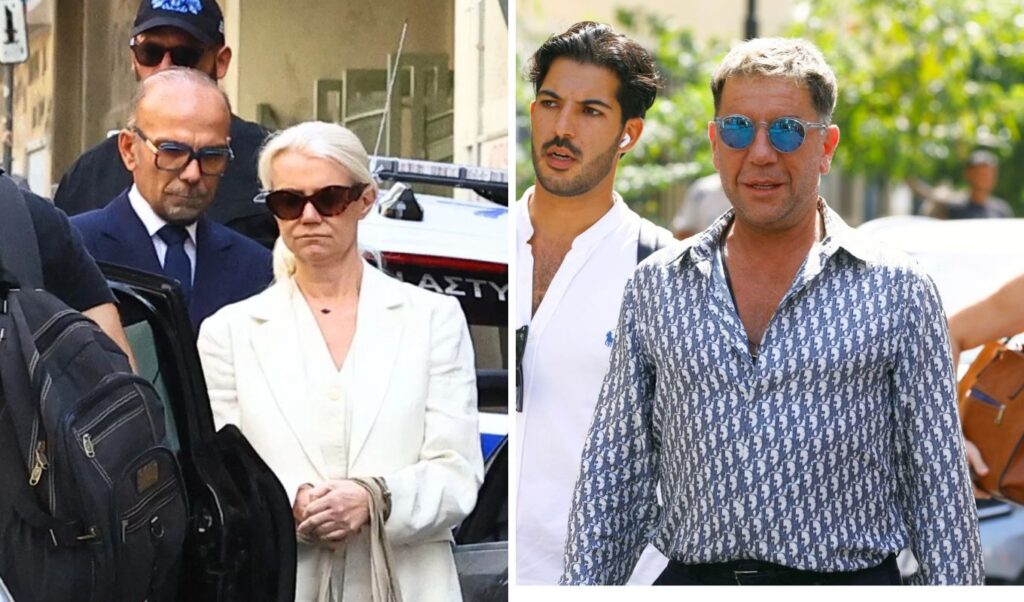
New details are emerging from the testimonies of two doctors regarding the critical moments that unfolded at the medical clinic following the rapid deterioration of Giorgos Mazonakis’ condition. In his testimony, the 58-year-old doctor reportedly describes, minute by minute, everything that took place at the clinic after the singer’s condition rapidly deteriorated. According to his statement, he was notified at 4:15 PM and, upon entering the room, immediately checked the patient’s pulse and began CPR.
The death of Giorgos Mazonakis: What the 58-year-old doctor claimed
“I checked his pulse and immediately began CPR — chest compressions and artificial respiration, three to one, as protocol dictates. One ml of adrenaline was administered by Ms. […] in my presence,” he stated.
He also claims that when he entered the room, the doctor was not performing CPR but was standing near the monitoring equipment and the patient’s right hand. According to his testimony, he ordered that emergency services (EKAB) be called, estimating that approximately four to five minutes elapsed from the moment he entered the room until the call was made. He also stated that he informed the emergency services this was a cardiac incident and requested a cardiology unit.
His testimony also references the defibrillator present at the clinic, which he says was there as part of the equipment used by his wife in her practice.
“We both know how to use a defibrillator, but since there was asystole, we did not use it,” he stated, adding that he believes the defibrillator was functioning, though he was unsure whether it had been previously checked. “I have never tested it myself. I don’t know whether Ms. […] had checked it either,” he noted.
According to the same testimony, paramedics departed the clinic at 4:40 PM.
Why he didn’t follow the ambulance
When asked why he did not accompany the patient to the hospital, the doctor responded that he was not the patient’s attending physician. “I was not the patient’s treating doctor, so there was no reason for me to go to the hospital. I had nothing further to offer,” he said.
He also argued that his wife had nothing additional to contribute to the hospital staff either, as all necessary information had already been provided to the paramedics. “The paramedics had our contact details, so they — as well as the hospital staff — could reach us at any time for any information they might need,” he stated.
“I am being defamed, insulted, and harassed”
At the outset of his testimony, the doctor addressed the personal toll of the case, claiming that both he and his family have been subjected to attacks. “I am being defamed, insulted, and harassed. My personal life is being destroyed. My children are being exposed and psychologically abused,” he said.
He also claimed to have faced public criticism and administrative sanctions before the legal process was even completed. “I am being interrogated, arrested, and detained like a common criminal — despite never having had any medical, professional, operational, therapeutic, or caregiving relationship with the deceased,” he stated emphatically.
The female doctor’s testimony
For her part, the accused female doctor, in her 18-page testimony, describes certain events differently. She states that as soon as she noticed the patient’s condition, she placed an oxygen mask on him and began calling out for her husband.
“I immediately put an oxygen mask on him and started calling for my husband. I don’t know whether the monitor had an alarm function,” she said. According to her account, she asked a nurse to prepare adrenaline and began performing CPR.
“I started CPR. I was trained in surgery, so I knew how to respond in an emergency. I reacted instantly,” she stated. She claims her husband arrived immediately and took over the CPR, and estimates that the initial response took approximately one minute. “We did everything that needed to be done. Even if we had been inside a hospital, we would have done exactly the same things, in exactly the same time,” she added.
She also acknowledged that approximately five minutes passed before the emergency services were called, attributing the delay to the panic that ensued.
On the cause of the cardiac arrest
When asked what she believed had caused the cardiac arrest, the doctor said she could not answer with certainty. “I cannot give you a definitive answer on that. After all, even the forensic report has not provided a clear answer,” she stated.
What she said about the defibrillator and emergency services
Regarding the defibrillator, the doctor claims she activated the device and that it indicated asystole. “I activated the defibrillator and it showed asystole. The same was shown by the EKAB defibrillator, as well as the one at ‘Elpis’ hospital,” she said. As for the patient’s transfer, she states that she initially got into the ambulance but was asked to step out because there was no room.