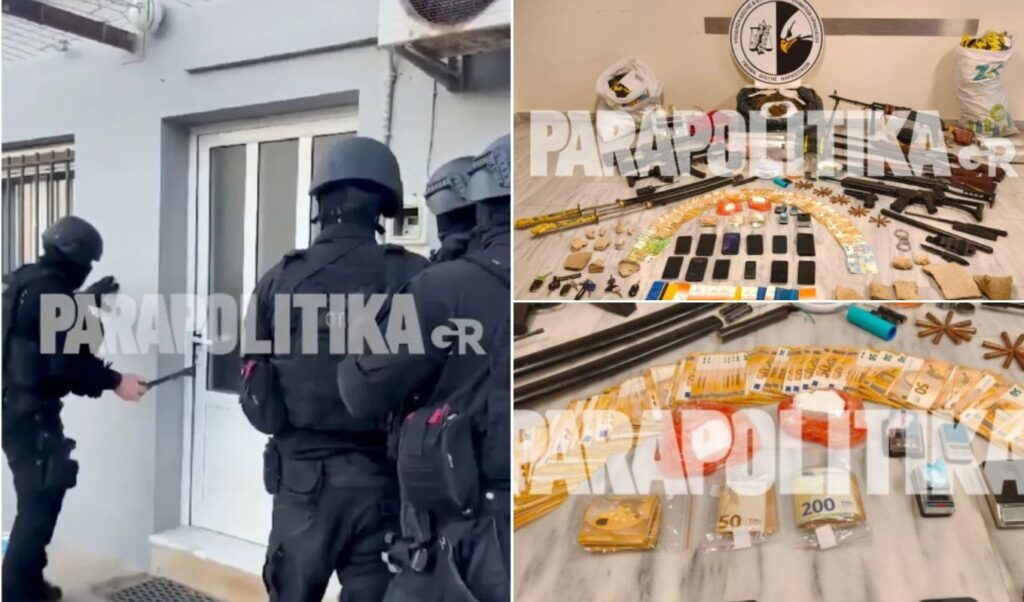
The trinity of “drugs, weapons and agricultural subsidies” appears to be at the core of the massive case file that officers from the Narcotics Division of the Heraklion Crime Investigation Subdirectorate had been building for months, leading to the giant police operation that unfolded at dawn on Thursday in Zoniana, Malevizi, Kalo Chorio Chersonisou, Heraklion, Rethymno and Agios Nikolaos, in Crete.
This is one of the largest operations carried out in recent years in Crete, both operationally and in terms of the number of people involved. Approximately 200 police officers from different services across the island participated in the operation, conducting simultaneous searches of houses, livestock farms and outdoor areas. According to leaked information from investigation sources, the total number of defendants reaches 76, with arrests totaling 18.
The most interesting element is that authorities appear to have mapped two main criminal organizations with strong family characteristics and a common link – a 21-year-old Cretan – while other sources speak of a total of three or even four families involved in drug trafficking.

The composition of criminal families in Crete
According to case file information, the first core consisted of a 48-year-old father, his two sons aged 21 and 27, and two additional 21-year-olds. Police believe this particular group had structured activities mainly in cocaine trafficking, with members allegedly storing quantities either in a house in the Gazi area or in outdoor hideouts, depending on transaction needs. According to Narcotics Division data, this group is attributed with at least 108 completed cocaine transactions involving approximately 60 different people.
Police appear to have identified specific “operational” methodology. One element that impressed them was that group members used a shared mobile phone, which passed between them to avoid exposing their personal numbers in communications with clients and associates.
The second core, according to the case file, includes a 53-year-old man, his 55-year-old wife, their two sons aged 21 and 22, and two other young Cretans aged 19 and 21. This group allegedly operated mainly in Agia Pelagia, Achlada, Gazi and Heraklion, with authorities attributing at least 30 drug transactions to its members.
800 non-existent sheep and the trap
The case, however, does not appear limited to cocaine and cannabis trafficking. The aspect generating particular interest concerns illegal subsidies through agricultural programs and how sheep and goat herds were allegedly used to secure grants.
At the center of this aspect are a 43-year-old man from Zoniana and his 35-year-old wife, mother of four children. According to case file data, the 35-year-old allegedly declared more than 800 animals in her livestock registry, which she did not actually possess.
Phone intercepts appear to have played a decisive role. Through recorded conversations, police allegedly detected discussions where the 43-year-old was desperately searching for animals ahead of an impending agricultural inspection. According to the same information, an entire operation was organized to transport “borrowed” herds just before the inspection, while they even searched for corresponding ear tags so the animals could appear as the 35-year-old’s property. These repeated communications to find the… borrowed animals played a crucial role in mapping many of those involved.
Authorities place special significance on discovering thousands of sheep and goat ear tags in sacks. These are special markings placed on animal ears for recording and traceability. Police estimate the ear tags were possibly used so the same animals could pass through recording systems more than once or be “baptized” as different animals.
The case file also states that a livestock farmer from the Gouves area allegedly provided the 43-year-old not only his herd but even his livestock facility, so they could be presented as the 35-year-old’s property assets in case of inspection.
Most remarkably, the inspection never actually took place, as the 43-year-old did not appear on time for the predetermined appointment with inspectors and they left.
Tension in Zoniana
The police operation in Zoniana unfolded in a particularly tense atmosphere. Strong forces from Heraklion and Rethymno blocked all access to the family’s house near the Zoniana football field, while the raid was carried out by Crete SWAT team members. The 43-year-old was not located during the initial search phase, but his 35-year-old wife was arrested.
According to information, after police entered the area, reactions were provoked from family relatives and friends. Verbal abuse, intense verbal reactions and stone-throwing toward police forces were recorded, while family women allegedly broke down when police took the 35-year-old mother.
The 43-year-old was located later after several hours of searching. He was found outside a bank where it is presumed he visited to potentially withdraw whatever… could be withdrawn.
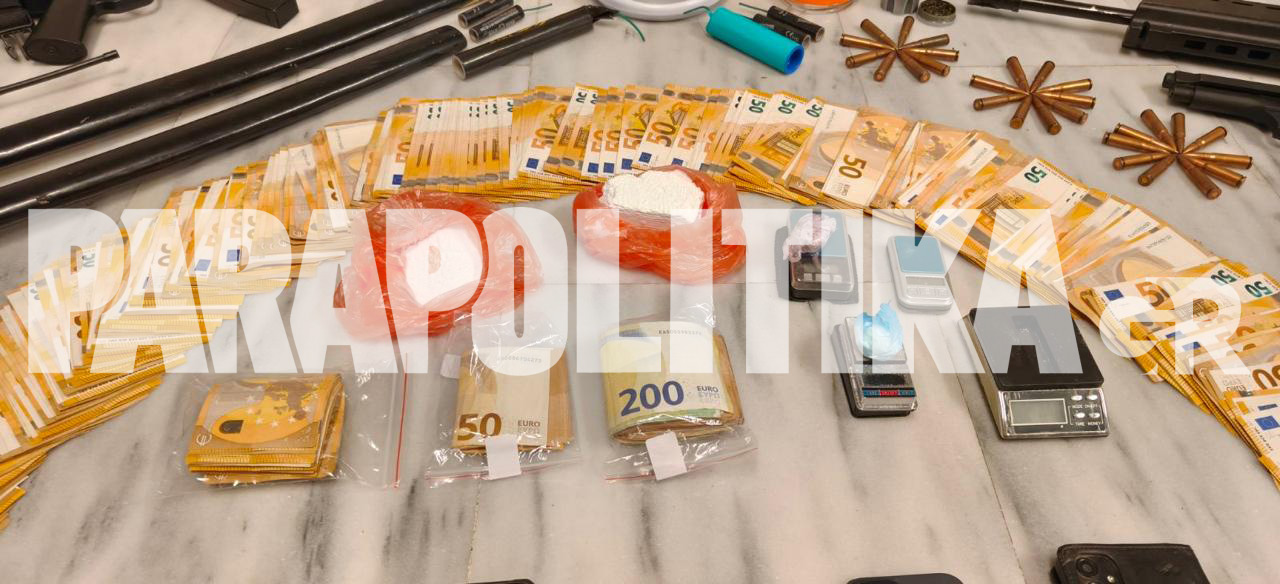
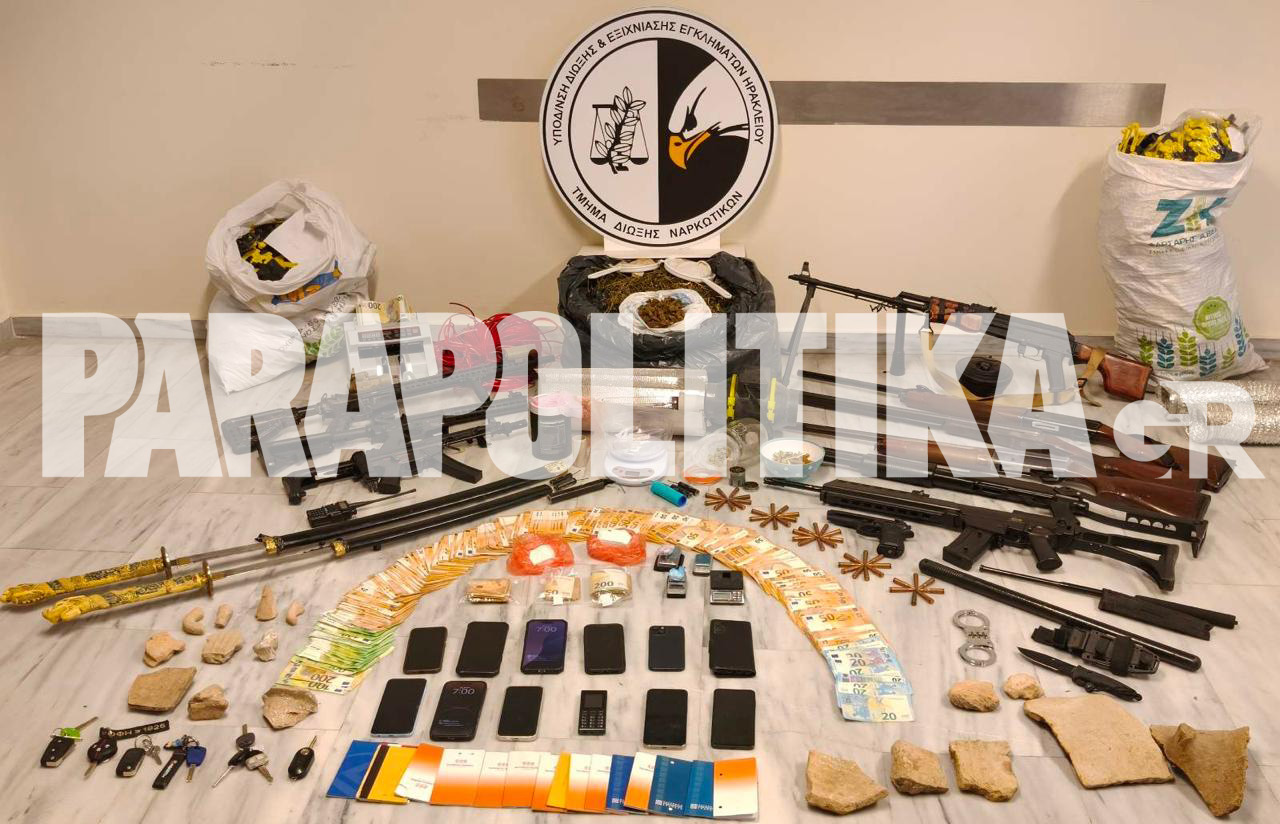
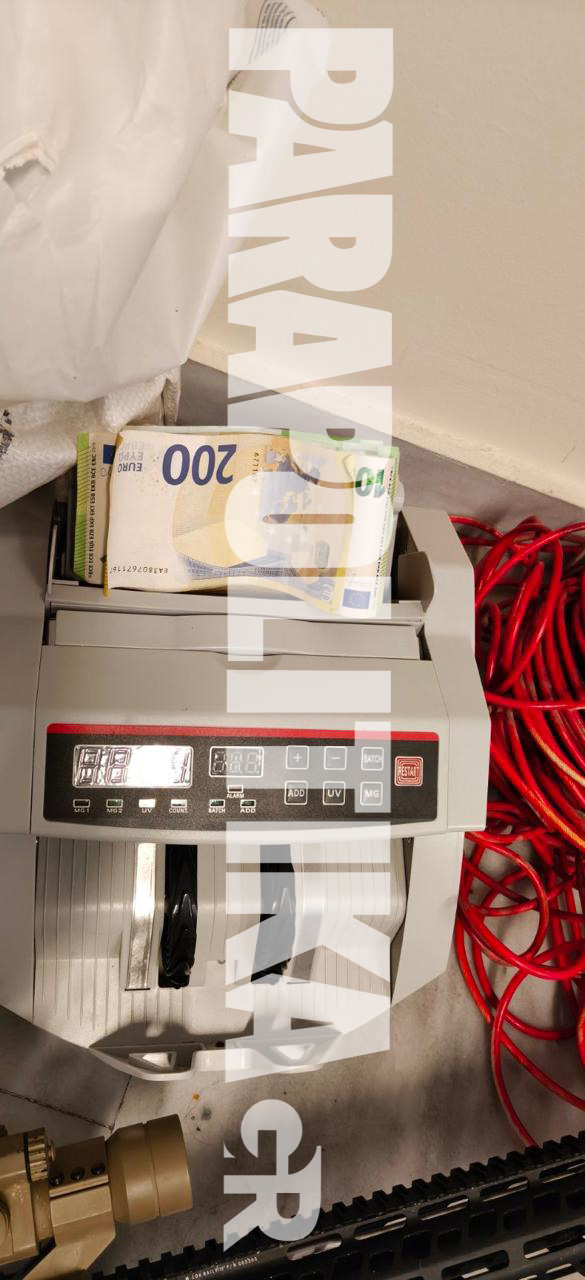
During searches, quantities of cocaine and hashish were seized, along with weapons and ammunition of various calibers, large sums of money, an automatic bill counter, thousands of ear tags, and 15 vehicles. Additionally, approximately 50 bank accounts were frozen.
Money laundering
Authorities are now seriously examining the possibility that part of the money from drug trafficking was “legitimized” through agricultural and livestock activities, as well as through subsidies. In this context, they are examining bank transactions, digital evidence, phone communications and economic activities of those involved. Police sources also report that the couple from Zoniana allegedly had started professional projects in the tourism sector, having registered a business for a travel agency in Panormo, Rethymno.
In any case, police believe the case is still in its early stages, with the case file remaining open and investigations continuing both for the financial aspect and for fully mapping the connections between families, drugs and subsidies.