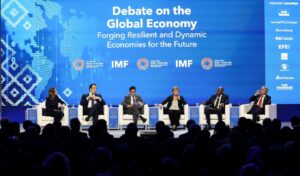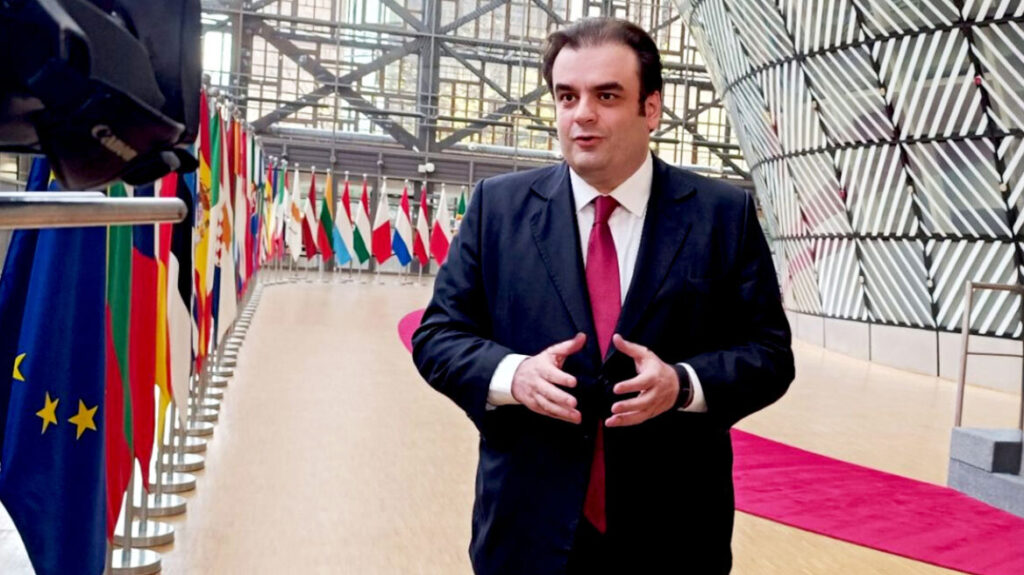
“Europe is resilient in the face of geopolitical developments and successive shocks, and for the first time in a long while, it has the political will to push forward with reforms, such as the Capital Markets Union and the Banking Union.” These were the words of Finance Minister and Eurogroup President, Kyriakos Pierrakakis, speaking alongside IMF Managing Director Kristalina Georgieva at the central panel of the IMF’s annual meeting in Bangkok, themed around building resilient and dynamic economies for the future. Also participating in the discussion were Thailand’s Deputy Prime Minister and Finance Minister Eknito Nitithanprapas, Argentina’s Finance Minister Luis Caputo, and the Governor of the Central Bank of Nigeria, Olayemi Cardoso.
“We are monitoring developments, but we are not on high alert,” Pierrakakis stressed, adding that the foundations of the European economy are solid, and if there is one word that defines it, it is resilience. There are challenges, he acknowledged — fragmentation of the internal market, high energy prices, significant investment needs, and public finance pressures — but at the same time, European banks are better capitalized today, and the institutional framework has also improved.
He referred to the agreement reached at the latest Eurogroup meeting on unified supervision of European capital markets, noting that the progress made over the past 10 months has been greater than that of the previous 10 years. He expressed optimism that similar progress would be achieved on the Banking Union. He emphasized the growing understanding of the need for “European champions” across all sectors of the economy to close Europe’s productivity gap — which he described as the continent’s most pressing problem. Over the past 30 years, he noted, productivity in the United States grew at an average rate of 1.8%, compared to just 1.1% in Europe, meaning European productivity now stands at 75% of U.S. levels, down from 90% in 2000.
Kyriakos Pierrakakis: The average deficit in the European Union today stands at 3.5% of GDP, compared to 1.7% a decade ago
Turning to fiscal matters, he pointed out that the average deficit in the European Union today stands at 3.5% of GDP, compared to 1.7% a decade ago, while the new high-yield government bond environment is making the situation even more challenging. Today, he said, only five EU countries are running surpluses: Greece, Cyprus, Portugal, Ireland, and Denmark. The message Greece is sending, he said, is that fiscal discipline is a prerequisite for growth — alongside the implementation of reforms that carry both national and European dimensions.
At this point, the IMF chief praised Greece, noting that the country moved swiftly to repay its IMF loans ahead of schedule and is now financing technical assistance for other nations. Pierrakakis added that the government aims to positively surprise on growth, with a higher rate expected next year compared to the IMF’s traditionally more conservative forecasts.
Georgieva expressed caution about whether the global economy would continue to demonstrate the resilience it has shown in recent years, warning that this resilience rests on fragile foundations. First, she noted, there are significant performance divergences between countries, with those more closely linked to artificial intelligence (AI) benefiting the most, while on the other hand, energy-importing countries that are not integrated into the AI supply chain are struggling.
Second, she pointed out that rising energy and food prices are fueling inflation, prompting central banks to tighten their policies, while public debt remains high in many countries.
Third, she emphasized that the primary driver of the projected 3.1% global growth this year is AI — but raised the question: what happens if enthusiasm for AI begins to fade?