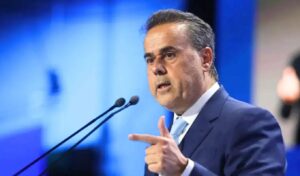
The Prime Minister is set to arrive at the Thessaloniki International Fair (TIF) this year with a full package of measures, as four new relief measures are expected to be added to already-approved legislation, targeting 2,500,000 retirees and other vulnerable social groups and low-income households. The interventions will be formally announced by Prime Minister Mitsotakis in September from Thessaloniki and will be fully implemented from October onwards.
The benefits the Thessaloniki International Fair brings to retirees
In detail:
- The previously announced increase to €300 of the now-permanent pension supplement every November will ultimately reach €100, covering part of the former Christmas bonus, while simultaneously expanding the income thresholds so that 1,750,000 retirees receive the fixed benefit, which will amount to €400. The annual total household income of eligible recipients must not exceed €25,000 for single individuals and €35,000 for married couples, while the total value of the obligor’s real estate must not exceed €300,000 and €400,000 for married couples.
- In December, a general pension increase will be granted, which due to inflation is expected to be around 3%, instead of the initially announced 2.7%.
- A definitive end to the personal difference offset. The 2027 Budget will provide for a full increase for 670,000 retirees who still have a remaining personal difference balance. This amount will not be subject to insurance contributions (health and Solidarity Allowance deductions), but only to income tax, as it is considered income outside the pension that is taxed alongside the pension. Insurance contributions will be calculated — as they are now — on the sum of the national and contributory pension. With the abolition of the offsetting of increases against the personal difference, the winners will be retirees with a large remaining balance (€150 and above), as they will receive real increases every year, whereas — had the offset remained in place — they would only have seen increases in their pockets after 5 or even 10 years.
- Favorable arrangements are also expected for the Solidarity Allowance (EAS), with the abolition of percentage deductions from €1,436 and above. A new platform will be created that will calculate the difference at each income bracket, and the deduction will be applied only on that difference. The abolition of the Solidarity Allowance on supplementary pensions is also expected.
The already-announced measures
Alongside the new announcements for retirees, previously decided interventions will also begin rolling out for broader categories of retirees, private sector workers, and public servants, specifically:
–Stronger incentives for the employment of retirees: Under review is the low pension return on contributions paid by retirees who continue to work, where each year of insurance corresponds to a 0.77% salary increase as an extra pension amount. The possibility of raising the replacement rate to 0.90% is being considered.
–Expanded income criteria for receiving two months’ rent for doctors, teachers, and nurses serving in regional areas, for primary residence rental purposes. The benefit will be available to those who cumulatively have an annual total household income of up to €25,000 for single individuals, up to €35,000 for married couples — increased by €5,000 for each dependent child — and up to €39,000 for single-parent families with dependent children, increased by €5,000. The subsidies, in the form of a refund of rental amounts for 2026 onwards — for rents paid in 2025 and beyond — correspond to two months’ rent. The amount cannot exceed €1,600 per year. This limit is increased by €100 for each dependent child.
–Retroactive pension increases of €1,200–€3,500 are expected to be received from September by thousands of retirees who worked in special categories and retired from the Public Sector and the Armed Forces, through the linkage of active-duty salaries at 80% to pensions. These specific categories had been excluded from the calculation framework of the Katrougalos Law. Their pensions will be recalculated and set at up to 80% of the pensionable earnings of active employees and officers belonging to the same categories. The increase is estimated to average €100 per month. A similar framework applies to military personnel, with the difference that maximum salary grade progression limits per personnel category are stipulated. Should active-duty salaries increase, pensions will increase proportionally.
–Nearly 10,000 public servants will receive a €300 “equalization allowance” instead of a “personal difference” payment. In practice, the provision states that employees of specific services, where a personal difference is paid to longer-serving staff, will receive a monthly amount of €300 to smooth out the salary gap for those placed in these positions — retroactively from April 1, 2023. This amount is included in regular remuneration.
–Abolition of the provisional pension in both the private and public sectors: The issuance of pensions within one month from next autumn will lead to the abolition of the pre-retirement framework in the private sector as well. Insured individuals will receive their final primary pension directly, provided they have completed all insurance years in the public system — that is, without successive or parallel insurance coverage.
Originally published in Apogeumatini