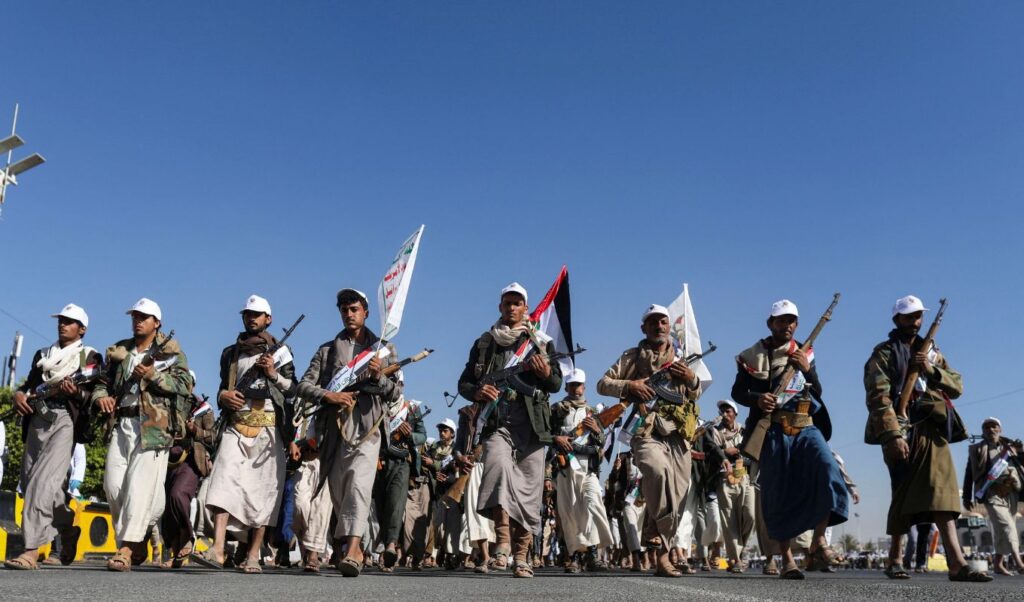
Iran has reportedly asked the Houthis of Yemen to stand ready to close the passage to the Red Sea should the United States strike Tehran’s energy infrastructure. Reuters broke the story, citing three sources familiar with the matter. According to the same information, such a move could create a new threat to global energy supplies and oil shipments. As two senior Iranian sources and one regional source revealed, the idea was discussed at the highest levels of Iranian leadership and the relevant message was passed on to the Houthis, who serve as Tehran’s regional allies.
Read also: Iran: Cancer hospital evacuated following U.S. strikes — Over 200 patients removed as Tehran condemns “barbaric attack” (Video)
Sources said the Houthis were recently briefed on Tehran’s request, which had not been previously reported. They did not provide further details on how the request was conveyed, or whether it was made following Donald Trump‘s threat on Tuesday to strike Iranian energy infrastructure. Iran’s Foreign Ministry and a Houthi spokesman did not respond to the agency’s request for comment.
“The Houthis are ready to close the Red Sea”
A source close to the Houthis said the militants have completed their attack preparations against shipping vessels, deploying missiles and drones near the Bab el-Mandeb strait — the “gateway” to the Red Sea — on the heights overlooking Hodeidah and the Gulf of Aden. They are now awaiting the order to begin.
Any threat to the Red Sea and the Bab el-Mandeb risks rapidly worsening the energy crisis triggered by Iran’s closure of the Strait of Hormuz. It also underscores the explosive dangers posed by a new round of hostilities in the region. With Hormuz already shut, any Houthi attacks on Red Sea vessels or ports would simultaneously disrupt both of the Middle East’s key maritime oil export routes, opening a dangerous new front in both the energy crisis and the broader Iran-U.S. confrontation.
Representatives of Iran’s Revolutionary Guards already stationed in Yemen will decide when to close the Bab el-Mandeb, the source close to the Houthis said.
Houthis launch missiles into Saudi Arabia
In a sign of escalating regional tensions, the Houthis fired missiles into Saudi Arabia in recent days, accusing the kingdom of bombing Sanaa airport — which remains under their control — thereby breaking a four-year ceasefire.
Houthi leader Abdul Malik al-Houthi said today that all oil and other vital Saudi Arabian facilities would be targeted by his group’s missiles and drones if Riyadh becomes involved in a “full-scale offensive” against Yemen and escalates the situation. He also threatened to strike the Saudi capital’s airport.
Middle East analyst warns of “bad timing” for renewed Houthi-Saudi conflict
Torbjørn Sølvberg, Middle East analyst at risk management firm Verisk Maplecroft, said the resurgence of conflict between the Houthis and Saudi Arabia has come at a particularly bad moment.
“If fighting intensifies and spreads to Red Sea export infrastructure and shipping, it will threaten the region’s only other alternative route for oil exports,” he explained.
Two regional sources close to Riyadh said the kingdom is taking Iran’s and the Houthis’ threats “very seriously” and is well aware that the Yemeni movement is coordinating its actions with Tehran regarding the Red Sea.
Closing the Red Sea is no simple matter
A significant volume of Gulf-produced oil is now being rerouted through the Red Sea via a Saudi pipeline. Approximately 7% of global energy supplies now pass through this maritime route.
When the Houthis began attacking vessels during the Gaza war, major shipping companies opted to divert their ships to the far longer and more costly route around southern Africa.
Saudi Arabia itself has redirected 70% of its energy exports through the Red Sea port of Yanbu, and any attacks there would pose a serious problem for oil markets.