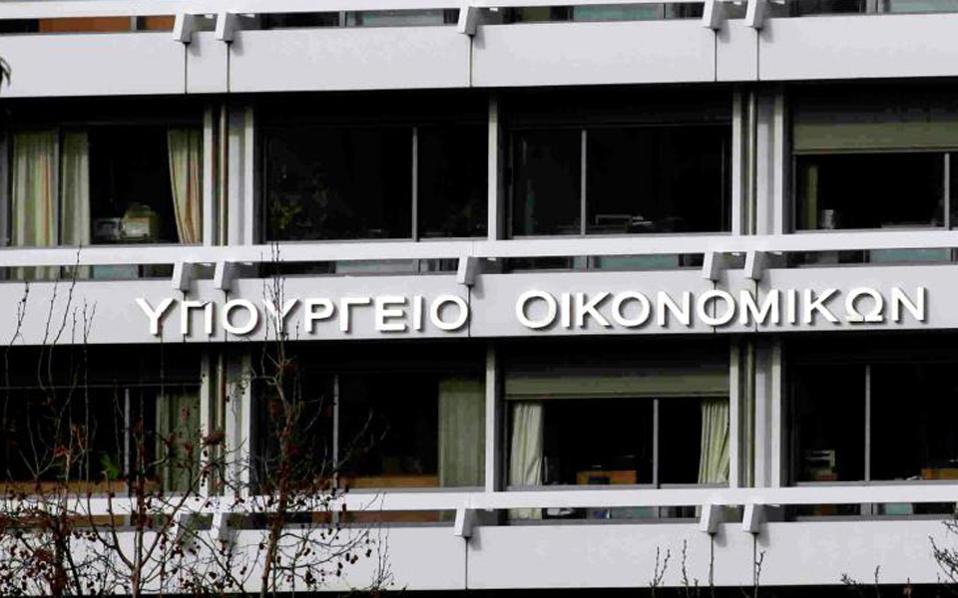
Changes to benefits, hybrid vehicles, and public sector pay differentials are among the provisions introduced by the Ministry of National Economy and Finance’s omnibus bill, formally titled: “Measures to address the energy crisis and boost citizens’ disposable income, salary and tax provisions, out-of-court debt settlement regulations, public sector pension adjustments, regulations for the Gaming Supervision and Control Commission and improvements to the gaming framework, provisions for the Public Real Estate Company S.A., and other regulations,” which was submitted to Parliament on Monday.
Read more: Kyriakos Pierrakakis on Parapolitika 90.1: “Six-month extension on hybrid vehicle tax discount”
The bill’s key measures include a one-off €150 financial boost for families with children, an annual €300 grant for pensioners and vulnerable social groups, debt restructuring in up to 72 instalments with tax authorities and social security funds, and a reduction of the minimum debt threshold for entry into the out-of-court settlement mechanism to €5,000.
Of particular interest is the revision of the personal pay differential provision for newly hired and other public employees. The original arrangement is replaced by a new framework for a “salary equalisation allowance.” Specifically, employees in certain public bodies — where longer-serving staff currently receive a personal pay differential — will be granted a monthly allowance of €300, provided they were appointed to those positions after 1 April 2023.
Omnibus bill: What the new provisions include
Hybrid vehicle registration tax
– The 50% flat reduction in registration fees for hybrid electric vehicles is extended for six months, until 1 January 2027, regardless of CO₂ emissions. The previous tiered discount system based on emission levels is abolished.
Additionally, hybrid electric vehicles with CO₂ emissions of 75g/km or less that were imported between 1 November 2025 and 31 May 2026 and have not yet been registered will be exempt from 75% of registration fees.
Personal pay differential
– A new provision, effective from 1 July 2026, addresses salary inequalities arising from personal pay differentials in the public sector.
– Under the new measure, in public bodies where the majority of employees had been receiving a personal pay differential — due to extensions granted successively in 2018 and 2023 — salary imbalances will be corrected by replacing the personal pay differential up to €300 with regular pay of €300.
– Approximately 1,500 employees (out of roughly 7,000 public servants) in specific bodies stand to benefit — either those hired after March 2023, or those whose personal differential had already fallen below this amount. This resolves a pay imbalance within public bodies that has persisted since 2011.
Non-seizable status for Ministry of Education grants for hearing-impaired students
– A new provision is introduced to fill a legal gap and correct a social injustice concerning a specific Ministry of Education benefit for students with hearing impairments.
– The new regulation stipulates that the Ministry of Education grant for the purchase of hearing aids for students with hearing difficulties is non-transferable, non-seizable, cannot be frozen, and cannot be offset against debts owed to the state, social insurance funds, local authorities of any tier, or financial institutions of any kind.
Swiss franc loans — extension
– The protection programme for Swiss franc borrowers is extended until 30 September 2026, with the aim of giving more borrowers the opportunity to convert their loans to euros.
– The Ministry’s goal is to resolve these loans on a permanent basis, eliminating the uncertainty caused by exchange rate fluctuations — and doing so at a fixed interest rate and fixed instalment.
It is noted that to date, approximately 50% of borrowers have already initiated their enrolment in this programme.
Increase of the protected bank balance threshold to €1,600
– The non-seizable amount in bank accounts is raised to €1,600 for all debts owed to the state and banks.
New tax framework for alternative investment management
– A targeted tax framework is being established to attract to Greece professionals who manage alternative investment funds (hedge funds, private equity, AIFs).
– This represents a significant opportunity for the country, which aims to establish Athens as a hub for alternative investment management, attracting highly specialised talent from the Middle East and Asia, as well as from London and other European capitals.
A whole ecosystem of supporting services develops around investment management functions — legal, auditing, tax, banking, custody, advisory, and technology — which in turn generates new jobs.
Foreign investment organisations (established in the EU and third countries under specific conditions) continue to be taxed where they are domiciled.
The new framework guarantees that if certain executives relocate to Athens, or if an office is established here to provide services to the fund manager, this does not automatically mean that the manager’s, the fund’s, or the unit-holders’ tax residence is “transferred” to Greece, nor does it create a permanent establishment for these entities in Greece.
This is not a tax exemption: the foreign group is taxed abroad regardless, while everything generated in Greece (service offices, salaries) is fully taxed here. This avoids double taxation and provides the legal certainty that foreign managers need in order to choose Athens.
Full taxation of all economic activity in Greece. Greece collects the full amount of taxes due:
• Service offices established in Greece to provide services to affiliated companies/managers are fully taxed at the standard corporate tax rate.
• All employees are fully taxed on their salaries and pay the required contributions, receiving the entitlements and rights provided under Greek labour and social security legislation.
• Corporate tax and VAT are paid in full.
Those who now transfer their tax residence to Greece under the inbound workers regime of Article 5C of the Income Tax Code — subject to a seven-year limit and provided they are employed by a Greek entity with operating expenses of at least €3 million per year — will benefit from a 5% tax rate exclusively on carried interest / performance fees for fund management executives.
Regarding the mandatory quarterly reporting to the Independent Authority for Public Revenue (AADE) for online betting companies:
Under a separate provision, the Gaming Supervision and Control Commission (EEEP) will compile and submit to AADE on a quarterly basis all necessary data extracted from the software server or data safe that licensed online gambling and betting companies are required to maintain.
This strengthens transparency in the sector and enhances the effectiveness of AADE’s audit mechanisms. By leveraging this data, AADE gains a reliable and verifiable control tool for accurately determining amounts owed to the state and cross-checking the accuracy of payments made by licence holders.
What the bill provides:
Its provisions include new support measures for disposable income, private debt, and housing. The bill also constitutes a comprehensive legislative intervention for the prevention, detection, and combating of illegal gambling.
In this context:
• The role and powers of the Gaming Supervision and Control Commission (EEEP) are strengthened, enabling it to take immediate action to remove illegal online content, identifying involved accounts and websites.
• The Gaming Inspectors Corps is upgraded, with its members granted the powers of special investigative officers for the investigation of criminal offences related to the gambling market.
• Immediate sealing of premises for up to one year is introduced, along with revocation of operating licences by municipalities, for establishments found to be running illegal gambling operations.
• Strict administrative and criminal sanctions are established for offenders, including prison sentences for those who obstruct inspections.
In detail, the provisions include:
Strengthening the Gaming Supervision and Control Commission (EEEP)
• Creation of new permanent positions and personnel regulations. Specifically, the total number of permanent posts is increased from 80 to 110. Of these, 70 are administrative positions and the remaining 40 are specialist scientific posts with expertise in gambling.
• A transfer mechanism is introduced allowing public sector staff to move to EEEP upon application and evaluation by a five-member committee.
• Regulations are introduced covering the Commission’s operational procedures, internal rules, and regulatory powers.
• The national responsible gambling strategy is to be drawn up with the EEEP’s assent. The Authority is empowered to enter into procurement and service contracts — including studies, research, and awareness campaigns — in the context of its supervisory role in combating illegal gambling and addressing addiction.
Measures to control illegal online activity
• A blacklist of unlicensed gambling providers is to be established, with access blocking and domain name controls.
• Provisions are introduced regarding seized player funds, addressing the issue of player accounts being frozen or seized by AADE.
Administrative sanctions and inspections
• Administrative sanctions are imposed on internet service providers and advertisers associated with the illegal organisation and conduct of gambling.
• A flat-rate fine of between €1,000 and €2,000,000 per violation or per gaming machine is imposed, depending on the severity and frequency of the offence.
• Temporary licence suspension of up to three months or permanent revocation, depending on the severity and frequency of the offence.
• Those who advertise illegal gambling through online channels — including influencers, streamers, digital ad networks, affiliates, and advertisers — face fines of between €5,000 and €50,000 per violation.
Criminal sanctions
• For illegal non-gambling games, a prison sentence of at least three years and a financial penalty of between €10,000 and €500,000 are imposed. Until now, the financial penalty in equivalent cases ranged from €100,000 to €200,000 per gaming machine or from €200,000 to €500,000 for online offences.
• For illegal gambling, a sentence of at least ten years’ imprisonment and a financial penalty of between €50,000 and €700,000 are imposed. The current regime provides for a financial penalty of €700,000 and ten years’ imprisonment.
• Where illegal gambling is conducted professionally, on a commercial scale, with the participation of underage players, or at a premises that has resumed operations after a sealing order has been breached, a sentence of at least ten years’ imprisonment and a financial penalty of between €100,000 and €800,000 are imposed. No equivalent graduated scale currently exists.
• The prison sentence for organising gambling without the required licences and/or certifications is set at a minimum of one year, accompanied by a financial penalty. Where the games organised are games of chance, a minimum sentence of two years’ imprisonment and a financial penalty apply.
• Anyone participating in a game of chance organised without a licence faces a prison sentence of up to two years and a financial penalty, which in the event of a repeat offence increases to between €5,000 and €20,000.
Investigative powers
• Investigative powers are conferred upon the Gaming Inspectors Corps.
Taxation of winnings
• Taxation on the winnings of online casino-type game players is increased.
Pension adjustments for injured-on-duty public sector retirees and related categories
A package of provisions in the bill resolves issues relating to pension recalculations following the implementation of the new pay laws for military personnel and those legally assimilated to them who fall under the competence of the General Accounting Office — including those injured in the line of duty, persons receiving related survivor’s pensions, war pensioners, and other categories.
€800 million supplementary budget and energy crisis support measures
The same bill incorporates a supplementary budget together with additional support measures totalling €800 million.
The interventions cover:
• boosting disposable income,
• support for families with children and vulnerable social groups,
• addressing the housing problem through supply-side measures,
• and private debt management.
Specifically, the following are provided for:
Out-of-court settlement mechanism and private debt
• The out-of-court debt settlement mechanism is expanded, with the minimum debt threshold reduced from €10,000 to €5,000.
• For the first time, the option to repay and save a primary residence through the liquidation of other real estate assets within the out-of-court mechanism is introduced.
• Repayment in up to 72 instalments is introduced for debts that had not been restructured by the end of 2023.
• The option to lift a bank account seizure order is introduced, provided the debtor pays 25% of their debt and restructures all remaining confirmed debts with the tax authority.
Measures to address the energy crisis and support farmers
• A new process is introduced for exemption from excise duty on agricultural diesel, via a direct pump discount through a dedicated AADE digital platform.
• The GAIA special tariff is extended to new farmers, enabling them to benefit from lower electricity costs.
Boosts for families, pensioners, and vulnerable groups
• A one-off financial grant of €150 per dependent child is established for families, with expanded income criteria.
• The annual November grant for pensioners and vulnerable social groups is increased from €250 to €300, while income criteria are broadened, resulting in a greater number of eligible recipients.
• At the same time, those receiving only a widow’s/widower’s pension will be entitled to the €300 grant from the age of 60, rather than 65.
Housing interventions
• Rent rebate: Income thresholds for the rent rebate scheme are widened, meaning 85% of wage earners will now be covered.
• Two months’ rent is to be reimbursed for teachers, doctors, and nurses serving in regional Greece, with no income restrictions attached.
• Short-term rentals (Airbnb): The issuance of new licences for properties located in the First Municipal Community of the Municipality of Thessaloniki is prohibited.
• A new “Build to Rent” programme is established, providing tax incentives for private investment in the residential sector.
Pay interventions
• The issue of determining the pay grade for former indefinite private-law contract employees who have been made permanent public servants — and who upon their permanentisation retained their former IKA social insurance status and have submitted a retirement application — is resolved.
• The issue of extending the personal pay differential to new employees in bodies where the personal differential had been extended up to March 2023 is resolved.
• The pay framework for staff of the Presidency of the Government is unified and rationalised in line with the unified pay scale, and employees of the General Secretariat for Coordination and the General Secretariat for Legal and Parliamentary Affairs of the Presidency of the Government are given the opportunity, subject to meeting requirements and completing relevant training, to receive the pay increments provided under Law 4622/2019.
• For the staff of the Presidency of the Republic, the application of Article 12 of Presidential Decree 351/1991 is reinstated.
• The pay framework for Bishops of the Church of Greece is redetermined for the first time in approximately a decade, with pay consolidated and additional benefits abolished.
• In line with established case law, the issue of pay progression for judicial officers who have completed the legally required period for promotion to the next grade in their branch but have not been promoted due to a lack of vacancies is resolved.
• The entry-level pay grade for judicial administrative staff in the PE Documentation and Judicial Support Branch is redetermined.
• Provisions introduced by the Ministry of Infrastructure and Transport address compensation for Air Traffic Controllers in cases of childbirth or maternity leave, the determination of special compensation, and compensation for loss of specialisation and in the event of death.
Other interventions
• The legislative framework governing coastlines and beaches is updated, with the primary aim of protecting their public character, ensuring the rational use of public assets, and creating conditions for balanced and sustainable business development. In this context, targeted technical improvements are introduced for more effective implementation of the framework, concerning the composition of committees for defining coastline, beach, and riverbank boundaries, and the remote detection of violations using modern technological means. Further provisions are introduced to ease the workload of Land Registry offices, speed up service to businesses operating in coastal zones, and facilitate their smoother adaptation to the new regulatory framework. Finally, provisions with a strong social dimension are introduced to support the business viability of enterprises in areas affected by Storm Daniel.
• Practical issues that had arisen in the implementation of the procedures for granting and returning advance payments to electricity suppliers, as well as the procedure for settling electricity bills by General Government bodies, are addressed. A provision is also introduced governing how the Ministry of National Economy and Finance will henceforth settle outstanding electricity bills of a body not belonging to the Central Administration, following the certification of debts with the tax authority, with the aim of reducing overdue liabilities.