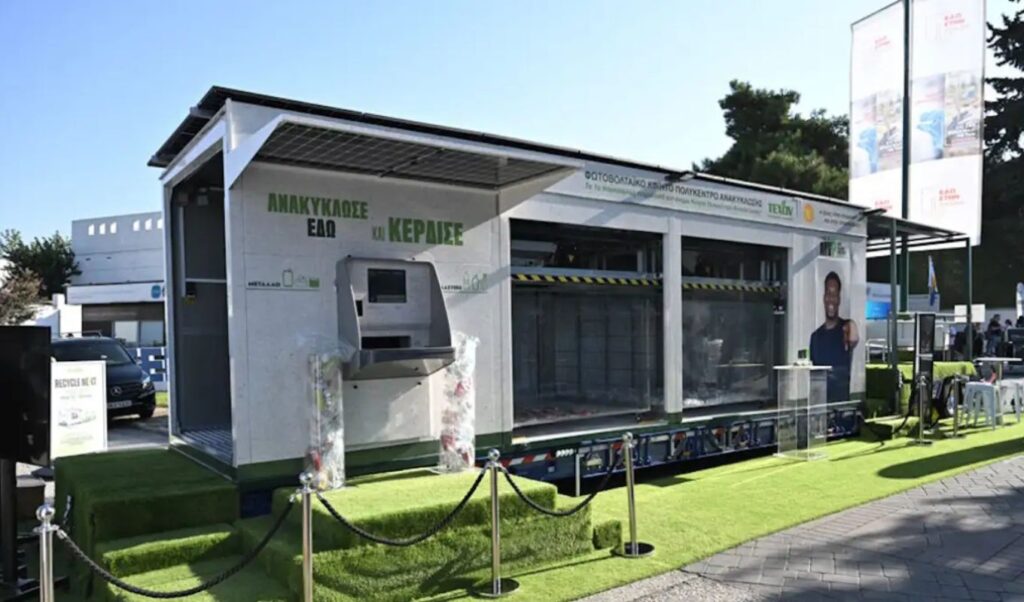
TECHAN has published ten new questions regarding the Recycling Multi-Centers, continuing its series of public announcements on the matter. The questions raised relate to reports about the Recycling Multi-Centers, two international tenders for the procurement of recycling equipment conducted by DRS HELLAS, the company’s Business Plan, and the financial bids submitted by a competing company.
Read: TECHAN: All the facts about the “recycling houses”
Who TECHAN’s questions are directed at
At the same time, TECHAN is raising questions about the prices offered per Recycling Multi-Center, the financial bid submitted by a competing company in the FODSA Peloponnese tender, tenders co-funded by the ESPA program and the “ANTONIS TRITSIS” program, as well as the process by which contractors were selected in the DRS HELLAS tenders.
The same press release also includes questions about the actions of a political figure, the transportation of equipment samples, the stance of a competing company following the announcement of the winning contractors, and a meeting between an ambassador and a government official during the bid evaluation process. The company states that a further set of ten questions will follow.
The company’s ten new questions
1) Is it true that the recent wave of false and defamatory publications regarding the Recycling Multi-Centers began after the announcement (on 3.7.2026) of the contractor in two international tenders for recycling equipment procurement conducted by DRS HELLAS, and prior to the submission of DRS HELLAS’s Business Plan?
2) Which politician attempted, until the very last moment and outside the scope of their duties and authority, to prevent the submission of DRS HELLAS’s Business Plan to the competent authority, in order to block its approval as a Collective System?
3) Why is the financial bid submitted by a competing company in the FODSA Peloponnese international tender — amounting to €332,072 (€267,800 plus VAT) per Recycling Multi-Center — apparently being ignored?

4) Why are the financial bids of the competing company not being opened — bids submitted in both the ESDA Crete international tender co-funded by ESPA, and in the international tenders of the municipalities of Thessaloniki, Palaio Faliro, Chalkida, and Galatsi co-funded by the ANTONIS TRITSIS program — in order to demonstrate that in all international tenders the competing company offered a price of €332,072 and not €66,000?
5) Is it true that the financial bid submitted by the competing company in the DRS HELLAS international tender (Section 3 of Tender 04 of 2026) was ultimately double the price of the financial offer it had previously sent in response to a market survey conducted by DRS HELLAS?
6) Why did the competing company’s financial bid double within just a few months? What significant additional costs arose in Greece and were factored into the price of the equipment?
7) Is it true that the doubling of the competing company’s financial bid results in additional revenues of tens of millions of euros?
8) Is it true that the competing company attempted to transport equipment samples for the DRS HELLAS international tender in violation of the applicable regulatory framework for transport safety — without the required transport permit and without the necessary escort by appropriate vehicles?
9) Is it true that the competing company submitted bids in the DRS HELLAS international tenders without any reservations, was ultimately selected as the winning contractor for certain tender sections, agreed with the selection of all winning contractors, and filed no objections — despite having the right to do so under the terms of the tender announcements?
10) Is it true that the Ambassador of the country of origin of the competing company held a meeting with a government official (at their office) during the evaluation of bids in the DRS HELLAS open international tenders for the selection of contractors for recycling equipment procurement — with the subject of that meeting being precisely those tenders?