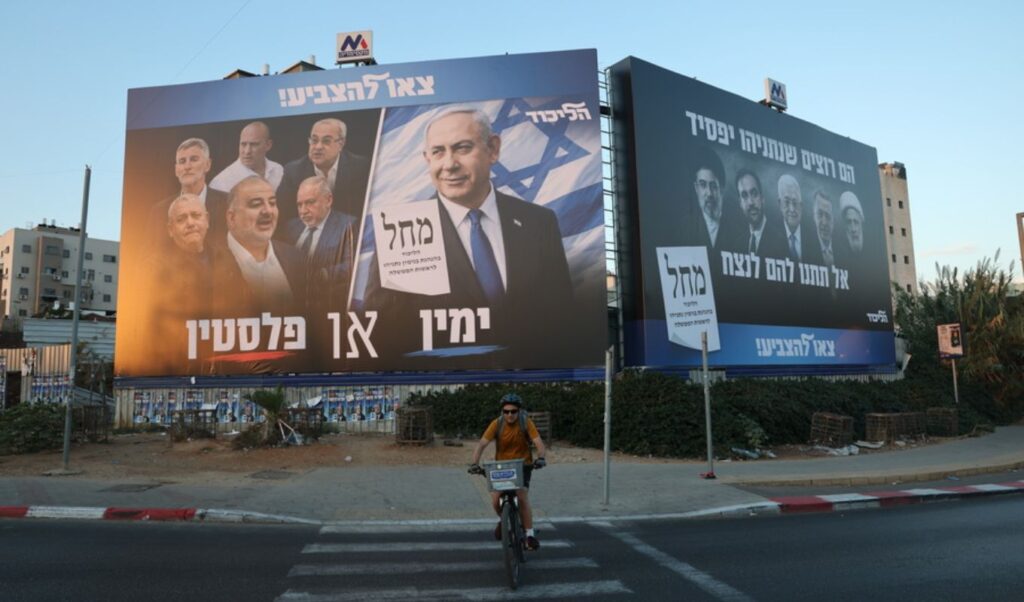
7,331,981 Israeli citizens are heading to the polls to elect the 26th Knesset (the Israeli parliament) in an election taking place amid extraordinary tension, with one overriding question at its center: the political “survival” of Benjamin Netanyahu, the country’s longest-serving prime minister, who has led Israel for a total of 19 years — including 15 of the last 17. These are the first elections held since the Hamas attack on October 7, 2023, and if Netanyahu fails to retain power, he faces serious jeopardy on multiple fronts: a potential investigative committee into possible security failures prior to the Hamas terrorist attack (against the backdrop of reports that the UAE had issued advance warnings), while his ongoing corruption trial — which has been underway since 2019 — could result in a prison sentence, particularly if the election outcome goes against him.
Read also: October 7 at the center of the Israeli elections
Israel: Reports of an Iran strike emerge just before the election
The already charged atmosphere intensified further following a CNN report on Monday, which claimed that Netanyahu had been seeking to persuade Trump to carry out new strikes against Iran ahead of the elections — votes that are separated by just a matter of days between Israel and the United States. A statement from the Israeli Defense Forces did little to calm the tension, as it asserted that military decisions are based solely on “security, professional, objective, and national criteria” — implicitly ruling out any electoral considerations. In any case, both Netanyahu and Defense Minister Katz denied any intention to strike Iran before polling day. Meanwhile, reports continue to mount in Israel — citing Channel 12 as their source — describing a fierce confrontation between the prime minister and IDF Chief of Staff Eyal Zamir, with the latter reportedly refusing to execute an order for military action related to Iran without prior deliberation and without securing written, signed legal authorization. Although Netanyahu dismissed the reports as “nonsense,” the stories have continued to circulate, with some even raising the possibility that Zamir could be dismissed if the Israeli prime minister wins re-election.
The stakes and Netanyahu’s message
Regardless, the question of what will happen with Iran is at the heart of this election. Speaking to Channel 14 — a broadcaster considered sympathetic to him — Netanyahu framed the stakes as nothing less than the “existence” of the State of Israel, and warned against what he described as potential alliances between Islam and the Left, drawing on developments across Europe to support his narrative. His campaign message centers primarily on “national security.” However, Netanyahu’s main rivals can hardly be described as left-wing — they lean more toward the right and center-right, and largely share positions such as opposition to the establishment of a Palestinian state and, to varying degrees, support for the war in Gaza.
Netanyahu’s political opponents
Netanyahu’s main political opponents are:
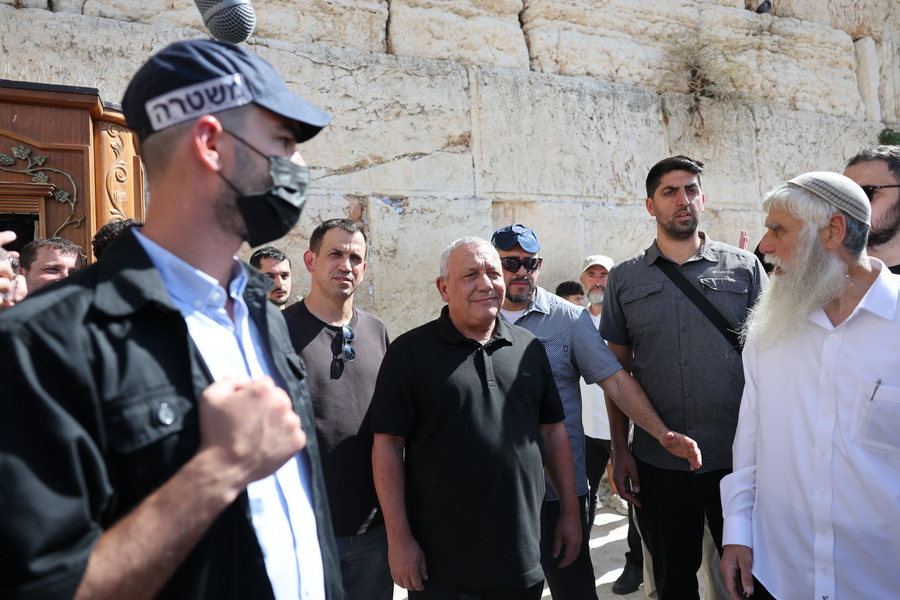
Former IDF Chief of Staff Gadi Eisenkot, who lost a son — and two nephews — in combat in Gaza. The 66-year-old Eisenkot presents himself as an outsider to the traditional political establishment: a military man and a hardliner on security. His modest background and his family’s sacrifices stand in sharp contrast to Netanyahu’s decades in high office and the pending corruption charges hanging over him. Eisenkot leads a new centrist party called “Yashar” — meaning “straight” or “honest” in Hebrew. He has been a vocal critic of Israel’s dependence on the United States, and despite his broader criticism of Netanyahu’s policies, he was also critical of the US-Iran negotiations that took place over the summer as being far removed from Israeli interests, as well as Washington’s attempts to constrain Israeli operations in Lebanon. He has supported mandatory military service for all citizens — including ultra-Orthodox Jews — and has backed the establishment of a committee to investigate potential government failures in the lead-up to October 7.
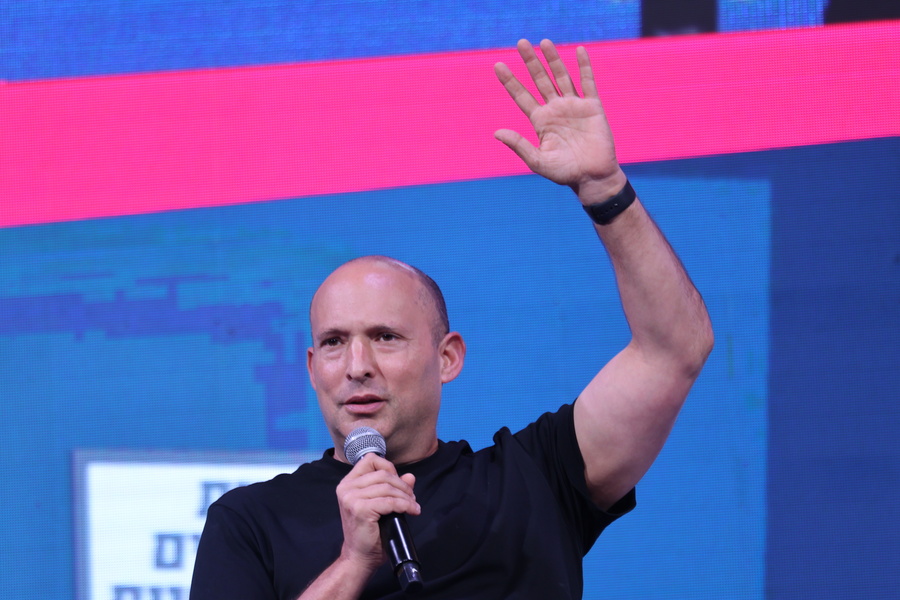
Former Prime Minister Naftali Bennett — 54 years old, right-wing, a former special forces officer, a former Netanyahu ally, and a high-tech millionaire — has joined forces with centrist former Prime Minister Yair Lapid. Their new party is called “Together” (Beyachad), and its message focuses on healing the nation’s wounds and getting Israel back on track. Their alliance — despite the fact that the two men stand at opposite ends of the political spectrum — previously succeeded in ousting Netanyahu from power in the 2021 elections. Bennett supported the strike on Iran and also backed the September 2025 strike on Doha targeting Hamas leaders.
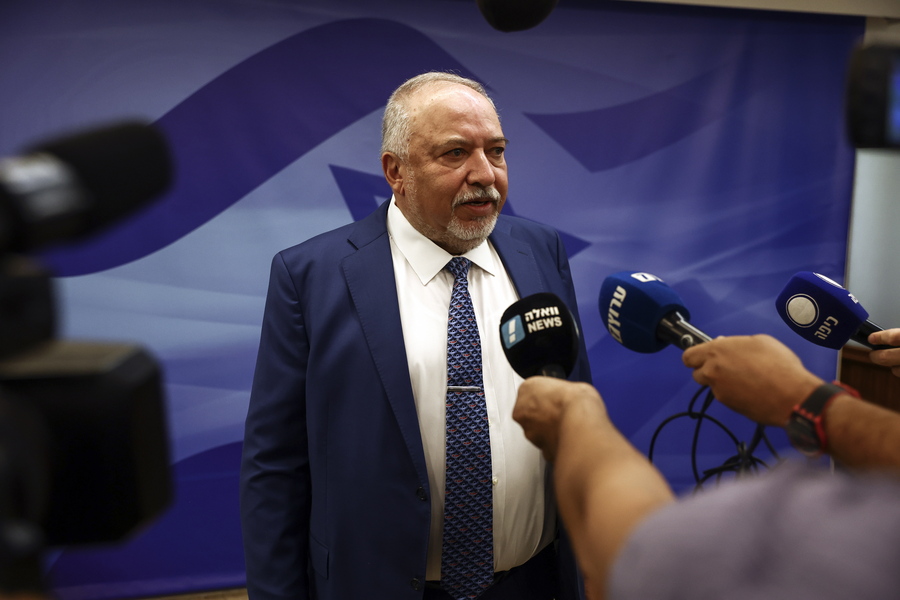
Former Defense Minister Avigdor Lieberman, 68, was once one of Netanyahu’s closest allies. Even more hardline than his former boss, Lieberman resigned from the Netanyahu government in 2018, accusing the prime minister of being too lenient toward Palestinian fighters in Gaza. Since then, he has become one of Netanyahu’s most fierce critics. His party, “Israel Our Home” (Yisrael Beiteinu), draws much of its support from the community of immigrants from the former Soviet Union, as Reuters notes.
Former General Yair Golan, 64 — who was praised for personally rescuing civilians from one of the sites attacked by Hamas on October 7 — leads the “Democrats” party. The party was formed from the remnants of Israel’s historic Labor Party and the smaller left-wing Meretz party.

Together, these figures make up what is known as the “change bloc,” united around the goal of removing Benjamin Netanyahu from the prime ministership.
The candidates standing with Netanyahu
Finance Minister Bezalel Smotrich, 46, and National Security Minister Itamar Ben-Gvir, 50, have drawn international condemnation for their far-right positions on Palestinians. Smotrich has spearheaded the rapid expansion of Israeli settlements in the West Bank, openly expressing his hope that the move will “bury” the idea of a Palestinian state.

Ben-Gvir, who was convicted in 2007 of inciting racist hatred against Arabs, has pushed for the death penalty for convicted Palestinian fighters, harsher detention conditions for Palestinian prisoners, and easier access to firearms for Israeli citizens. Both men have advocated for the expulsion of Palestinians from the Gaza Strip and the resettlement of Israelis in the enclave.
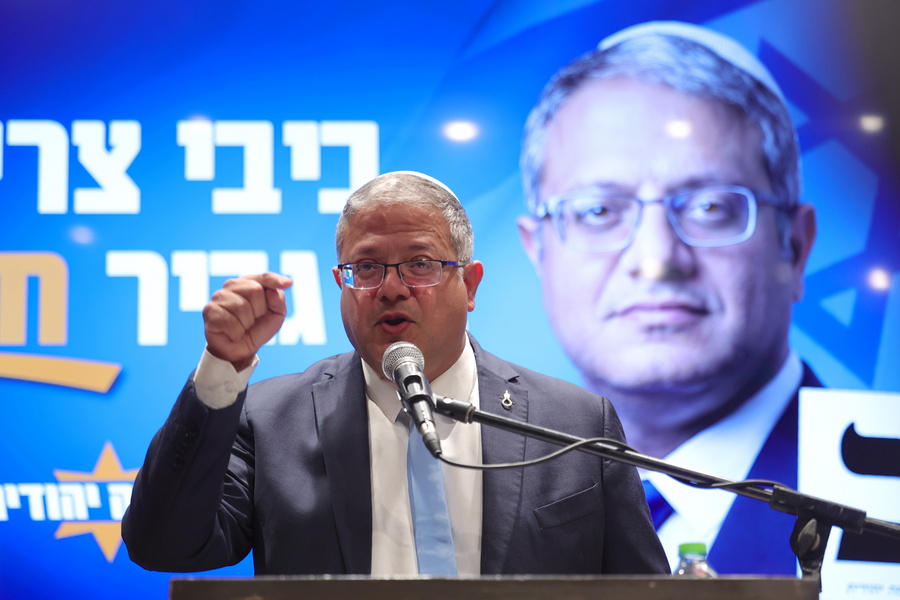
Ben-Gvir’s position was further illustrated by comments he made to the Jerusalem Post, in which he endorsed Donald Trump’s earlier statements about relocating Palestinians from the enclave, suggesting they should be “sent to France” or “to Britain” — noting that conditions there would actually be better for them.
Ultra-Orthodox allies
For years, Netanyahu has relied on two ultra-Orthodox Jewish parties for his political survival: United Torah Judaism and Shas. Their demands — chief among them the near-total exemption of their community from mandatory military service — combined with their community’s low workforce participation rates and dependence on state benefits, have fueled widespread anger among Israelis, particularly during wartime.
The parties that could decide the outcome
Reuters highlights that parties which have not clearly aligned with either bloc could tip the balance in favor of Netanyahu or his rivals. These include Raam and the Joint List, the two parties representing Israel’s Arab minority, which makes up 20% of the population. Also in this category are a new right-wing party called “People of Israel” and a center-right party called “The Reservists,” both of which have shown volatile polling numbers.
First-time voters emerge as a key factor
Another significant variable is the large cohort of young voters aged 18 to 22 who will be casting their ballots for the first time. According to the Israel Democracy Institute (IDI), these first-time voters number approximately 640,000 — representing nearly 10% of the electorate. Polls suggest they are expected to turn out in large numbers, and they appear to lean generally conservative: more than four-fifths of IDI survey respondents described voting as “quite important” or “very important,” with particularly strong responses among traditionally observant and religious young Jewish voters.
A separate poll conducted by the news outlets Ynet and Yedioth Ahronoth among likely first-time voters aged 18 to 22 also revealed high motivation to participate: 67% of respondents said they were certain they would vote, while an additional 19% said they believed they would. Analysts point out that beyond the general rightward drift that has characterized Israeli society over recent decades, military service — whether already completed, currently underway, or imminent — is also shaping the ideological outlook of many of these young voters.
Turnout figures are also expected to be high among Arab Israelis, with surveys indicating that close to 90% intend to exercise their right to vote.
61 seats are the prize
Polls opened at 7:00 a.m. local time (also Greece time) and will close at 10:00 p.m. Citizens vote for parties, and parliamentary seats are then allocated to individuals on party lists in accordance with a proportional representation system. To secure representation in the Knesset, parties must clear a threshold of 3.25%. The parliament has 120 seats in total, meaning 61 are required for a majority.
With the picture far from clear, a deadlock cannot be ruled out. The scenario of excluding Arab parties from coalition negotiations — even if they hold pivotal seats — is already being actively discussed, with a potential minority government floated as an alternative. What seems near-certain is that the day after the vote will be defined by coalition negotiations, and a return to the polls cannot be excluded if those talks collapse. It is worth recalling that Israelis went through five elections between 2019 and 2022. It remains to be seen what cards the players on the Israeli political stage will be holding once the votes are counted.