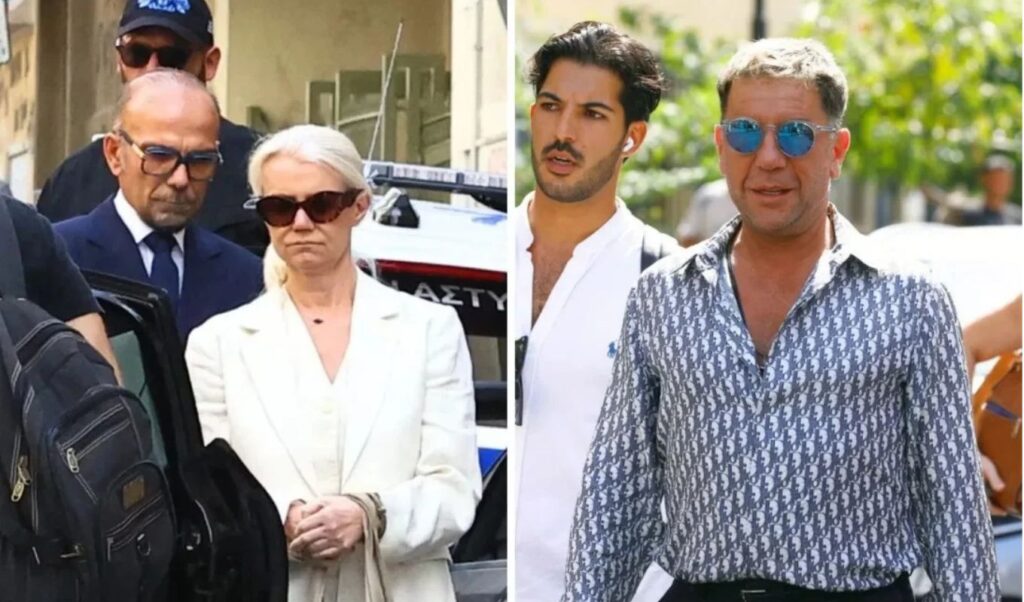
New developments are emerging in the death case of Giorgos Mazonakis as the first toxicology results are dealt a damaging blow to the 56-year-old accused doctor. According to information reported by Vasilis Lampropoulos on Mega, the anesthetic substance propofol was found in Giorgos Mazonakis’ system — a substance used for sedation. If confirmed, this discovery creates a significant new development in the singer’s death case, as it indicates that he was sedated during the plasmapheresis procedure. The 56-year-old accused doctor has denied from the very beginning that she administered any sedation to Giorgos Mazonakis. However, subsequent testimonies from employees at the Karneadou clinic reportedly contradict her claims.
Giorgos Mazonakis: The testimony about propofol and the search for an antidote
Specifically, a nurse at the clinic testified that the doctor asked her to contact an anesthesiologist and inquire whether an antidote for propofol exists. According to the same sources, the anesthesiologist who received the call confirmed this phone conversation took place, clarifying that she informed the caller that there is no antidote for propofol.
In addition, evidence reportedly obtained through the investigation and the lifting of telephone confidentiality has revealed an internet search regarding whether an antidote for propofol exists. The laboratory has also requested a new sample in order to carry out a quantitative analysis of the substances detected.
Histological examinations are now also under the microscope, as a finding has been identified in Giorgos Mazonakis’ heart. According to Vasilis Lampropoulos, the key question is determining when this particular issue first appeared and whether it can be linked to treatments he received prior to his death — including hydrotherapy sessions — during the critical period before September 9. The toxicology tests are being conducted by the Aristotle University of Thessaloniki, the same institution that carried out the ketamine analysis in the Roula Pispirigos case.
The hypnotherapist throws the doctor under the bus over the ambulance response
Despite 13 years of professional collaboration, the hypnotherapist did not paint the most flattering picture of the 56-year-old accused doctor when called to testify about what he knew regarding Giorgos Mazonakis’ final moments. He described her as calm and composed, and claimed she gave him no indication of the seriousness of the situation. “The doctor is generally a calm person. When we spoke on the phone she was calm and didn’t let me understand how serious the situation was. I had seen the equipment and machines at the clinic before. But she had never given me details about the treatment — only that it was a therapy that cleanses the blood. I have never recommended anyone else to go to that particular clinic,” he stated.
He also criticized her conduct as a doctor at the moment the ambulance arrived on the scene. “At 4:50 p.m. I sent a message saying ‘Is Giorgos okay?’ and got no reply, so I called. The doctor told me the ambulance had arrived and taken Mazonakis. She said his blood pressure had dropped. I asked her why she hadn’t gone with him, and she told me she had a patient. I told her they needed to go to the hospital immediately and help him,” he emphasized, among other things.
Testifying before the examining magistrate, the witness provided detailed insight into how Giorgos Mazonakis had approached the now-remanded doctor during their meeting on September 7, explaining his mental state and his reservations about the plasmapheresis procedure.
“At that moment he gave me the impression of a physically healthy person. I told him to go to the doctor on Tuesday to see how they would proceed, and that I would be waiting for him on Wednesday in Kifisia. He never contacted me again after that.”
The hypnotherapist confirmed to the examining magistrate that he had received a photo of the singer connected to the plasmapheresis machine, sent by the accused doctor. “I also received an MMS message with a photo showing Mazonakis undergoing treatment, which I again reacted to with a heart emoji. It did bother me that she sent me a photo of a patient without any indication that the patient had consented — especially since his eyes were closed and his leg appeared to have dropped.”
The witness also revealed that the 56-year-old had herself undergone a hypnotherapy session with him. “The doctor and I met when I was still in Corfu, through a colleague of hers, because she was interested in having a hypnotherapy session, so we met at her clinic. She was impressed by the session. We repeated the session one more time, and on the day I was returning from Corfu — March 25, 2013 — she told me she had a new clinic and that, in the context of holistic medicine, she wanted me to be her first external associate. I jumped at the opportunity immediately.”
However, as Mega revealed, the 56-year-old doctor — despite referring patients to hypnotherapy and making past-life regression diagnoses — would tell those same patients that she herself had never undergone such sessions.
In any case, the 62-year-old hypnotherapist was keen to clarify that he would not have received any commission from the plasmapheresis treatments.