A unified planning approach that integrates water supply, irrigation, and flood protection is now at the forefront of efforts to address growing water pressures across Greece. The climate crisis, rapid urbanization, and human interventions in the natural environment are creating new demands on infrastructure. More than 50 major hydraulic projects worth a combined €1.2 billion are currently underway, while an additional 130 projects totaling €2.8 billion are in the final stages of evaluation. The full scope of these interventions — spanning dams, irrigation networks, stream channeling, and new water supply infrastructure — was presented at the 9th Infrastructure and Transport Conference (ITC 2026) at the Athens Concert Hall.
Read also: Tsafos: “We can do more together” — The message on Europe’s energy security
Water infrastructure: Over 50 major projects worth €1.2 billion
Charalampos Mygdalis, Special Secretary for Hydraulic Works and Buildings at the Ministry of Infrastructure and Transport, identified the transition to integrated planning as a top priority. “The climate crisis shows us that we must move from fragmented restoration to proactive strengthening and reinforcement of our infrastructure,” he stated, placing particular emphasis on island and tourist regions that face intense seasonal pressures. “Project prioritization is based on the actual needs of each area — where there is a high risk of water scarcity or desertification, flood risk levels, residents’ needs, and seasonal demand spikes,” he explained. He further noted that the effects of the climate crisis are compounded by rapid urbanization, unauthorized construction, the filling in of natural watercourses, and deforestation caused by wildfires. “Water management projects, flood protection works, and land improvement initiatives must be implemented in a coordinated and combined manner,” he emphasized.
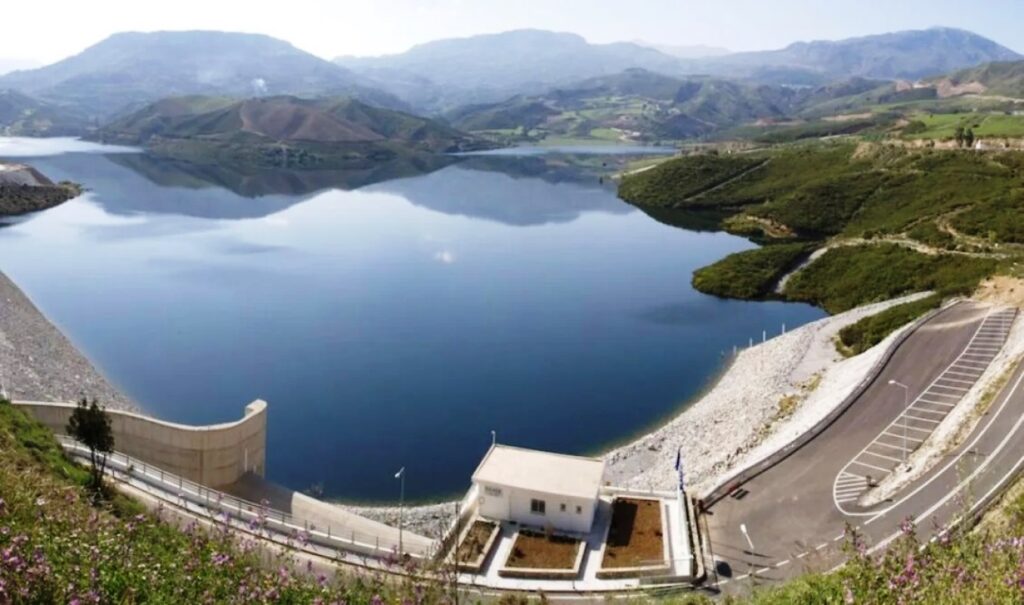
The Special Secretariat is currently executing more than 50 major hydraulic projects with a total budget of €1.2 billion. Among the examples highlighted by Mr. Mygdalis were the construction of the Myrtos dam in Crete and the Asopos dam in Corinthia, as well as the Anavalou dam network. In Attica, channeling works are progressing on the Eschatia, Acharnes, and Rafina streams, with the latter two covering a large portion of the Penteli basin’s catchment area. Four additional major projects are awaiting contract signing, while the Nestorio dam in Kastoria and the Almopeos dam in Pella have already been tendered. “At the Ministry of Infrastructure and Transport, we believe that the successful completion of projects requires five stages: sound planning, mature and detailed studies, secured funding, collaboration and participation from all stakeholders, and quality construction with provisions for ongoing maintenance and management,” he concluded.
130 projects worth €2.8 billion in final evaluation
Argyro Zerva, General Secretary for EU Resources and Infrastructure at the Ministry of Rural Development and Food, underscored the sector’s importance: “Water is a priority, and we will pursue the maximum possible resources from the next programming period.” She welcomed the decision to end the separation between irrigation and water supply projects, which will now be jointly funded through a single unified fund — EPES — noting that “water is a unified resource and cannot be managed in a fragmented way.”
Ms. Zerva acknowledged that the Recovery Fund was not an ideal financing instrument for large-scale infrastructure projects due to tight timelines, though it did serve as an accelerator. The Ministry of Rural Development and Food successfully incorporated five major irrigation projects, which were launched and subsequently transferred to the fund’s dedicated public-private partnership (PPP) programme. In parallel, 190 projects worth €650 million that were not completed were transferred to the new programming period following negotiations with the European Commission, while 130 projects with a combined budget of €2.8 billion are now in the final evaluation phase. She also stressed that the objective goes beyond simply securing water for irrigation — it also includes protecting arable land, since improper irrigation practices can actually accelerate desertification. She further suggested that the full completion of these projects would likely result in lower water costs for farmers.
EYATH: €360 million investment plan through 2029
Anthimos Amanatidis, CEO of EYATH (Thessaloniki Water Supply and Sewerage Company), described the climate crisis as the most significant systemic threat facing water and sewerage utilities, adding that the situation in Greece is further aggravated by unsustainable water management practices and the over-extraction of water resources, particularly for agricultural use. “We operate along two key axes: modernizing our infrastructure and increasing available water resources. To that end, we are ensuring we are not dependent on a single water source, but have alternative solutions in place,” he said, referencing desalination, boreholes, dams, and reservoirs.
Through the deployment of smart water meters and artificial intelligence solutions, EYATH has reduced non-revenue water from 35% to 26% over the past five years. The company’s investment programme through 2029 amounts to approximately €360 million and includes, among other initiatives, increasing water production by doubling treatment plant capacity and expanding service to new areas. “We have already reduced the cost per cubic meter of water consumed by 15%,” noted Mr. Amanatidis, also referencing the company’s carbon footprint reduction to 70% below baseline — exceeding initial targets — through the first Power Purchase Agreement (PPA) signed by a public entity in Greece. He described the partnership with the European Investment Bank as a pivotal step toward a new water management strategy for Thessaloniki and Chalkidiki. “With the recent reform, we are integrating 25 water supply, sewerage, and irrigation bodies into our organization. This now requires a clear investment roadmap, defined priorities, and the full utilization of all available financing tools,” he noted, setting the goal of building a resilient and financially sustainable system for the decades ahead.