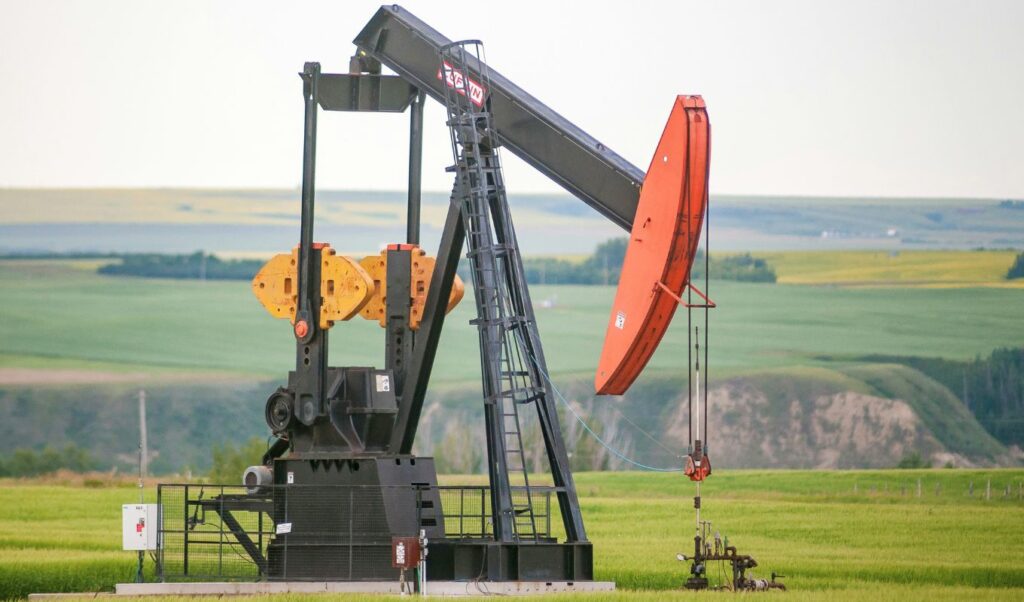
Oil remains the center of market attention, with prices continuing their upward trajectory as attacks on commercial vessels in the Red Sea and the Gulf of Oman intensify fears of further disruption to international maritime trade.
Oil prices surge again following ship attacks
Brent crude, the international benchmark, rose approximately 1.24% on Wednesday, reaching $90 per barrel. Meanwhile, U.S. WTI crude gained around 1.3%, climbing to $84.3 per barrel. This latest rise followed a 5% jump on Monday and an increase of more than $1 on Tuesday.
With today’s move, Brent has now recorded six consecutive sessions of gains, as investors continue to factor in the risk of prolonged disruptions to global oil supply.
A Houthi attack — carried out by the Iran-backed militant group — on a commercial vessel near the Bab el-Mandeb strait triggered the latest wave of concern. Six people were killed in the strike, marking the first deadly attack on a commercial ship in the Red Sea in more than a year. Hours later, U.S. forces announced they had struck a container ship in the Gulf of Oman that Washington claimed had attempted to breach the blockade of Iranian ports.
Both developments come at a time when maritime traffic in the broader region remains severely restricted, intensifying fears of further delays and disruptions to the global supply chain. Each new attack reverberates through markets, as geopolitical and insurance costs for shipping rise, while the likelihood that companies will reroute away from dangerous passages continues to grow.
Markets on high alert with the Strait of Hormuz in focus
The Strait of Hormuz, one of the world’s most critical oil shipping chokepoints, remains at the heart of the energy crisis. Markets are growing increasingly skeptical about the prospects of a swift U.S.-Iran agreement, despite ongoing diplomatic efforts and occasional optimistic statements from officials.
Donald Trump declared that the U.S. “fully controls” the Strait of Hormuz and reiterated his distrust of Iran, while Tehran has signaled that the passage will remain closed as long as its conditions are not met. The scale of the problem is starkly illustrated by shipping data: according to figures cited by Reuters, just six vessels passed through the Strait of Hormuz on Monday, compared with approximately 125 to 140 per day before the conflict began.
The U.S. Energy Information Administration (EIA) estimates that reduced flows through Hormuz will continue to affect the market in the coming months. Its latest forecast places the average Brent price at around $85 per barrel for the third quarter of 2026, with a gradual decline toward an average of $69 in 2027 as production is expected to recover.
From $90 to $100 — is oil heading higher?
The market crisis persists, with Brent’s rise to $90 signaling that investors are still pricing in a significant geopolitical risk premium. Analysts warn that prolonged restrictions on flows through the Strait of Hormuz, combined with further drawdowns in global inventories, could push prices considerably higher.
The U.S. Energy Information Administration (EIA) estimates that approximately 600,000 barrels of Middle Eastern oil per day could remain off the market through the end of 2027 due to the ongoing conflict. As a result, the oil market faces two opposing scenarios: a U.S.-Iran deal that could restore flows and push prices lower, or a further escalation that keeps key maritime routes closed and drives energy costs even higher.
Investors appear to be in a wait-and-see mode. With Brent hovering near $90, the Strait of Hormuz remains the defining question — and every new attack on a vessel brings fresh turbulence to the market.