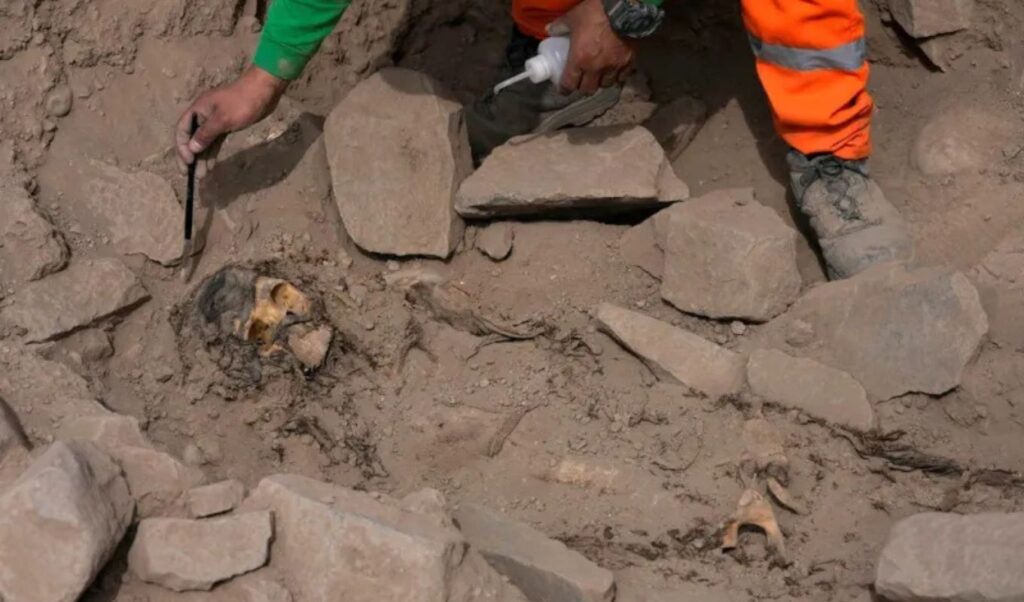
The real “mummy’s curse,” according to academics, is the global trade in mummified human remains — a market that continues to grow at an alarming rate. Researchers warn of serious health risks affecting everyone involved, whether willingly or not: buyers, sellers, and even shipping workers who handle these shipments. A study examining the buying and selling of mummified human body parts — primarily heads, feet, and hands — has revealed the presence of dormant microorganisms and toxic substances once used in the preservation process.
The “mummy’s curse”: What the research reveals
The study, titled “The Real Mummy’s Curse: Health Risks Associated with the Sale and Trade of Mummified Remains”, was published in the peer-reviewed journal International Journal of Cultural Property by Cambridge University Press. Its findings paint a deeply troubling picture of a largely unregulated and dangerous global market.
According to the researchers, a “semi-illegal and often outright illegal” trafficking network has been significantly amplified in recent years through social media platforms, personal websites, online stores, e-commerce platforms, and auction houses. Alarmingly, participants in this trade appear largely unaware of the risks they are exposing themselves to. As part of the study, researchers examined 128 online listings and auction posts.
In many cases, the researchers identified mummified human remains showing visible signs of biological decomposition. Sellers provided no instructions on how to safely handle or store such items, and the remains were frequently shipped through standard postal services.
More than half of the items found — specifically 51.6% — consisted of complete mummified heads or head fragments, skulls with soft tissue or hair still attached, and so-called tsantsas: the well-known shrunken heads traditionally created from human corpses by the Shuar people of what is now northern Peru and eastern Ecuador.
The death of Lord Carnarvon
The mummification process — whether artificially performed or naturally occurring — involves complex chemical and physical processes that slow the decomposition of organic tissue. Over the centuries, various toxic substances have been used in preservation, including heavy metals such as arsenic, mercury, and lead.
Despite the fact that remains may have been desiccated for hundreds of years, they can still harbor a wide variety of dormant microorganisms. Of particular concern are dormant fungal spores, which can become airborne when remains are moved or disturbed.
According to the study, the inhalation of Aspergillus fungal spores has been linked to the deaths of 10 of the 12 scientists who opened the tomb of King Casimir IV of Kraków in present-day Poland during the 1970s. Furthermore, researchers believe that a severe form of aspergillosis, triggered by spore inhalation, may have contributed to the death of Lord Carnarvon — the primary financier of the exploration of Tutankhamun’s tomb in Egypt’s Valley of the Kings. Carnarvon’s death in 1923 subsequently gave rise to the enduring legend that those who disturb ancient tombs are condemned to misfortune, illness, or death — the so-called “mummy’s curse.”
A risk that affects everyone
Kirsty Squires, Professor of Human Bioarchaeology at Staffordshire University, who conducted the research alongside Dario Piombino-Mascali, Clara Ursi, and Damien Huffer, emphasized that traders appear to have very little awareness of the dangers involved. She noted that some buyer reviews reference a distinctive “mummy smell” reminiscent of decomposition — yet in several cases, mummified heads were displayed as decorative objects without any protective casing, even in living rooms and other domestic spaces. “This could be genuinely dangerous,” she warned.
Squires also noted that during the preparation of the study, researchers came across images of severely deteriorated remains placed openly on display stands, with no glass covering, no visible temperature control, and none of the appropriate protective measures required for the safe storage of human remains.
The risks, critically, extend to all parties involved. The researchers highlight that as mummified human remains are transported via postal and courier services, warehouse workers, drivers, sorting center staff, and customs officials are all potentially exposed to harm. These workers, the study notes, are unlikely to be wearing the necessary personal protective equipment when they first come into contact with such shipments.
Academics are therefore sounding the alarm: the growing online trade in mummified human remains is not merely a matter of cultural heritage or ethics — it is an inadequately assessed public health threat that puts a wide range of unsuspecting people at serious risk.