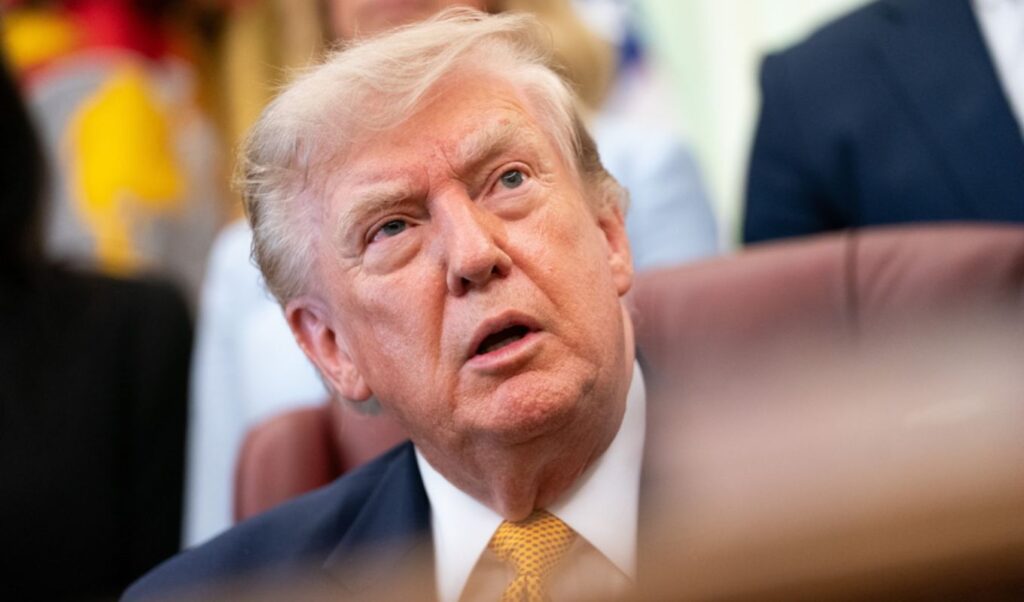
On Thursday morning, Donald Trump denied reports of significant ammunition shortages in the US military following the intensive military campaign against Iran, insisting that the United States holds “massive” stockpiles. In a post on his Truth Social platform, Trump stated that the US possesses “massive stockpiles of ammunition, particularly of specific types,” adding that “large quantities are being manufactured and shipped to the country whenever needed.” He also noted that defense industries are building “the largest number of factories in the history of the country.”
The remarks came one day after a CNN report revealed that US armed forces had consumed nearly four-fifths of their THAAD missile stockpiles held before the war with Iran began, as well as approximately half of their Patriot interceptor missiles. The network, citing two sources with knowledge of a recent military inventory assessment, also reported that the issue of depleted stockpiles was raised again prior to Trump’s decision last weekend to cancel new large-scale strikes against Iran.
According to the same report, the US military has also used nearly all of its long-range, high-precision surface-to-air missiles during the conflict. In the same Truth Social post, Trump also lashed out at those leaking information to the press, warning that “leakers of these treasonous statements are being identified” and that “lengthy prison sentences will be sought.”
Trump’s fury at Hegseth
Meanwhile, according to a Washington Post report, the US president expressed his anger at Defense Secretary Pete Hegseth during a meeting at the presidential retreat of Camp David last week over the handling of the war with Iran. According to the same sources, Trump demanded explanations for not having been adequately briefed about the serious shortages of critical munitions, which are now limiting US military options against Iran. The confrontation reportedly took place on the sidelines of a cabinet meeting last Friday. Trump is said to have told Hegseth that he believed the ammunition stockpile issue “had been resolved,” according to two people cited by the newspaper who spoke on condition of anonymity.
What the shortages involve
The shortages, as highlighted in multiple reports, primarily concern long-range precision missiles and air defense interceptor systems. According to one source, this is one of the main reasons Trump has avoided approving new large-scale strikes against Iran in recent days. The president himself stated on Monday that he had approved and then canceled “the largest attack since World War II,” while awaiting developments in negotiations over the Strait of Hormuz. Although the United States has already announced new production agreements for critical weapons systems such as Patriot missiles, manufacturing them takes up to two years, meaning stockpile replenishment is not expected anytime soon.
Massive munitions consumption, says the Washington Post
According to a previous Washington Post report, in just the first month of operations, US armed forces fired more than 850 Tomahawk cruise missiles, over 1,000 Patriot and THAAD system missiles, and more than 1,300 ATACMS tactical ballistic missiles.
A source familiar with the matter stated that ATACMS stockpiles — a weapon also sought by Ukraine — have been essentially exhausted, a development previously reported by Reuters as well. The shortages extend beyond the Middle East. Ukraine is also facing a serious challenge in replenishing its air defense systems, as Western stockpiles have been significantly depleted. Additionally, according to a US official, the shortage of interceptor missiles has led to a change in operational rules of engagement, with the US now more strictly evaluating which incoming targets to intercept based on their trajectory and threat level.
According to the same sources, when Trump demanded explanations for the depleted stockpiles, Hegseth defended himself and reportedly shifted blame onto Deputy Defense Secretary Stephen Feinberg, arguing that Feinberg had failed to ensure the president was fully informed of the situation. The incident is said to reflect Trump’s growing frustration with the Defense Secretary, who was one of the main advocates for the military operation against Iran, having assured the president that it would be a swift and relatively straightforward operation.
Leavitt: “100% false”
White House Press Secretary Karoline Leavitt dismissed the report as “100% false,” insisting the incident “never happened” and that the president continues to have “complete confidence” in Hegseth. Pentagon chief spokesman Sean Parnell echoed the denial, stating that the Defense Secretary “never misled anyone about the state of the stockpiles, nor did he shift blame onto his deputy.” He described the claims of depleted stockpiles, internal disputes, and Hegseth distancing himself on Iran as “equally fictitious.”
Pressure on US ammunition stockpiles had already been documented before the conflict began. General Dan Caine had warned Trump that the United States did not have sufficient stockpiles to sustain a prolonged war. Between February 28 and April 7 — the date the first ceasefire took effect — US forces struck more than 13,000 targets inside Iran while intercepting over 8,500 Iranian missiles and unmanned aerial vehicles.
Operation “Epic Fury” launched while the US was already facing shortages of critical munitions. By the summer of 2025, more than a quarter of THAAD interceptor stockpiles had already been consumed during Israel’s so-called “12-Day War” and Operation “Midnight Hammer” against Iran’s nuclear facilities. Although the Pentagon has announced new industry agreements to replenish stockpiles, experts warn that without signed contracts and Congressional appropriations, production cannot begin. Even when that happens, it is estimated that it will take several years before US ammunition stockpiles are fully restored.