New evidence is coming to light in the Marfin Bank case, as Star TV revealed the methodology used by the Greek Police forensic laboratory to compare photographs of alleged perpetrators against footage from the riots. The analysis relied on specialized software, while investigators also evaluated supplementary evidence including backpacks and mobile phones. Star TV presented the image comparison method step by step, referencing 200 documentary photographs taken by Provópoulos, from which material was selected for further examination.
Read also: Marfin: The dramatic moments before the tragedy and the moment of the deadly arson attack on the bank (Video)
Photo comparison in the Marfin investigation
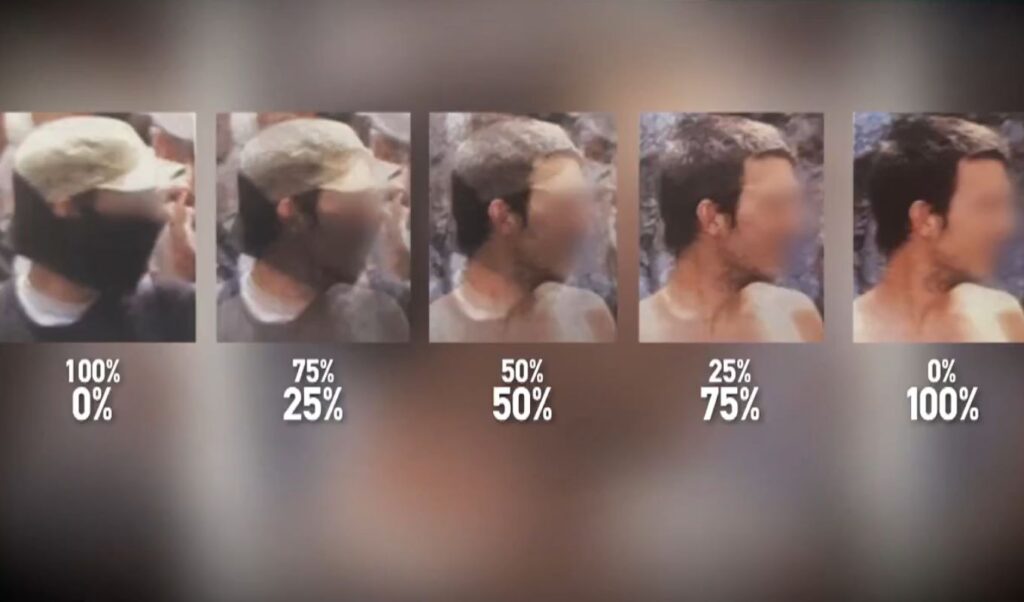
The process began with a frame captured during the Marfin riots, showing a suspect whose features were concealed. The second piece of material was a facial photograph which, as reported, had been sourced from a holiday photo and was identified by experienced detectives from the Homicide Division. A critical common point between the two images was the tilt of the head. In both cases, the face appeared turned to the left — a detail that allowed investigators to digitally align and compare the photographs at the same angle. During the presentation, one image was gradually overlaid onto the other. The mask and hat concealing the suspect in the riot footage were removed from the visualization, while the angle of the face was preserved so that morphological features could be examined.
The stages of forensic identification, the Greek Police investigation, and supplementary evidence
In the first stage of the investigation, the identification match stood at 0%, as investigators had not yet determined the identity of the individual. The search continued using available data and, in the next stage, the match progressed to 25%. The image comparison then advanced to 50%, with the feature cross-referencing becoming stronger. In the final stage, using the holiday photograph, the presentation showed a 100% match. The suspect’s facial features were not broadcast on television for obvious reasons. However, as reported, investigators had access to clear images and compared them against additional photographs in which the individual’s face was fully visible.
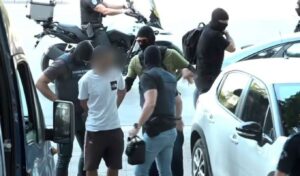
The photographic comparison was presented as the primary and foundational element of the investigation. Police simultaneously examined portable items, including backpacks and mobile phones, which were treated as secondary supporting evidence in the evaluation of the case. According to what was reported, it was the combined examination of all this material that led investigators to make their arrests. The investigation also focused on a suspect’s possible involvement in smashing the windows of the Marfin Bank. The broadcast highlighted that this particular forensic software is accepted in judicial proceedings and that the findings produced by the analysis can be used as evidence in court.
Marfin: From untapped evidence to the man who threw the Molotov cocktail
There are significant developments in the Marfin case, as members of the Homicide Division are closing in on the individual who threw the fatal Molotov cocktail. According to Star TV, detectives are getting ever closer to the person identified as “number 9” — believed to be the one who threw the incendiary device. Investigators now hold hundreds of previously untapped pieces of evidence which are gradually sharpening their picture of the perpetrator: a person who, without hesitation and fully aware that dozens of people were inside the bank, hurled the deadly Molotov cocktail. Investigators are now working to gather even more evidence in order to trace the fifth member of the group — the individual who is believed to have poured the flammable liquid that caused the bank to go up in flames. There is no longer any puzzle that cannot be solved, as the digital evidence serves as “silent witnesses” that will, sooner or later, speak.