The UN’s proposed framework for resolving the Cyprus issue has sparked significant debate after key details were brought to light by the British newspaper The Independent. According to the report, María Ángela Holguín, the personal envoy of the UN Secretary-General, is reportedly working on an agreement with the Turkish Cypriot side, arguing that Turkish Cypriots have not been treated as equals — as was originally intended when Cyprus gained independence from the British Empire in 1960.
Read also: The controversial Cyprus reunification plan being pushed by the UN special envoy — what The Independent is reporting
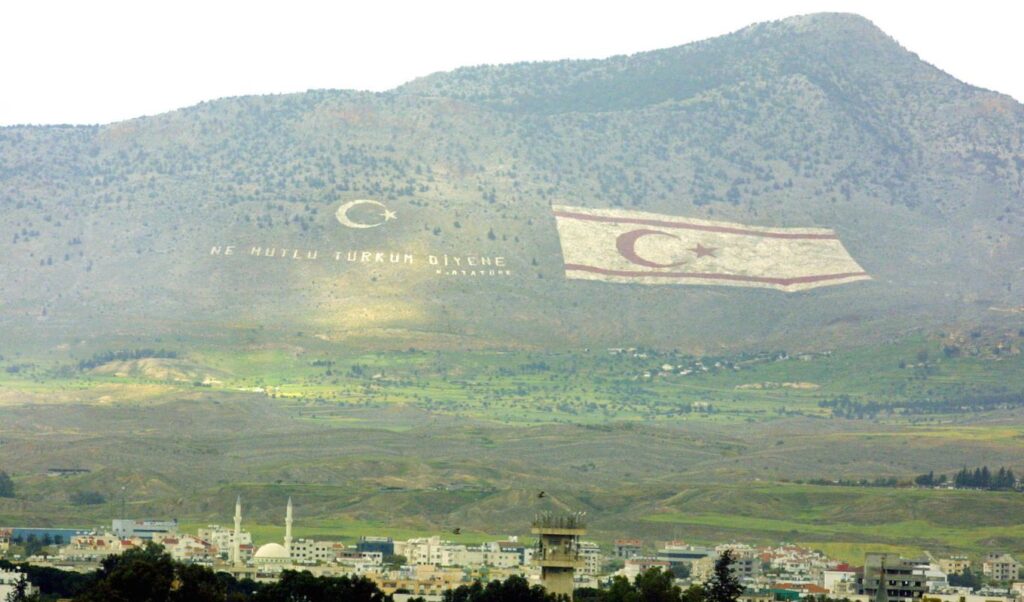
According to the British newspaper, Holguín is pursuing a governance structure that Greek Cypriots could call a federation and Turkish Cypriots could call a confederation — deliberately bridging the divide through what is described as intentional “creative ambiguity.” The plan would propose the creation of two constituent states with political equality. Day-to-day governance would be carried out primarily by the two states, while a small central structure would handle only those matters that cannot be left exclusively to either side. In return for international recognition and autonomy, the Turkish Cypriot side would be required to return territories, including the abandoned area of Varosha.
For shared competencies, the plan envisions a rotating presidential council led by both community leaders, with a ratio of 2-to-1 or 3-to-1 in favor of the Greek Cypriot side. Additionally, instead of a directly elected federal parliament, there would be a supreme council composed of Greek Cypriot and Turkish Cypriot legislators, as well as a joint council of ministers covering approximately five or six portfolios — including Foreign Affairs, Defense, Interior and Citizenship, Finance, and European Affairs.
At this stage, the Turkish Cypriot leader Tufan Erhürman appears willing to negotiate within this framework. On the other side, Nicosia has officially maintained a low-key approach, avoiding any formal endorsement of the report — a stance reflected in statements by diplomats such as Spyros Miltiadis. Miltiadis, an experienced Cypriot diplomat serving as Deputy High Commissioner of the Republic of Cyprus in London, told the British newspaper that he had no knowledge of any such plan. “As far as I am aware, there has been no formal UN proposal to which each side has been asked to respond. The ideas circulating appear to be speculation rather than a concrete proposal or plan. Any substantive progress must be achieved through the established UN-led process and within the agreed UN framework,” he stated.
Meanwhile, the appointment of Italian Executive Vice President of the European Commission, Raffaele Fitto, as the new EU special representative for the Cyprus issue marks a significant effort to strengthen Europe’s role in the reunification process. Fitto is considered a personal choice of Commission President Ursula von der Leyen — a notable departure from previous appointments, such as that of Johannes Hahn, which required a decision by the full College of Commissioners. This underscores the political weight that the Commission’s leadership is placing on this initiative. The appointment comes at a moment when, as von der Leyen recently stated following communication with UN Secretary-General António Guterres, a new momentum appears to be emerging for resolving the Cyprus issue.