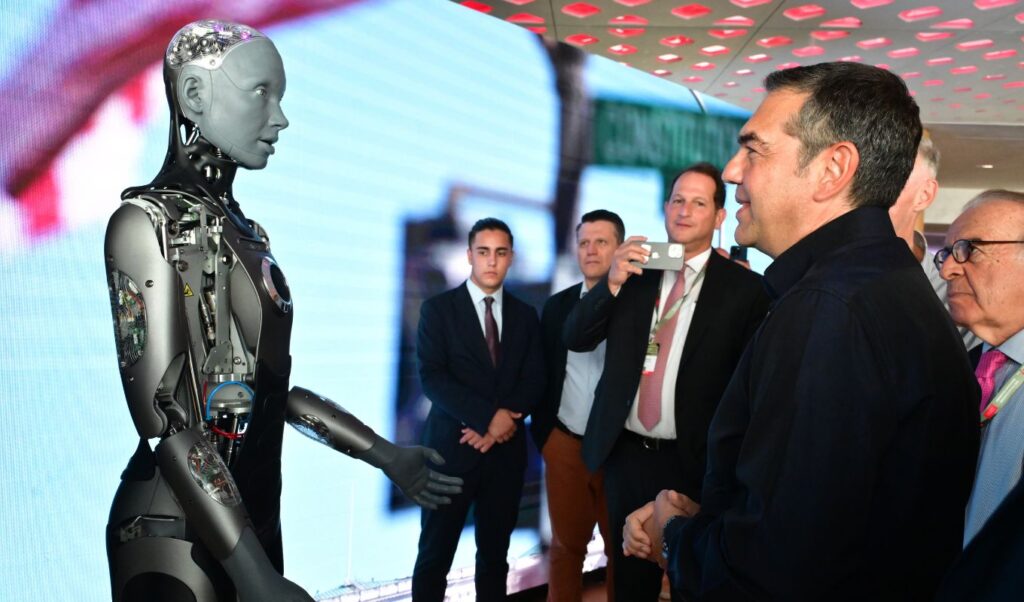
The 30th Annual Government Roundtable conference by the Economist has now wrapped up, yet its discussions reached into both the near and distant future. From Greece’s new left-wing party ELAS and the challenges of building a stronger Europe, to making society safer for Gen Z, and from the capabilities — and emotional limitations — of artificial intelligence to pharmaceutical clawback policies and healthcare investment, a wide range of issues was placed on the table over the two-day event. Shipping came under the microscope, the NATO Summit was analyzed, economic indicators were weighed against international turbulence, and the roles of states in shaping economic and geopolitical developments were thoroughly debated.
Alexis Tsipras, leader of ELAS and former Prime Minister of Greece
“ELAS was created to fill the gap in the opposition — the need for effective opposition oversight,” said the leader of the Greek Left Alliance (ELAS) and former Prime Minister Alexis Tsipras, setting the new party’s goal ahead of the next elections — whenever they may be — as winning governance of the country away from the ruling New Democracy party.
He stated that ELAS is coming forward with a plan as a governing left-wing force. When asked which European parliamentary group his party would join, he noted that it represents social democracy, the radical left, and political ecology: “Such a political family does not currently exist in the European Parliament. That, of course, does not rule out the possibility of one forming at some point, when the time comes — and European elections are still a long way off.” He also criticized the Prime Minister, saying he had abandoned the doctrine of multi-dimensional foreign policy. Referring to the NATO Summit in Ankara, he spoke of a stance among member states that rewards rather than pressures Turkey. Tsipras also called for the creation of a national recovery fund and came out in favor of reforming the national university entrance examination system.
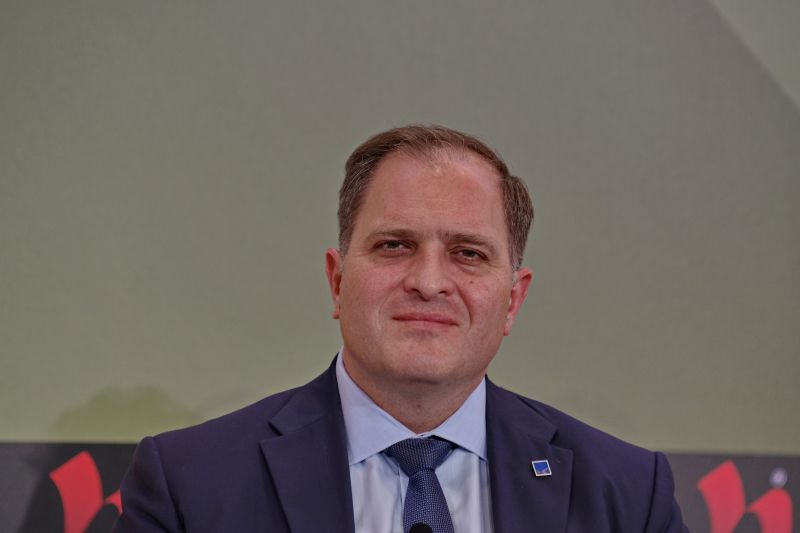
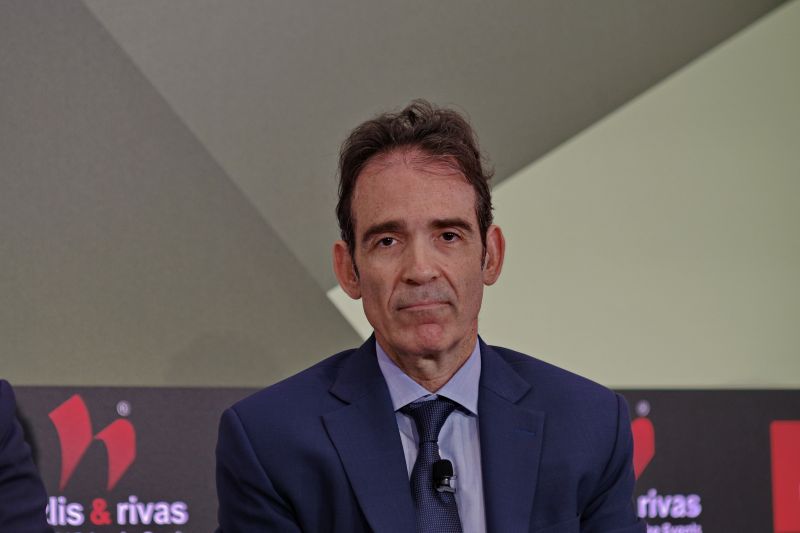
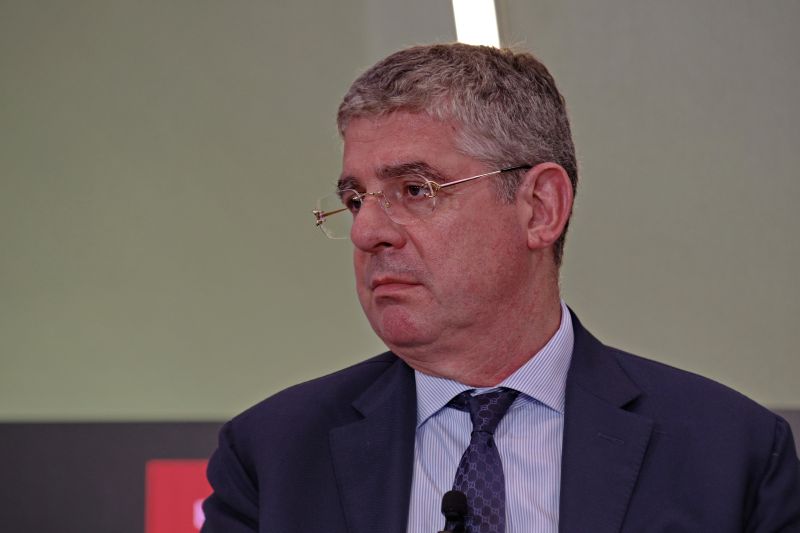
Peter Bofinger, economist and former member of the German Council of Economic Experts
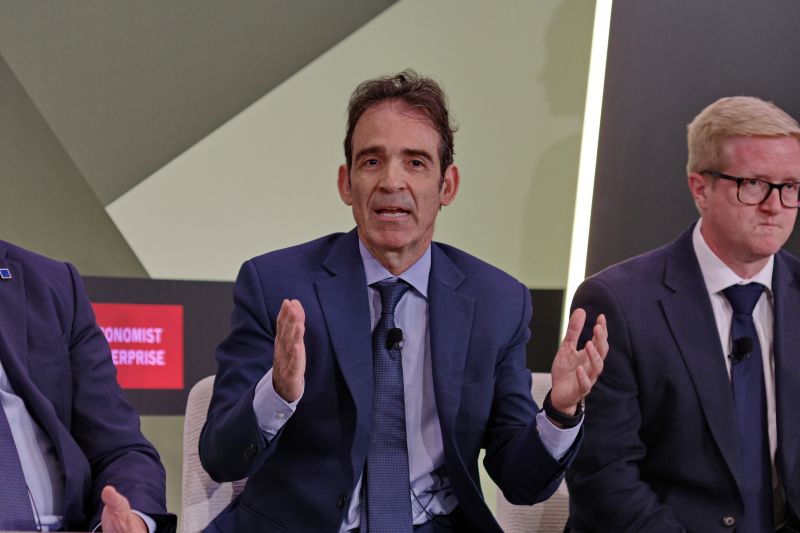
“Europe’s problem is not the capital markets union or banking union […] The problem is technology,” stressed economist and former member of the German Council of Economic Experts Peter Bofinger, who argued that “we are caught in a trap.” “Nothing has been done in medium-scale technology. We lack digital skills and we have lost manufacturing know-how,” he added, citing competition with China in the electric vehicle sector as a prime example. The solution to this problem, in his view, is the adoption of a coherent industrial policy — and how should that be funded? “But not by turning depositors’ savings upside down. We need another mechanism: to identify strategic areas and mobilize money,” he explained. What is also needed, he added, is a joint effort — namely a Eurobond. “We need funds that must come from governments, not from depositors,” he continued in the same vein. He also criticized the fact that industrial policy is entirely absent from the conversation about the way forward. It is alarming, he noted, that at the very heart of Europe — Germany — there is no policy for how industry should function. That is why, he concluded, “for seven years now Germany has seen no growth; the economy is frozen.”
Gikas Hardouvelis, chairman of the board of directors of the National Bank of Greece
Fragmentation at every level is Europe’s foremost problem, declared Gikas Hardouvelis, chairman of the board of directors of the National Bank of Greece. “What is needed is a unified political will, which the EU lacks,” he added, explaining that there are 27 member states and 27 different leaders making decisions. “It is extremely difficult. That is why we have fallen behind.” In his view, progress is blocked by veto politics. “Perhaps we need to find ways to bypass that veto,” he suggested. On the other hand, he described the current crisis as an opportunity. “Europe usually moves because of crises. This time it’s Trump,” he said, questioning whether “we can seize the opportunity and develop a common defense policy.” He further noted that Europe has large industries at the national level but not at the pan-European level — again highlighting the fragmentation problem. Finally, he observed that only 10% of what the Draghi Report recommends has so far been adopted, underlining that Europe is lagging behind in sectors such as transport and energy. “It is a political problem,” he concluded.
Tom Duff Gordon, VP and head of policy for Europe, Middle East and Africa (EMEA), OpenAI
“The question of whether artificial intelligence can think is similar to asking whether a submarine can swim,” remarked Tom Duff Gordon, VP and EMEA Head of Policy at OpenAI, in a characteristically striking analogy. He stated that AI benefits everyone by unlocking knowledge across a wide range of human activities. “The challenge is to adapt artificial intelligence not quickly but wisely,” Gordon noted. He also highlighted that 84% of young people in Greece use AI — “the highest rate in Europe” — and referred to OpenAI’s collaboration with the Greek government through an education program.
Dan Stratan, CEO and founder of RCI Holding
“The capabilities of AI — in art, for example — are wonderful. But has anyone felt the emotion experienced when standing before a work by one of the great classical painters?” asked Dan Stratan, CEO and founder of RCI Holding, in a question designed to illustrate what he sees as the inherent limits of artificial intelligence’s achievements.
Dimosthenis Anagnostopoulos, Secretary General for Information Systems and Digital Governance
We say that Europe is not leading in AI, yet Europe has been a pioneer in adopting responsible, democratic AI, stressed Dimosthenis Anagnostopoulos, Secretary General for Information Systems and Digital Governance. He referred to the technological competition between the US, China, and Europe, noting that the market favors whoever produces new technology first. Therefore, he pointed out, if Europe is to capitalize on its competitive advantage of responsible and democratic AI use, it must accelerate. In the same context, he emphasized that Europe needs to work harder on building computational power, on translating know-how into products — which he described as a major European weakness — on the scale of technology investment, and on harnessing talent. Finally, he drew a distinction between AI-producing companies that create foundational models and the so-called hyper-scalers, such as Amazon, Google, and Microsoft.
Ivan Vasilev, Minister of Innovation and Digital Transformation of Bulgaria
Bulgaria’s Minister of Innovation and Digital Transformation, Ivan Vasilev, focused on his country’s AI initiatives, noting that the Bulgarian government created a panel of digital advisors — robots and machines — that contributed to shaping national policy in the field. In this context, he pointed out that AI cannot replace human experts, but it can assist them. He also referred to the construction of one of the EU’s AI factories, which has begun in Sofia. He noted that countries cannot spend as much as tech giants, but they can share knowledge and leverage it for the common good, with the help of regulation. He further stressed that we must not be forced to choose between innovation and trust, and that decision-making should remain in human hands.
Iwona Sikora, Senior VP and General Manager EMEA, Iron Mountain
From process automation, we have now moved into a phase where AI learns from processes, recognizes exceptions, and augments workflows, stressed Iwona Sikora, Senior VP and General Manager EMEA at Iron Mountain. She noted that companies are asking themselves for what purpose they should use digital agents, and in this context she highlighted the importance of managing agentic AI. Sikora also spoke about the significance of practical AI applications — including for state digitization, as Greece has undertaken — and noted that while AI is indeed replacing basic tasks previously performed by humans, requiring upskilling, it is also creating new jobs centered on managing and leveraging the technology itself.
Georgios Sioufas, managing partner and founder of Sioufas & Associates Law Firm
Georgios Sioufas, managing partner and founder of Sioufas & Associates Law Firm, focused on the role that agentic AI plays in legal services. He noted, among other things, that digital agents can plan, decide, execute, and even negotiate and draft documents autonomously. This, he pointed out, raises questions about who bears responsibility. AI must be monitored, assessed, and placed on the market — yet agentic AI behaves less like a product and more like a “player,” he remarked. He went on to emphasize three key principles: a) accountability by design — autonomy not through anonymity but through the responsibility of a natural or legal person; b) adaptation with human oversight; and c) proportionality in the regulation of agents. He closed by stressing that agentic AI cannot replace lawyers, but it can expose the difference between those who practice law as a procedure and those who practice it as a matter of judgment.
Thanasis Navrozoglou, president and CEO of Natech Banking Solutions
There is a tremendous opportunity for Europe when it comes to AI, said Thanasis Navrozoglou, president and CEO of Natech Banking Solutions, explaining that it can be harnessed in favor of democratization and