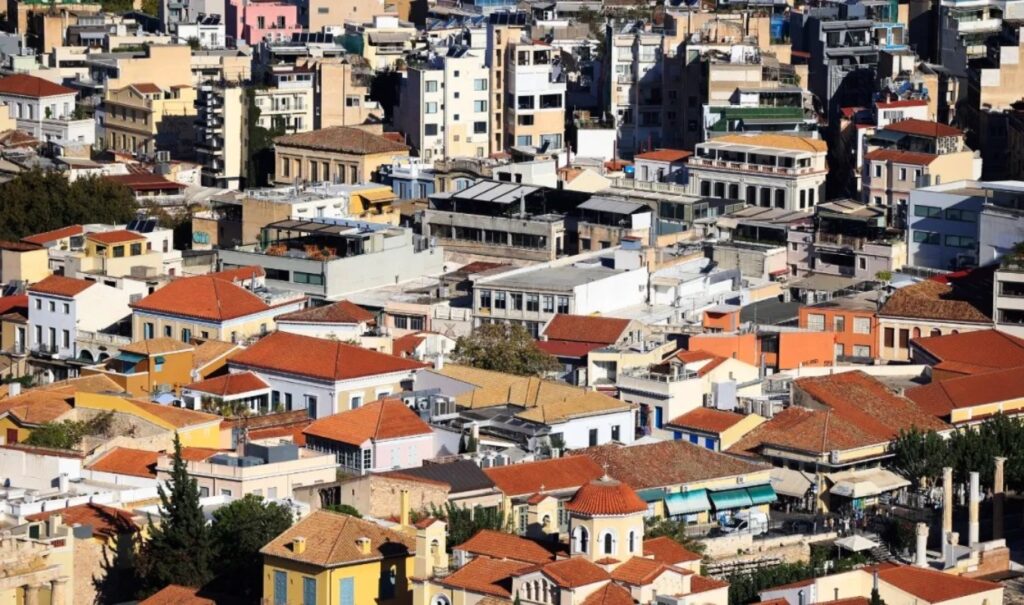
The housing crisis is emerging as one of the country’s most pressing social and economic challenges, with home prices and rents rising continuously while thousands of citizens struggle to find affordable accommodation. However, according to a new study by the Parliamentary Budget Office, the root cause lies not exclusively in limited construction activity or low production of new homes. The researchers conclude that a significant part of the problem stems from the fact that a large portion of the existing housing stock remains unused and off the market. While the country has millions of homes, a vast percentage sits vacant — neither rented nor sold — dramatically constraining available supply and driving prices upward.
Read also: Repairs in a rented property: When does the landlord pay and when does the tenant?
The housing paradox: millions of empty homes
The study published by the Parliamentary Budget Office draws on data from the 2021 Population and Housing Census and reveals a striking paradox in the Greek real estate market. According to the figures, the country’s total housing stock exceeds 2.2 million dwellings. Yet approximately 34.5% of all homes are recorded as vacant.
The study’s authors note that such a large number of empty homes might initially seem at odds with the ongoing rise in property prices and rents. The reality, however, is more complex. A home classified as vacant does not necessarily mean it is available on the market. Many properties remain unused due to inheritance disputes, unresolved legal issues, poor condition, limited demand in their location, or other factors.
The analysis shows that between 2011 and 2021, despite the total number of homes increasing by 3.5%, properties available for long-term rental fell by 10.4%, while those listed for sale dropped by 33.1%. At the same time, the number of inactive dwellings rose from approximately 1.71 million to 1.81 million.
Limited supply is pushing prices higher
The researchers emphasize that a partial recovery in construction activity alone is not enough to solve the problem. During the economic crisis, the construction sector nearly collapsed and, while there has been improvement in recent years, residential investment remains well below pre-crisis levels.
According to the study’s data, residential investment in 2025 stood at just 3.1% of GDP, compared to an EU average of 5%, and well below the levels of over 10% of GDP recorded in the mid-2000s. Meanwhile, foreign investment in the real estate market has increased since 2019 and now exceeds €800 million annually — though this does not translate into a corresponding increase in housing supply for Greek residents.
Using a specialized macroeconomic model, the study’s authors estimate that the underutilization of available housing stock may be responsible for driving real property prices up by as much as 19.1%. In a scenario where residential investment had not recovered at all, this effect could have reached as high as 26.7%.
Even more striking is the conclusion drawn from a second hypothetical scenario. If Greece were to gradually return to the lower vacancy rates recorded in 2001, and a significant share of dormant properties were brought back to the market within six years, real housing prices could fall by between 15.5% and 24.6%.
Five proposals to bring homes back to the market
Based on the study’s findings, the Parliamentary Budget Office proposes five core policy pillars to address the housing crisis.
The first concerns accelerating the resolution of inheritance disputes and land registry backlogs, so that more properties can be put to productive use. The second involves introducing tax incentives for long-term rentals, making them more attractive compared to short-term lets.
The third pillar focuses on supporting renovations through subsidies or green loans, on the condition that the properties are subsequently made available for long-term rental. The fourth calls for targeted interventions in the short-term rental market — particularly in high-demand areas — to redirect more properties back into the conventional housing market.
Finally, the fifth proposal addresses public investment and measures to boost construction activity, including faster building permit approvals, reduced construction costs, and the development of social and affordable housing in areas where need is greatest.
The study’s core conclusion is clear: Greece does not only need more new homes. It needs to make better use of the homes it already has. Activating even a portion of today’s dormant housing stock could be a decisive step toward addressing a housing crisis that is placing growing pressure on an ever-increasing number of households.