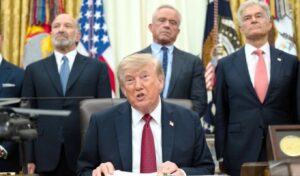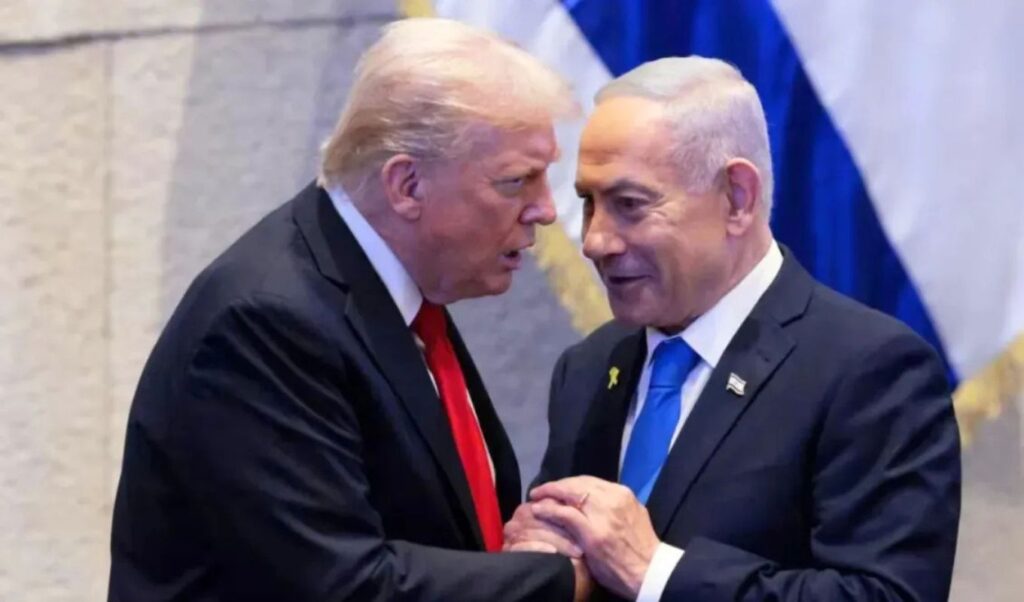
Donald Trump had an extensive phone conversation on Tuesday evening with Israeli Prime Minister Benjamin Netanyahu regarding the war with Iran. According to Israel’s Channel 12, both leaders appear to be “on the brink of a decision” regarding the next step against Tehran.
This development follows Trump’s unsuccessful attempts to force Tehran into retreat, despite harsh statements, aggressive rhetoric, and warnings of military action.
Specifically, on Monday, the American president announced that he was suspending plans for an immediate resumption of attacks. This decision was made following a request from Arab Gulf states, based on the rationale that critical consultations are underway that could lead to a mutually acceptable agreement for the US and the Middle East. However, despite this temporary postponement, Trump maintained his harsh rhetoric, stating that US military forces remain in full readiness for an “extensive attack on Iran, at any moment, if an acceptable agreement is not reached.”
Revolutionary Guards threaten war expansion “far beyond” the Middle East
The Revolutionary Guards, meanwhile, promised to extend the war “beyond the region” of the Middle East if the United States and Israel attack Iran again.
“If attacks against Iran are repeated, the regional war will this time extend far beyond the region and our devastating strikes will crush you,” the Guards warned in a statement published on their website, Sepah News.
Iran’s stance and US strategy
So far, there is no indication that Iran intends to satisfy US demands, which include abandoning its nuclear program, halting ballistic missile development, and stopping support for regional allies, such as in Gaza, Iraq, Lebanon, and Yemen.
According to the White House, the American president’s preference is peace and diplomacy, but he will only accept an agreement that “puts America first.” Spokesperson Olivia Wyles emphasized that “President Trump holds all the cards and keeps all options on the table to ensure that Iran will never acquire nuclear weapons.”
Iran continues to control the Strait of Hormuz, a fact that has led to high fuel prices and pressure on the Republican Party ahead of the midterm elections.