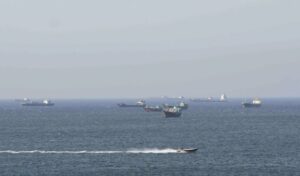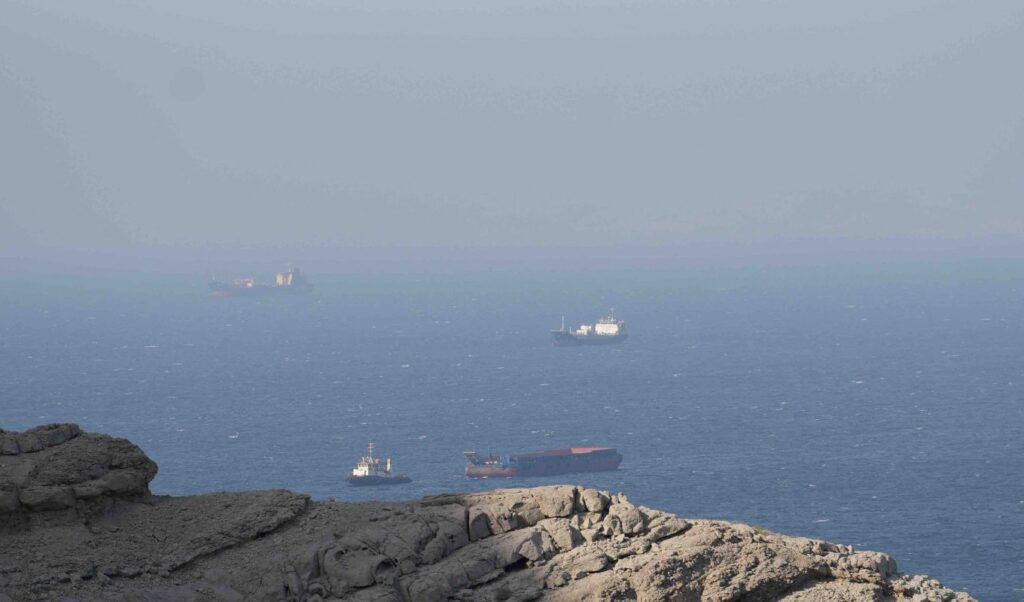
A total of 913 commercial vessels of all categories were present in the Gulf on April 29, two months after the outbreak of war between the US and Israel against Iran and the closure of the Strait of Hormuz, according to data from specialized maritime traffic monitoring company AXSMarine.
Despite the blockade, some vessels managed to leave. For example, on the morning of February 28, when the first bombardments began, their number stood at 1,114, recording a decrease of approximately 18%. According to the same data, the day before yesterday morning, more than 270 oil tankers were in the area, as well as approximately 20 liquefied natural gas (LNG) and liquefied petroleum gas (LPG) carriers.
These numbers do not distinguish between ships that were actually prevented from leaving the Gulf due to Iran’s de facto blockade of the Strait of Hormuz and due to the US blockade of Iranian ports, while various other vessels, mainly used by the oil industry, have no intention of leaving.
According to data from Kpler, the number of container ships carrying various goods (pharmaceuticals, food, furniture, industrial items, consumer goods) remaining in the Gulf stands at 118, of which 30 are Iranian, down from 155 on the first day of the war.
Of this total, 15 sail under the colors of the world’s largest shipping company, the Italian-Swedish MSC, which managed to get four of its ships out of the strait, while two were seized by Iran.
Denmark’s Maersk, the second-largest shipping company internationally, owns six container ships that remain in the Gulf. Their number has remained unchanged since the first day of the war.
The third-largest, France’s CMA CGM, owns 13. It managed to get two of its ships out.
Chinese COSCO owns only two container ships among those remaining in the Gulf, having managed to secure the exit of an equal number.
Six container ships belong to Hapag Lloyd. On the first day of the war, there were seven.
Due to the risk of attacks, the percentage of ships moving with their GPS signal disabled or transmitting misleading data (using the “spoofing” method) reached 31% on April 29, up from 16% recorded before the war broke out.