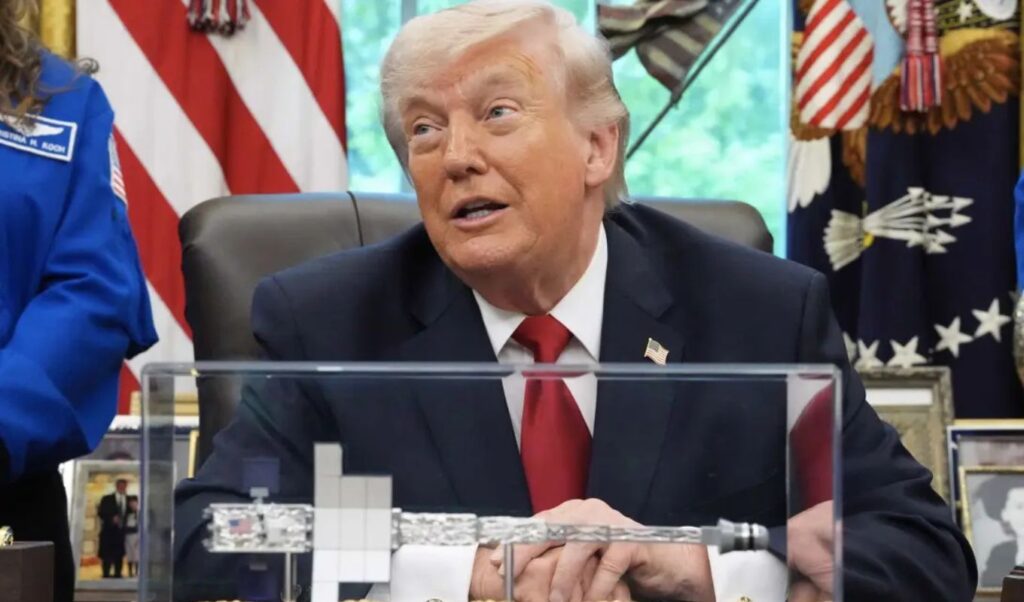
Today, May 1st, the 60-day deadline expires for American President Donald Trump to seek Congressional approval to declare war on Iran, as the controversial period is completed from the day hostilities began on February 28th. According to the letter of the law, only with approval from the legislative branch can he continue operations, otherwise he is called to stop military operations. Of course, given the ceasefire implementation, it is considered highly doubtful whether the Trump administration will fulfill this institutional obligation.
Under the US Constitution, only Congress has the power to “declare” war. However, a law adopted in 1973 allows the American president to begin limited-duration military operations to address an emergency arising after an attack against the US.
The same law requires the president to terminate military operations after 60 days, seek Congressional approval for their continuation, or request a 30-day extension citing “unavoidable military necessity” for the safety of armed forces.
The war with Iran began on February 28th and Trump informed Congress two days later, when the 60-day countdown began.
“The 60-day timeline has been suspended”
However, his administration, as mentioned above, does not appear willing to do any of these, as it claims that since the ceasefire took effect on April 8th, “the 60-day timeline has been suspended,” as Defense Secretary Pete Hegseth characteristically stated yesterday Thursday during a Senate hearing.
“The hostilities that began on Saturday, February 28th, are over,” a senior government official emphasized to AFP. “There have been no exchanges of fire between US armed forces and Iran since Tuesday, April 7th.”
Democrats reject this claim, with their Senate leader Chuck Schumer stating: “Pete Hegseth cannot simply stop the countdown when American troops remain exposed to danger.”
Military options the US is considering – scenarios for ground intervention, Dark Eagle deployment under review
Two months after the start of American-Israeli strikes against Iran and Tehran’s retaliation against targets in Israel and various Gulf countries, the Strait of Hormuz, vital for shipping, remains closed causing a sharp rise in energy prices globally.
Efforts to resolve the conflict have reached a deadlock and Trump was scheduled to be briefed yesterday on plans for a series of new military strikes against Iran, aimed at forcing Tehran back to the negotiating table, an American official told Reuters.
According to information in international media, and against the backdrop of yesterday’s Axios revelation that led to explosive oil price increases, at the White House the American president was briefed by the head of US Central Command (CENTCOM), Admiral Brad Cooper, on updated military action plans.
Among the options being considered are:
- Targeted strikes on Iran’s energy and government infrastructure
- Strengthening naval presence in the Persian Gulf
- Operations to control parts of the Strait of Hormuz
- Possible use of ground forces to restore shipping
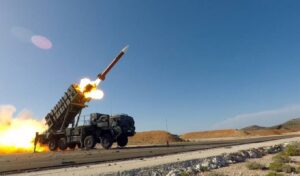
Particular attention is drawn to information that CENTCOM has requested deployment of the Dark Eagle hypersonic missile to the Middle East. If approved, it would be the first operational use of this specific technology by the US.
At the same time, in an indication that the US is also considering the scenario of ceasing hostilities, a State Department cable to be delivered verbally to partner countries by May 1st calls on them to join a new coalition, called the Maritime Freedom Construct, to restore free navigation in the Strait of Hormuz.
Trump repeated yesterday that Iran’s economy is “a disaster,” but analysts estimate that if he expects Tehran to back down, this may not happen soon.
Meanwhile, the American president reiterated that Iran will not be allowed to acquire nuclear weapons and that gasoline prices – a key concern for the Republican Party ahead of November’s midterm elections – will “drop like a stone” once the war ends.
Israel on high alert
Israel is in a state of heightened alert, with political and military leadership holding successive meetings to assess developments. Government officials express concern that US-Iran negotiations may collapse even in early next week, as Israeli Channel 12 reported, citing ministers briefed in recent days on the issue who estimate the US may need to “give a push” to the pressure campaign they are waging in the Strait of Hormuz through military attacks on Iranian natural gas and energy facilities, as well as government infrastructure.
As part of this pressure campaign intensification, Israel and the US are also reportedly working to present a credible naval threat against Iran.
Israeli Defense Minister Israel Katz, for his part, warned that despite supporting Washington’s diplomatic efforts, Israel may need to “act again soon” to neutralize threats it considers existential.
As he emphasized, Iran has suffered significant strikes in the past year, however the threat posed by its nuclear and missile programs has not been eliminated.
“Long-term and painful strikes” Iran is ready to retaliate with
Iranian Foreign Ministry spokesman Esmail Baghaei stated yesterday evening that it is not logical to expect quick results from talks with the US, as reported by IRNA news agency.
“The expectation of achieving results in a short timeframe, regardless of who the mediator is, in my opinion, is not very realistic,” he emphasized.
A senior Revolutionary Guards official warned that any new US attack against Iran, even limited, would lead to “long-term and painful strikes” on US regional positions.
Aerospace Force commander Majid Mousavi commented: “We have seen what happened to your bases in the region, we will see the same happening to your warships.”
For his part, Iran’s supreme leader Ayatollah Mojtaba Khamenei in his written message to Iranians emphasized that Tehran, under the new Strait management, will stop “the waterway’s abuse by enemies,” implying that Iran intends to maintain sovereignty over Hormuz.
“Foreigners coming from thousands of kilometers away (…) have no place there, except at the bottom of the waters,” he added.
UN Secretary-General Antonio Guterres warned that if problems arising from the Strait blockade continue until mid-year, global growth will decline, inflation will increase and tens of millions more people will plunge into poverty and extreme hunger.
“The longer this vital artery remains closed, the harder it will be to reverse the damage,” he emphasized.
Meanwhile, the United Arab Emirates announced they have banned their citizens from traveling to Iran, Lebanon and Iraq and urged those in these countries to leave immediately and return home, citing regional developments.