Ultimatums, stern warnings and reformulations describe the explosive scenario between US and Iran officials, with both sides seemingly heading toward a deadlock while mediators Pakistan, Turkey and Egypt carry messages aimed at easing differences and ending the conflicts. In his latest statements, US President Donald Trump, addressing Iran, said “get serious quickly, before it’s too late,” while also warning that there would be no going back. Meanwhile, tensions in the Middle East are reaching extremes, with Gulf countries becoming targets of missile attacks and demanding mobilization from Iraq against Iranian aggression.
Iran, for its part, fears US ground intervention, while Trump threatens “hell.” At the same time, Tehran sets five conditions for ending the war and rejects the 15 US conditions as excessive. It should be noted that the Trump administration had conveyed to Iran – through Pakistan – a 15-point plan for ending the conflicts in the Middle East. Of the US demands, the three main ones are as follows for Iran: to dismantle its existing nuclear capabilities, to commit that it will never pursue the acquisition of nuclear weapons, and that there will be no uranium enrichment on Iranian soil.
Regarding the conditions set by Tehran, these include among others the immediate cessation of attacks and targeted assassinations of Iranian officials, the creation of a mechanism that would guarantee that the US and Israel will not restart military operations, as well as the payment of compensation for the damages caused.
Middle East war: Trump’s side considers diplomatic path
As became known earlier, however, the US ordered the deployment of approximately 2,500 American soldiers from the 82nd Airborne Division to the Middle East, while military operations continue and possibilities for further escalation are being examined.
It is worth noting that in recent days the American side appears to be considering a diplomatic path that could lead to an agreement without immediate regime change. However, Israeli Prime Minister Benjamin Netanyahu tried last week to push the US president to call on Iranians to take to the streets to overthrow the regime, considering that “conditions are not ripe” for such a step.
According to the Axios website, citing American officials and an Israeli source, Netanyahu pushed for destabilizing the Iranian regime to become a central war objective, through creating conditions that would lead to popular demonstrations. This was discussed during his consultations with Trump last week.
At the same time, according to the report, the American government does not consider regime change an official objective, but treats it as a possible “side benefit,” if it happens.
Iran’s demand regarding Hezbollah
Iran, for its part, puts another issue on the table, demanding the inclusion of Lebanon in an agreement with the United States and Israel, so that Israeli strikes against Hezbollah stop.
In this scenario of uncertainty and tension, however, the mediators – Pakistan, Egypt and Turkey – continue their efforts, carrying messages between US and Iranian officials to end the conflicts. Islamabad conveyed the American 15-point proposal to Tehran, however the latter side had rejected the terms as excessive, something that automatically raises the diplomatic temperature to new heights.
Gulf countries on high alert
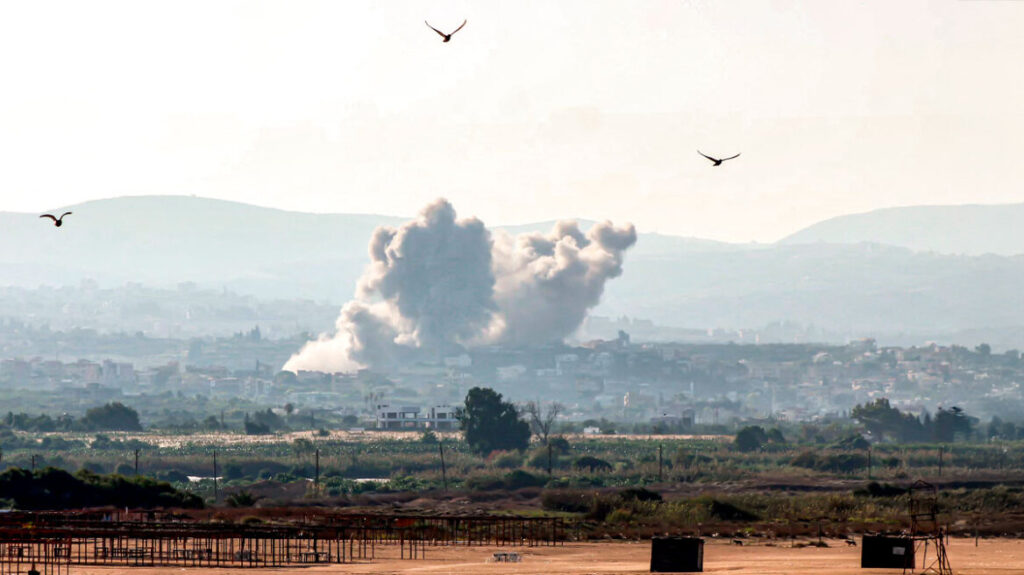
The Gulf countries are on high alert as two people were killed by falling debris from an intercepted missile in Abu Dhabi, while earlier the United Arab Emirates, Saudi Arabia and Kuwait declared that their air defense systems intercepted drones. Bahrain, on the other hand, announced that a fire was caused due to “Iranian aggression.”
The Israeli military reported earlier that it detected missiles launched from Iran toward its territory, the sixth time in recent hours it has reported such attacks.
In this Middle East war, the players are multiplying with British Defense Minister John Healey revealing to the BBC that before the conflict, Russia was sharing intelligence and providing training to Iran. He added that “Putin’s hidden hand” is in Iran.