The European Union is moving toward a new Arctic strategy as pressure from the Kremlin intensifies and statements by Donald Trump continue to dominate the headlines. Against this backdrop, 12 EU member states — including Greece — have co-signed a joint declaration calling on Brussels to strengthen its presence and role in the region.
Read also: Denmark sends recruits to Greenland amid Arctic tensions — talks with the US continue
The initiative was formalized following the conclusion of the European Conference in Rovaniemi, Finland. “We call on the European Union to take on a more strategic and more active role in the European Arctic,” the countries stated in their joint declaration. They also emphasized that “security in the Arctic must be ensured collectively.”
In their joint communiqué, countries including France, Germany, the Netherlands, Denmark, Sweden, Finland, and Greece stressed that protecting the Arctic Circle is a collective matter, urging the EU to take a more active role at the northern edge of the continent.
The conference brought together key European leaders, including German Chancellor Friedrich Merz, Danish Prime Minister Mette Frederiksen, and French Foreign Minister Jean-Noël Barrot.
Kaja Kallas: Europe’s new security strategy coming in October
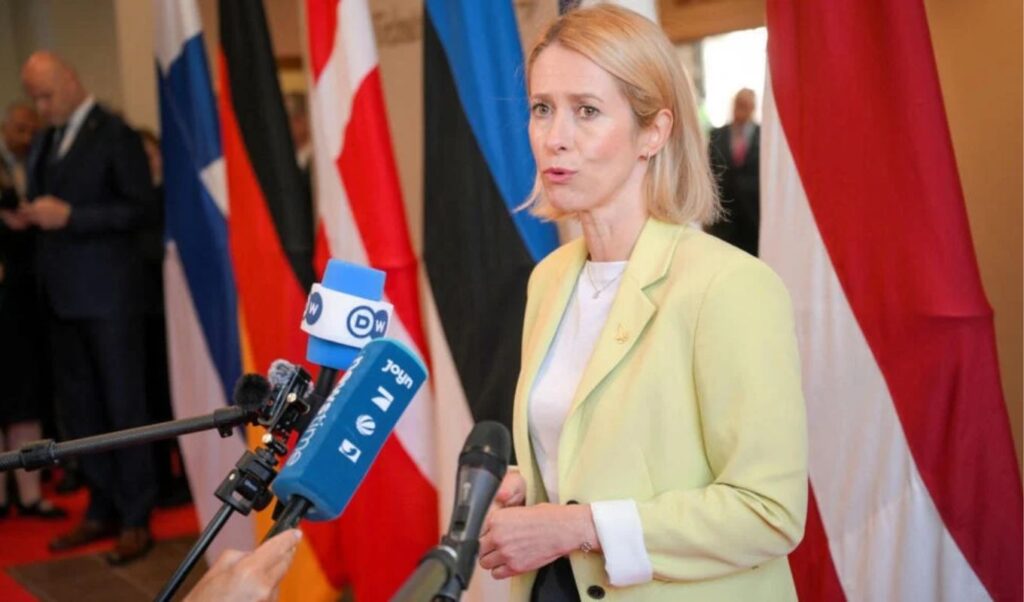
EU foreign policy chief Kaja Kallas stressed that the Arctic is directly linked to Europe’s broader security architecture. She announced that the European Union is preparing to unveil a renewed Arctic policy framework in October, with defense as a top priority — as Moscow’s military activity and Beijing’s interest in the region continue to grow.
The Arctic is no longer simply a critical link between Europe and North America for trade and communications — it is rapidly becoming an arena of intense geopolitical competition.
According to NATO assessments, Moscow is upgrading its military presence in the region by establishing a dedicated Arctic Command, reopening bases, and conducting tests of advanced weapons systems.
Meanwhile, Beijing is seeking to secure access to critical raw materials, energy resources, and new maritime shipping routes.