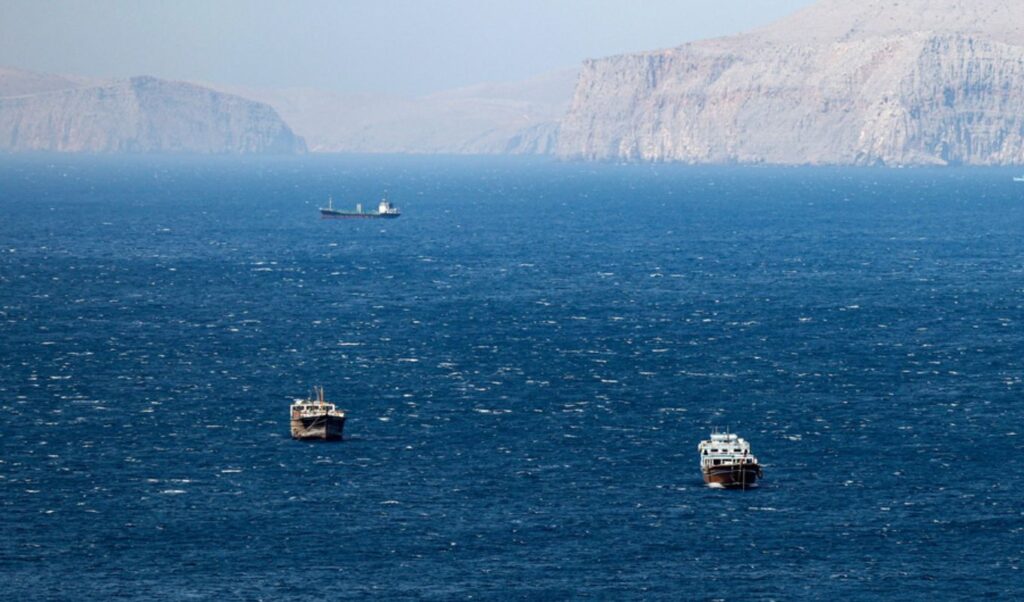
After all European Union member states refused to respond to Trump’s call to extend the “Aspides” naval mission from the Red Sea to the Strait of Hormuz, European officials are turning to diplomatic channels to restore communication with Iran’s government. Some steps have already been taken by the governments of France and Italy.
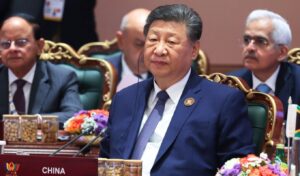
In this context, India’s Foreign Minister Subrahmanyam Jaishankar was invited to and participated in talks in Brussels on Monday, as his country has restored dialogue with Iran and, as all indications show, secured safe passage for Indian ships through the Persian Gulf.
As the head of Indian diplomacy stated in his Sunday interview with the Financial Times, “the negotiations between New Delhi and Tehran, which allowed two Indian-flagged LNG tankers to pass through the Strait on Saturday, were an example of what diplomacy can offer.”
In the same interview, he specifically stated that “at this moment I am talking to them and my discussions have yielded some results. This continues. If it yields results for me, naturally I would continue to pursue it.” The Indian minister declared his determination to follow the diplomatic path and, as he said, “certainly from India’s perspective it is better to deliberate, coordinate and find a solution rather than not find one.”
Evangelos Venetis to parapolitika.gr: India has no negotiating power, Iran is winning the war on points, Americans unlikely to offer concessions
However, international relations expert Evangelos Venetis expresses his doubts to parapolitika.gr about the results a diplomatic initiative by India can achieve at this moment, because, as he argues, “if we consider that three weeks ago and shortly before the invasion, Modi visited Netanyahu, you understand that India has no negotiating power, since it supports the Israelis. Iran currently has its own deterrent power, fighting the Americans on equal terms. Despite everything, it has projected power and is winning the war on points at this moment with the evidence so far and with conventional weapons. So Iran has no reason to consent, unless it receives concessions. Concessions from the Americans means diplomatic defeat during the ongoing war. It’s very doubtful and unlikely that the Americans would accept giving concessions at this moment. So the balanced war continues until developments on the ground are reflected, which will determine diplomatic developments and not the reverse. At this moment there is no room for diplomacy.”
Cyprus Foreign Minister Konstantinos Kombos met in Brussels with his Indian counterpart and discussed with him the developments taking shape in the Middle East. The two officials agreed that “diplomacy and dialogue are the only viable path for de-escalation and stability” in the region.
EU High Representative Kaja Kallas, referring to the presence of India’s Foreign Minister at the EU Foreign Affairs Council in Brussels, argued that they examined the possibility of initiatives for the current situation, emphasizing: “All Europeans support a diplomatic solution.” Results from diplomatic initiatives are expected to emerge in the coming period, while most predict that the margins are very narrow.