New Democracy records significant gains amid the war in the Middle East, with the opinion poll by Opinion Poll for Action 24 reflecting positively on the government’s handling of the crisis. Meanwhile, the survey highlights citizens’ main concerns, which continue to focus on inflation and the economy, but are now also influenced by international developments and security issues.
Vote estimate
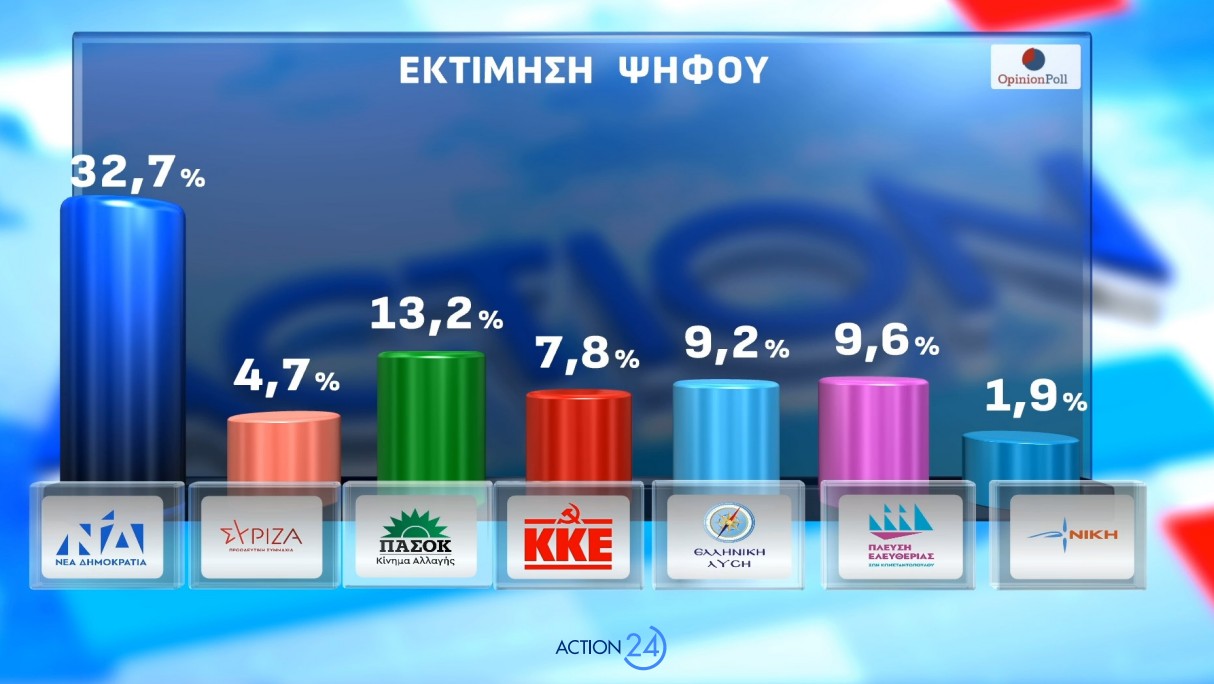
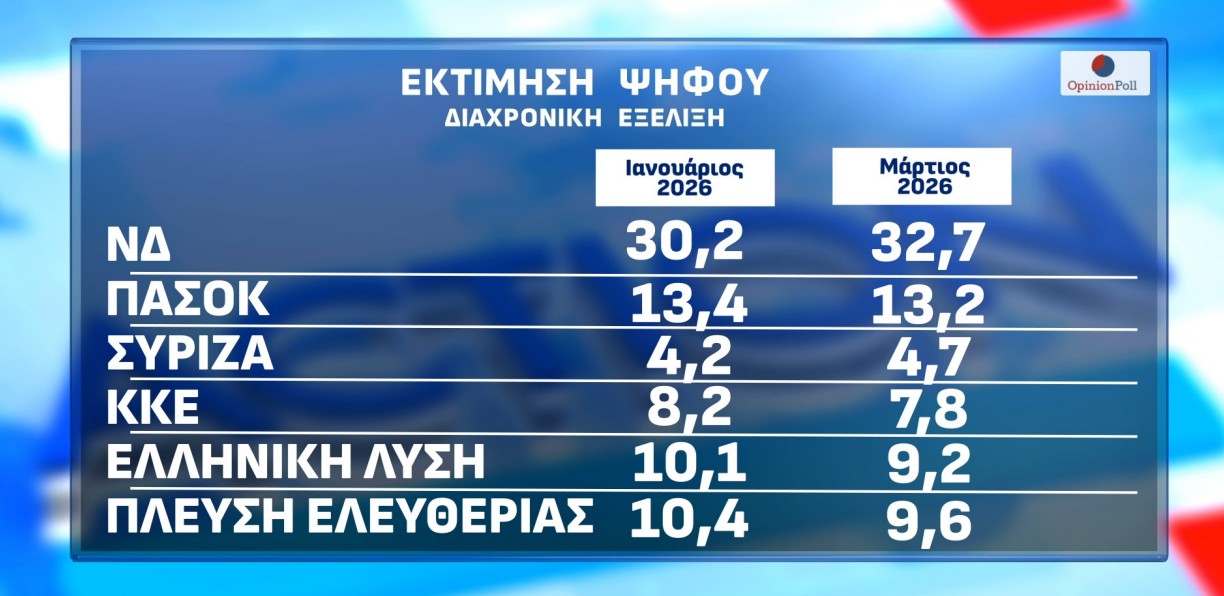
New Democracy makes a leap of 2.5% compared to its January vote estimate performance amid the war climate and due to the resonance of its handling of the situation, rising from 30.2% to 32.7%, while simultaneously improving all its qualitative indicators and those of K. Mitsotakis, showing it has reserves. It therefore escapes a performance “around 30%” and opens the gap from the steadily second-place PASOK to 19.5 points.
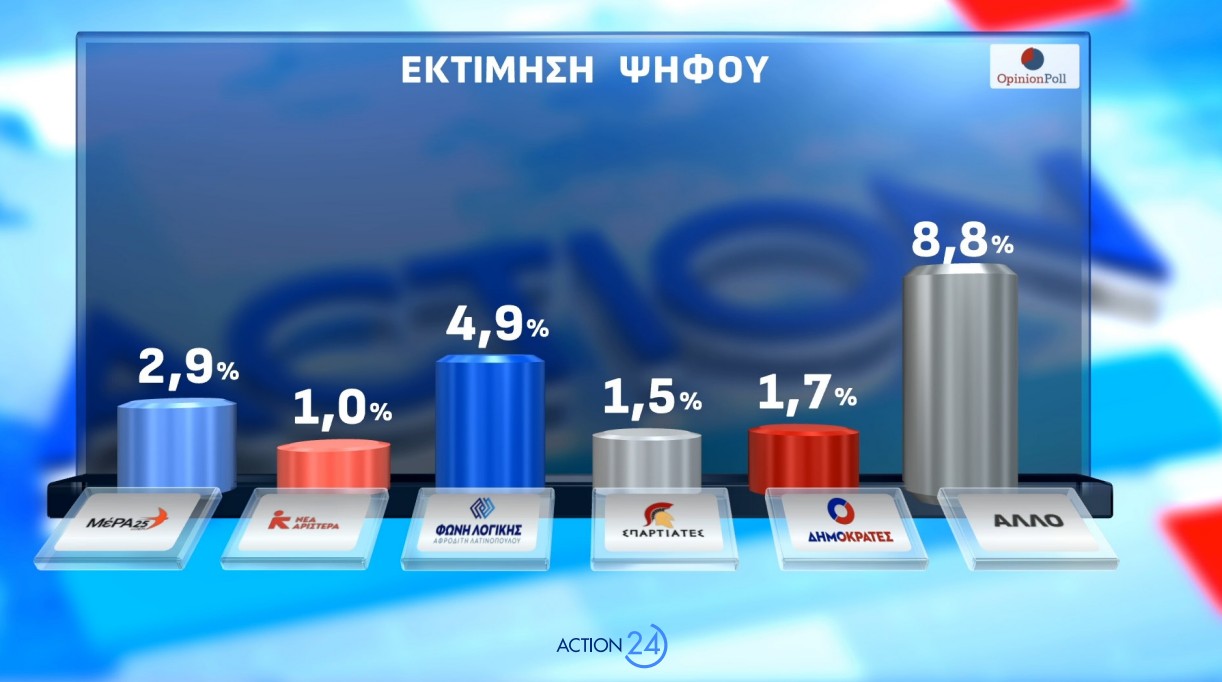
PASOK stands at 13.2% from 13.4% in January. Following are COURSE OF FREEDOM with 9.6% (10.4%), GREEK SOLUTION with 9.2% (10.1%), KKE with 7.8% (8.2%), VOICE OF REASON with 4.9% (4.2%), SYRIZA with 4.7% (4.2%), MERA 25 with 2.9% (2.4%), VICTORY with 1.9% (2.1%), DEMOCRATS – PROGRESSIVE CENTER with 1.7% (1.5%), SPARTANS with 1.5% (1.1%) and NEW LEFT with 1% (1.2%), while OTHER PARTY is at 8.8% (11.1%).
Voting intention
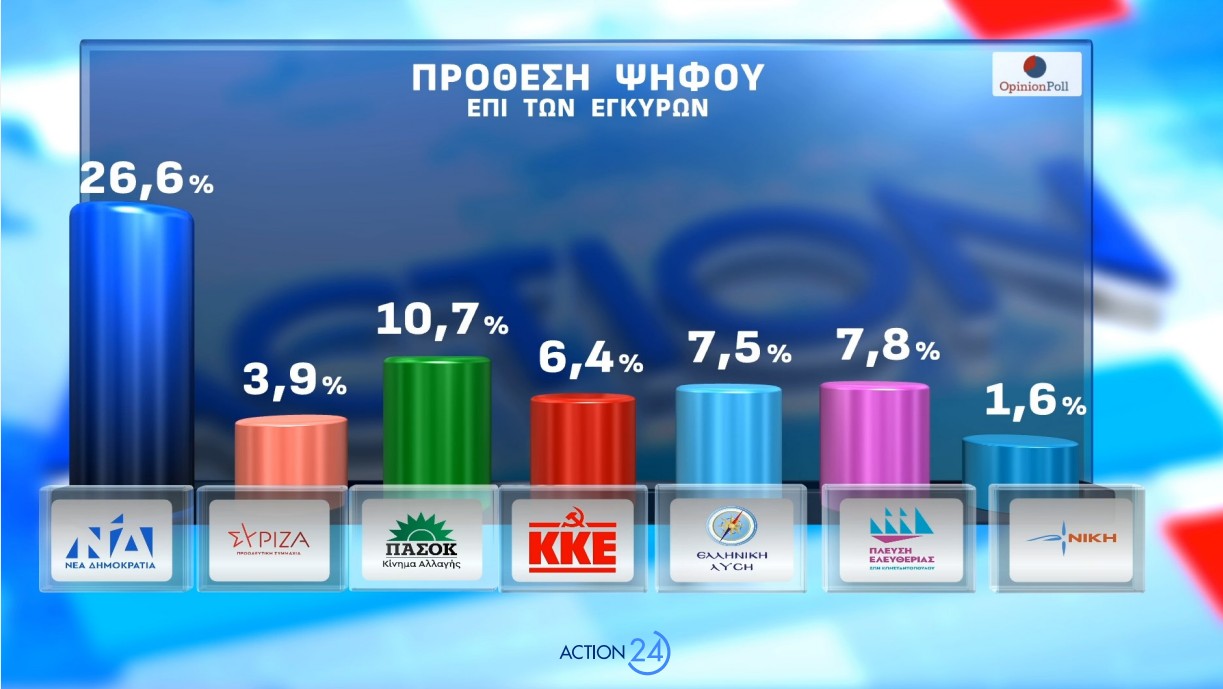
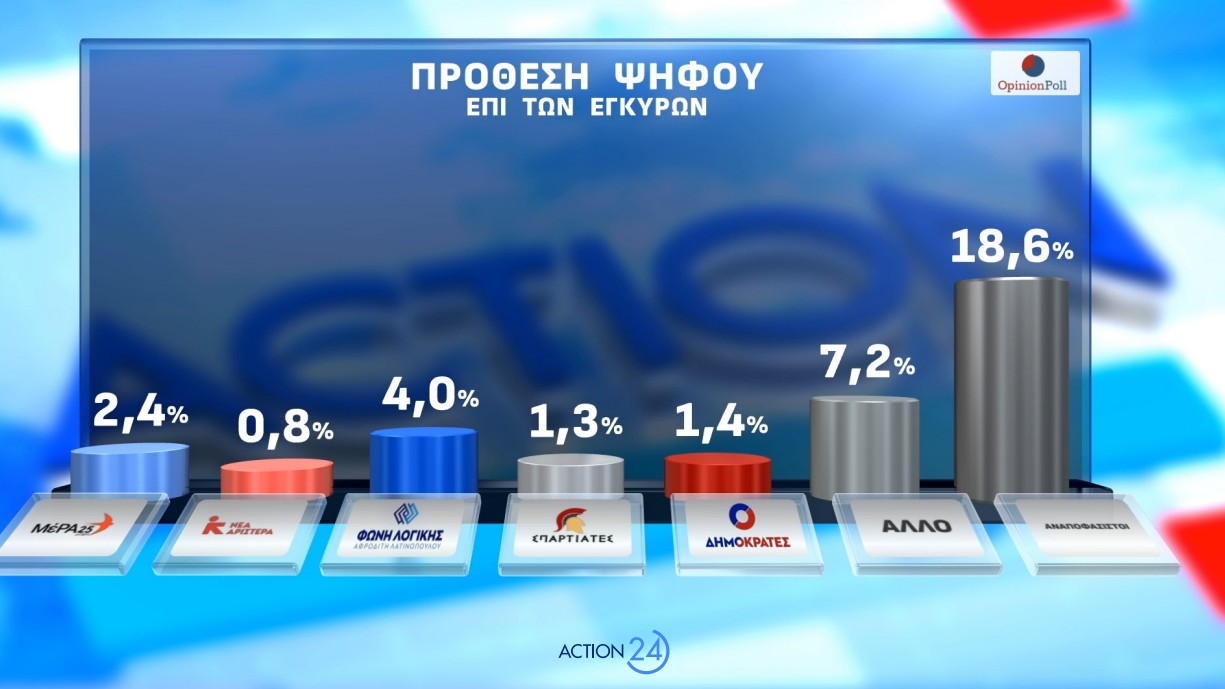
In voting intention among valid votes, the respective performances are: ND 26.6%, PASOK 10.7%, COURSE OF FREEDOM 7.8%, GREEK SOLUTION 7.5%, KKE 6.4%, VOICE OF REASON 4%, SYRIZA 3.9%, MERA 25 2.4%, VICTORY 1.6%, DEMOCRATS – PROGRESSIVE CENTER 1.4%, SPARTANS 1.3%, NEW LEFT 0.8%, with OTHER PARTY at 7.2% and Undecided at 18.6%. It’s noted that from simple voting intention with all responses, we find blank/invalid/abstention at 4.1% and undecided at 17.8%. The total “grey zone” is therefore 21.9% from 24.4% in January.
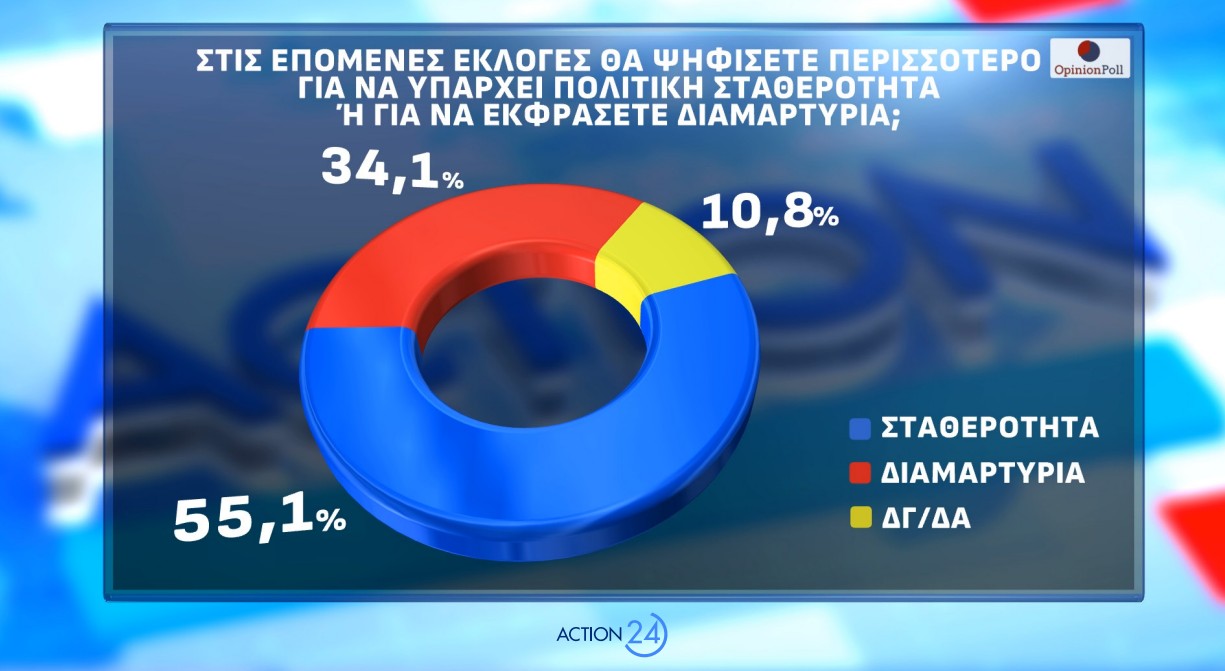
When asked whether they would vote in the next elections more for political stability or to express protest against the Government, for the first time stability appears as a majority trend with 55.1%, while protest decreases to 34.1%
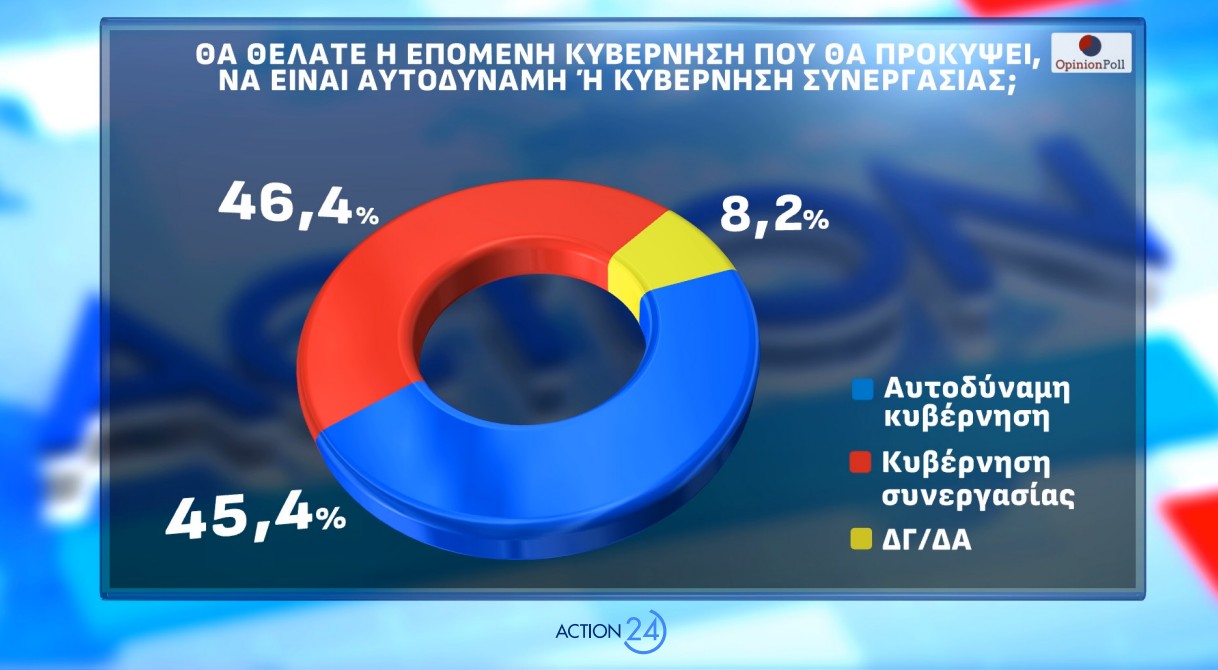
This in turn strengthens the view in favor of electing a single-party government, reaching 45.4%, with the view in favor of coalition governments decreasing to 46.4%, whereas until recently it was a minority position.
Concern about war, the emergence of a strong trend toward stability, and agreement with the government’s handling of the situation strengthens the “rally around the flag” effect, improving all qualitative measures concerning the Government, which is reflected in the Prime Minister’s persona and ND’s image of dominance.
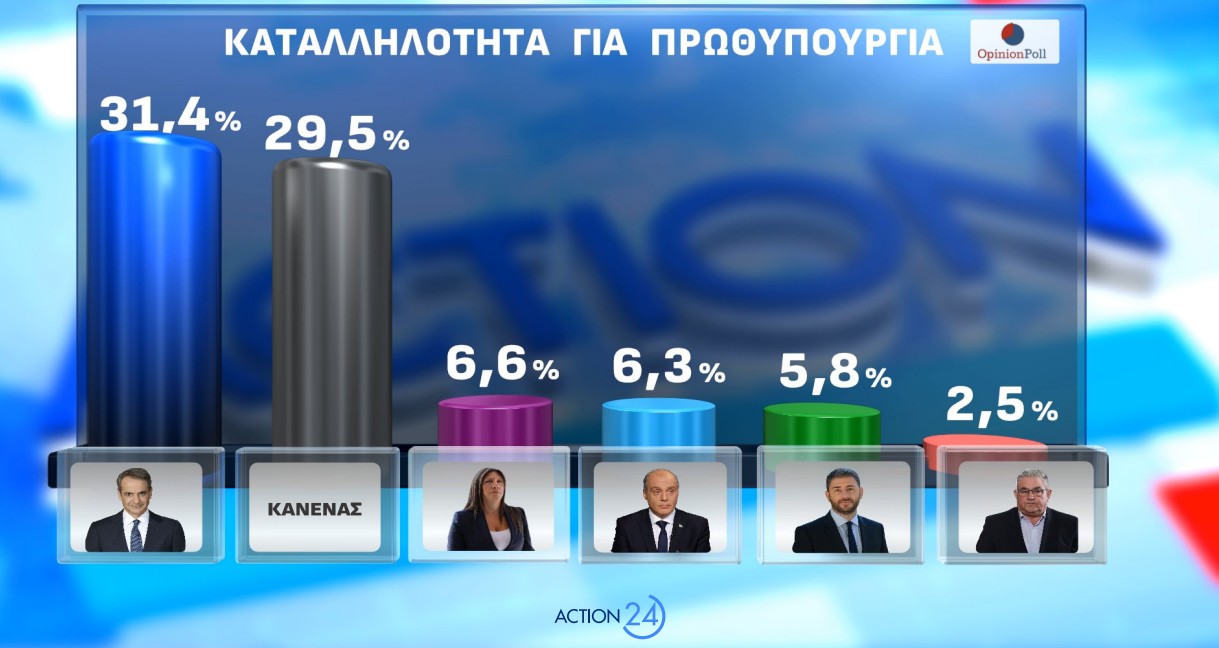
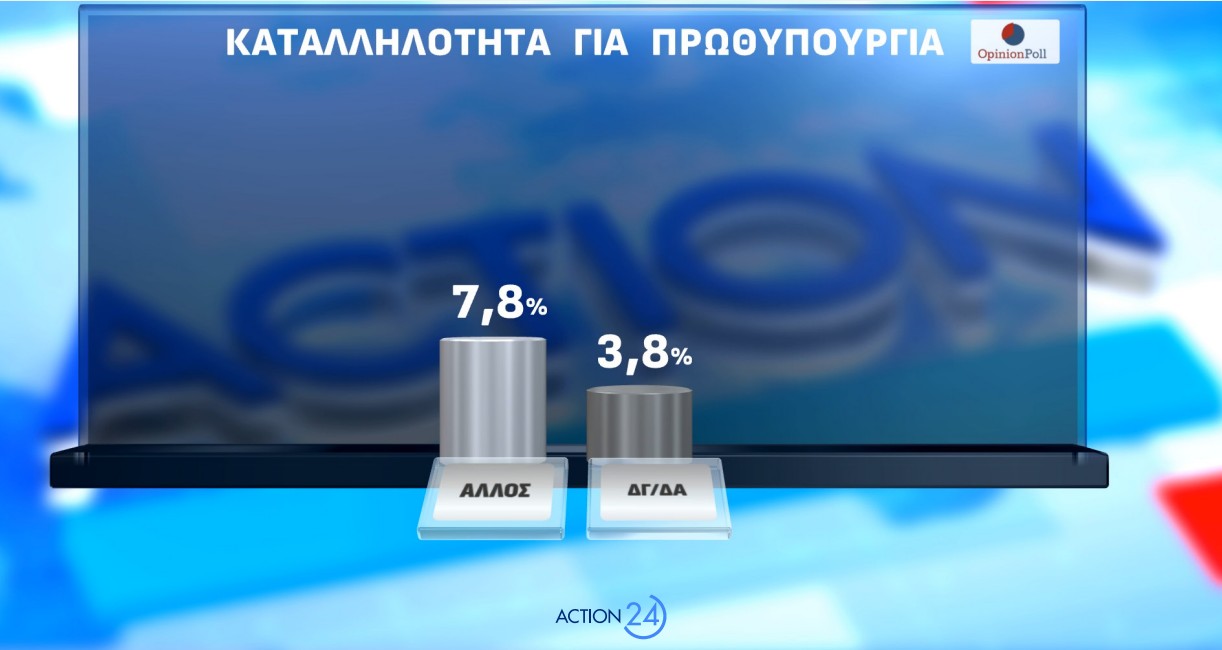
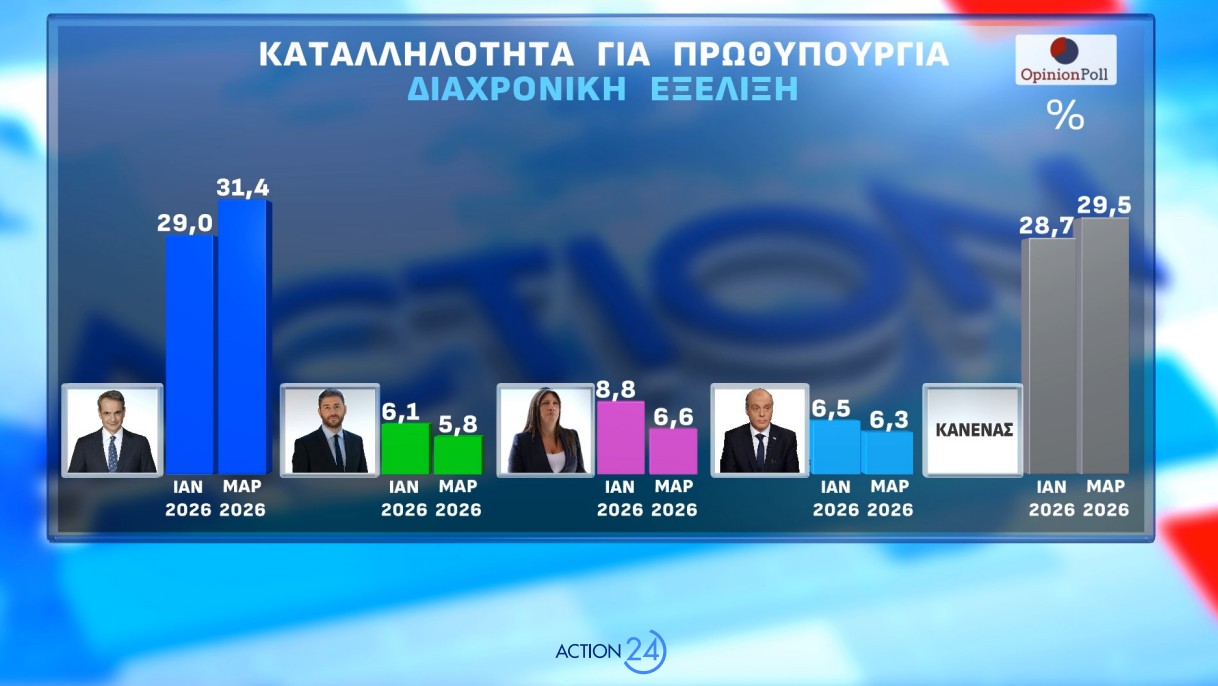
K. Mitsotakis gains 2.4% in suitability for Prime Minister and is chosen by 31.4% from 29% in January. Following with small declines are Zoe Konstantopoulou with 6.6% (8.8%), K. Velopoulos with 6.3% (6.5%), N. Androulakis with 5.8% (6.1%) etc. “None” is chosen by 29.5% and “Other” by 7.8%.
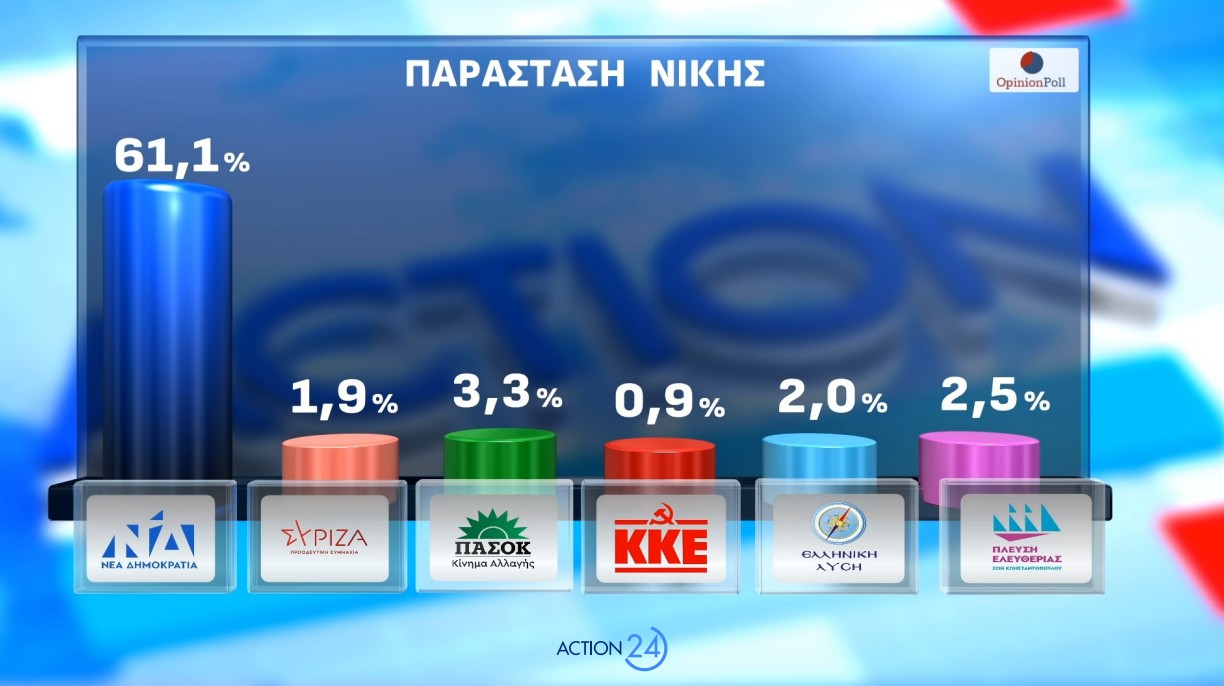
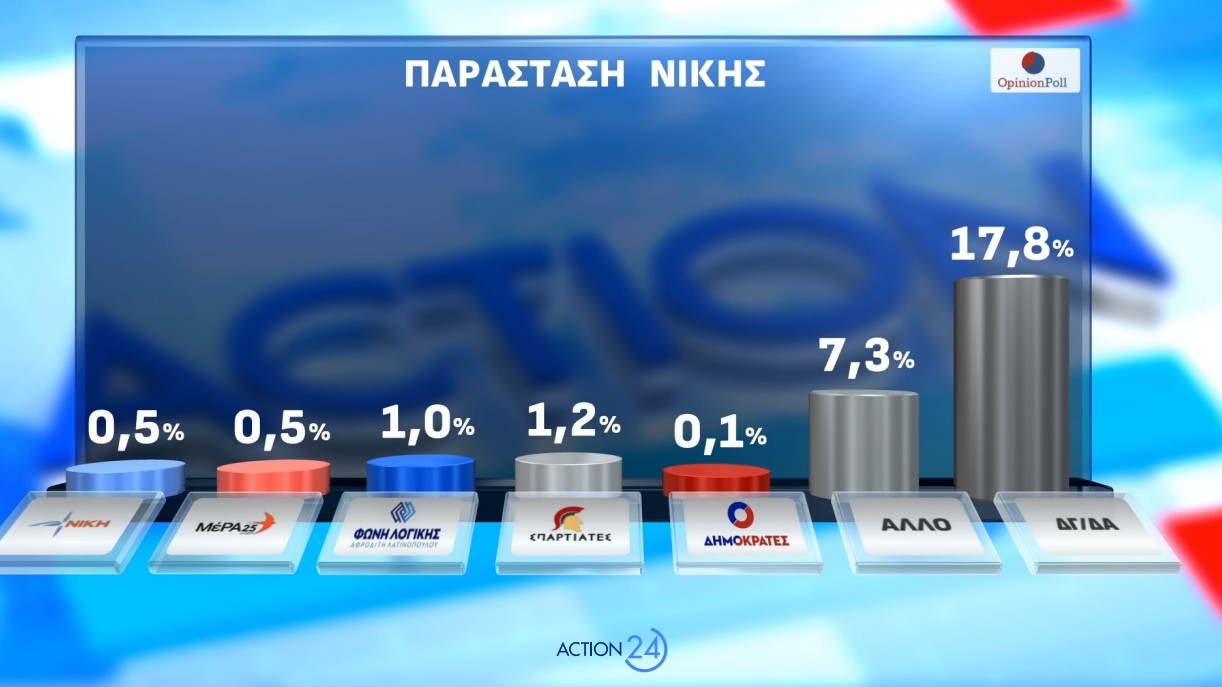
ND is significantly strengthened in the perception of victory, with 61.1% believing, regardless of party preferences, that it will win the next Parliamentary Elections. In January this percentage was 53.9%. Simultaneously, the view of securing a third term for K. Mitsotakis is strengthened. This is believed very and quite likely by 56.6% (26.9% very, 29.7% quite). Little and not at all likely is considered by 39.3% (20.9% little, 18.4% not at all).
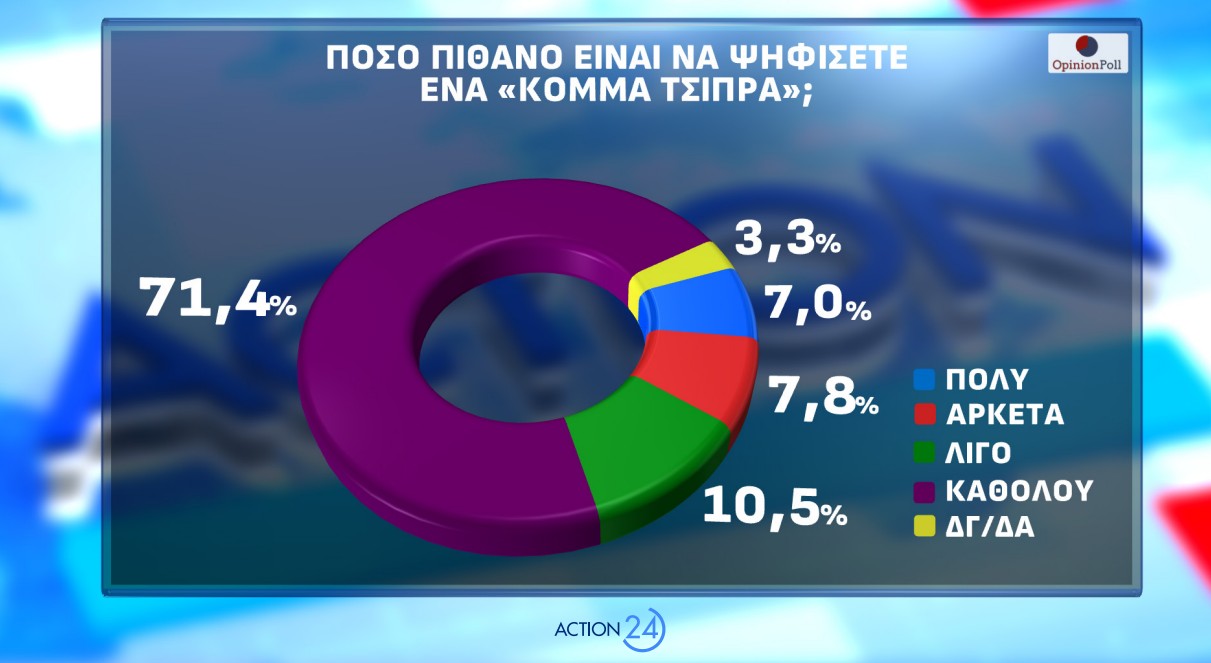
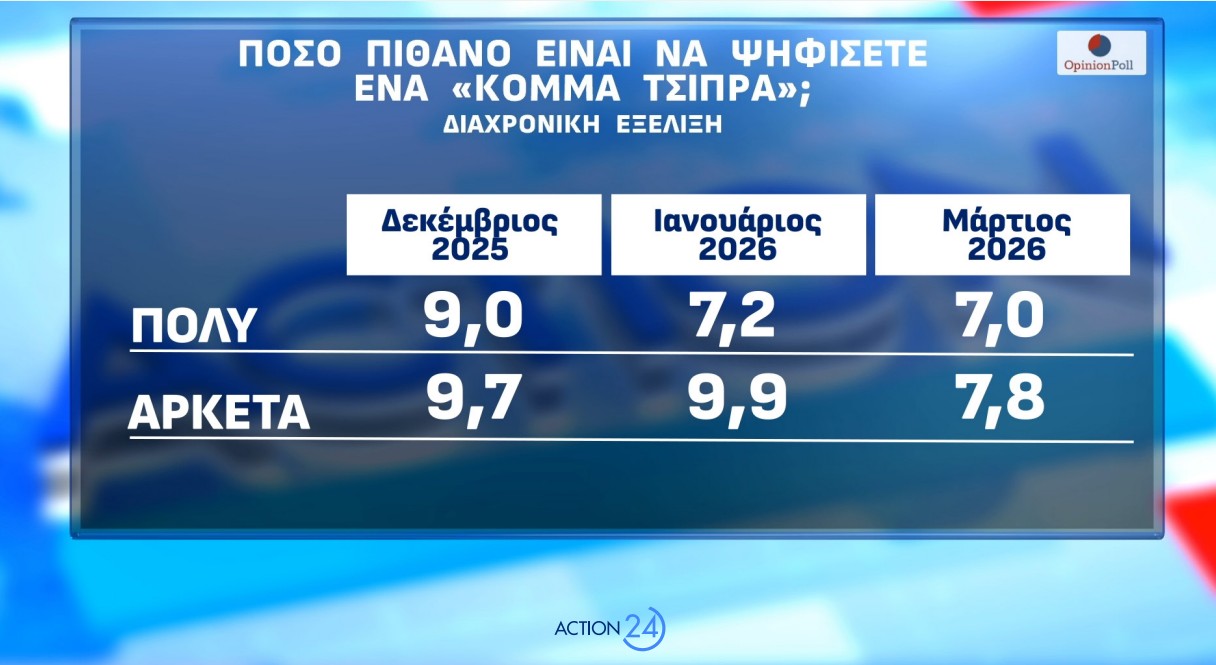
The party being formed by Tsipras shows a 2.3% decrease in potential vote (very and quite likely to vote for it). It appears at 14.8% (7% very and 7.8% quite), while in January it was at 17.1% (7.2% very and 9.9% quite) and 18.7% in December (9% and 9.7% respectively).
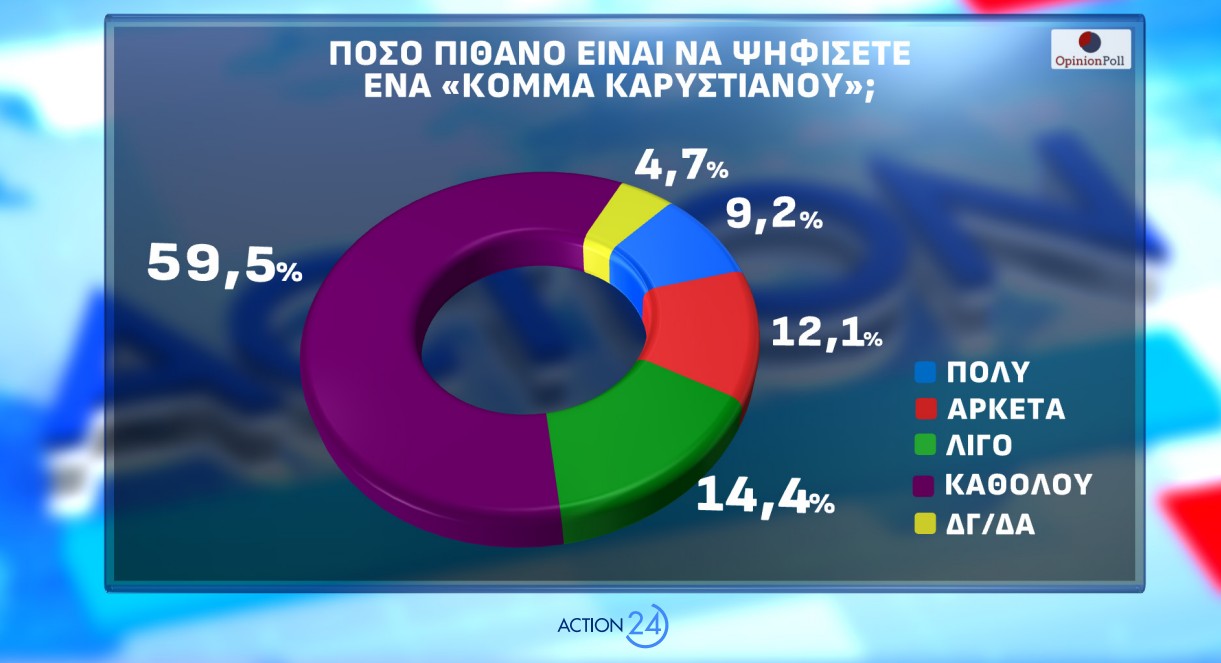
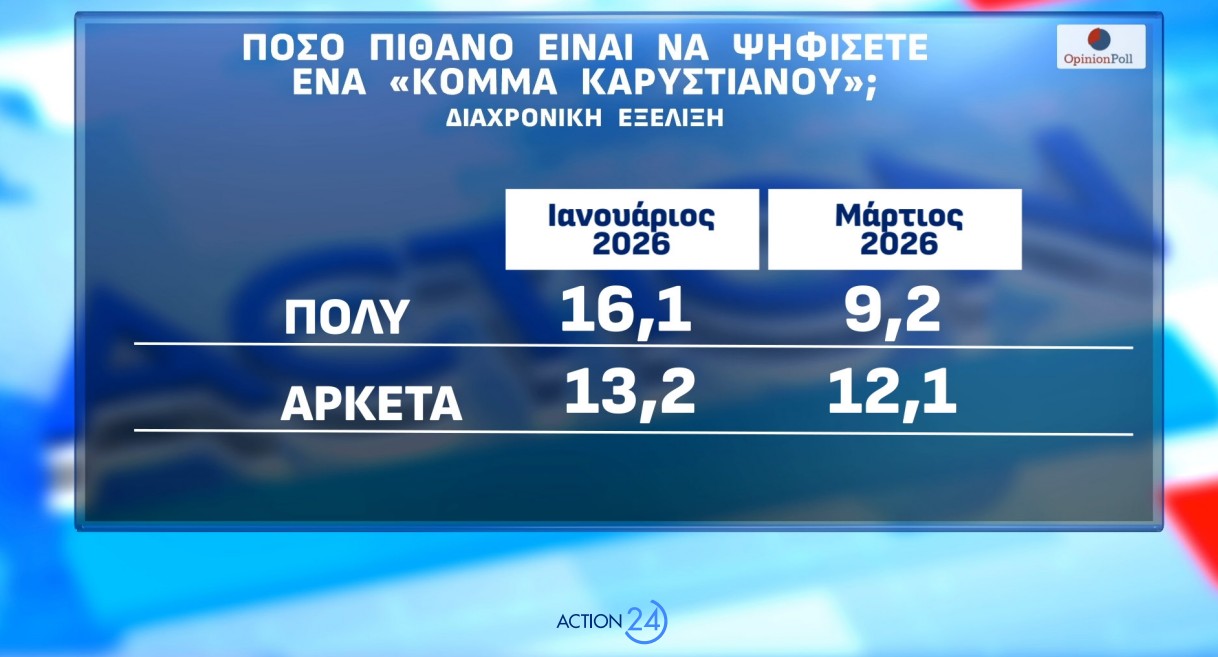
The party being formed by Karystianou shows a significant drop of about 8% in potential vote. It appears at 21.3% (9.2% very and 12.1% quite), while in January it was at 29.3% (16.1% very and 13.2% quite). It’s significant that the major drop occurs among those who declared it very likely to vote for it. There’s a 6.9% drop from the 8% total drop in the sum of potential vote
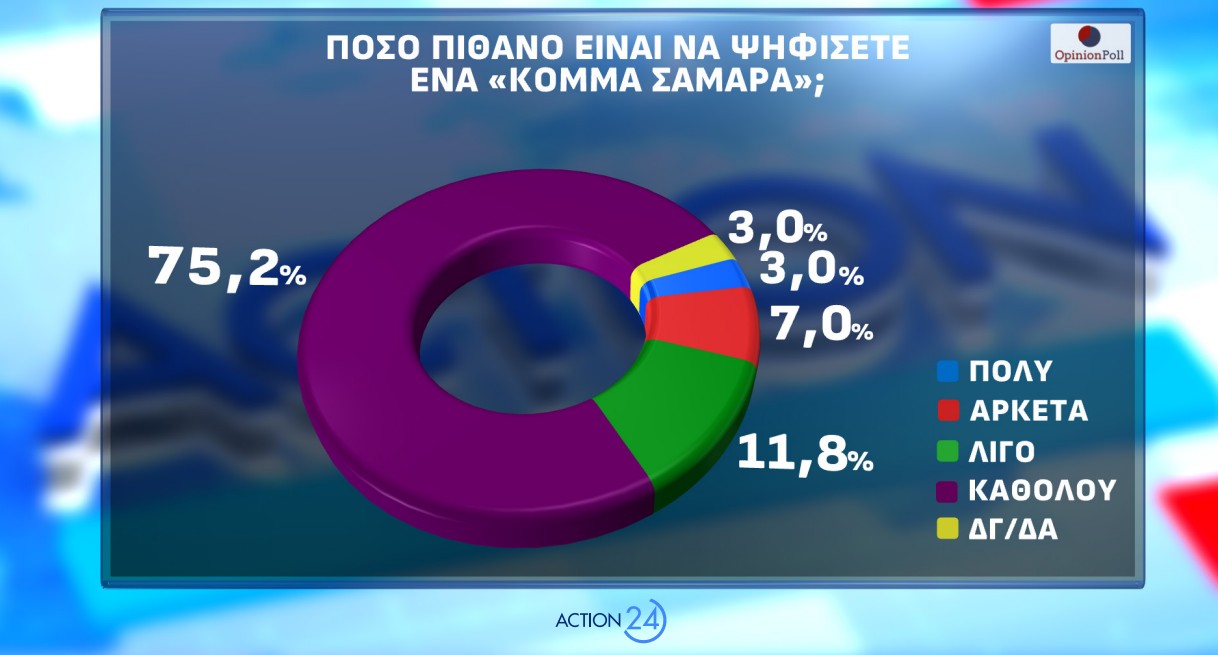
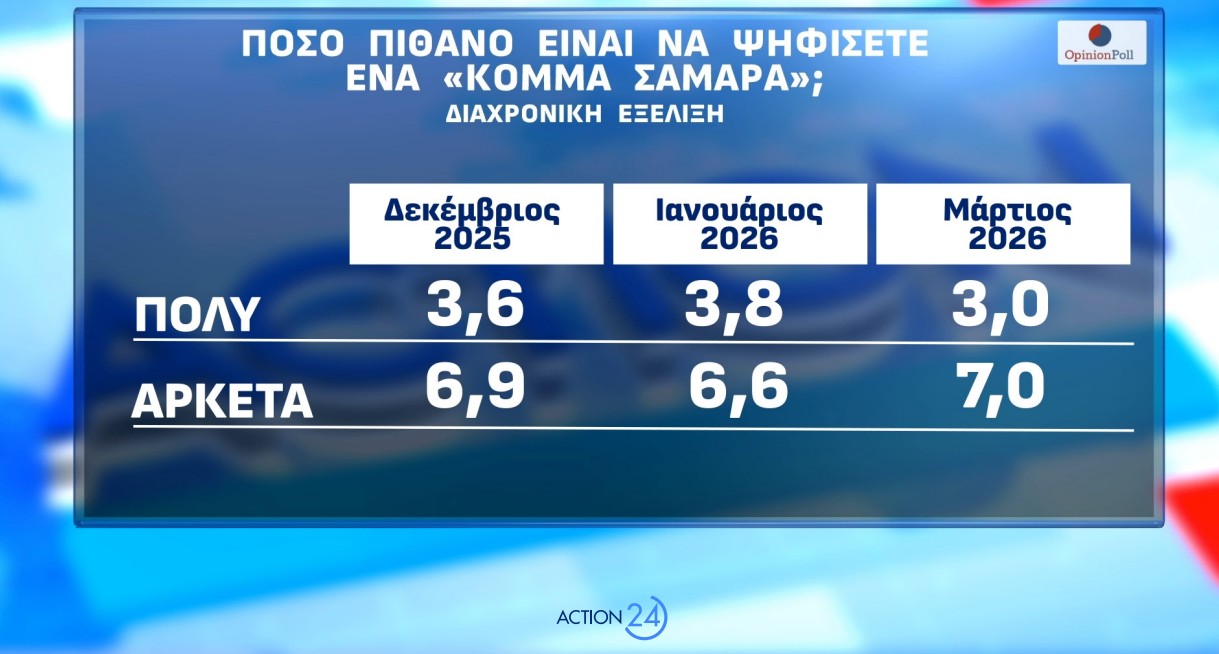
The “Samaras party” essentially shows stability with total potential vote of 10% (3% very and 7% quite). In January it was 10.4% (3.8% very and 6.6% quite), while in December it was 10.5% (3.6% very and 6.9% quite).
Problems concerning citizens
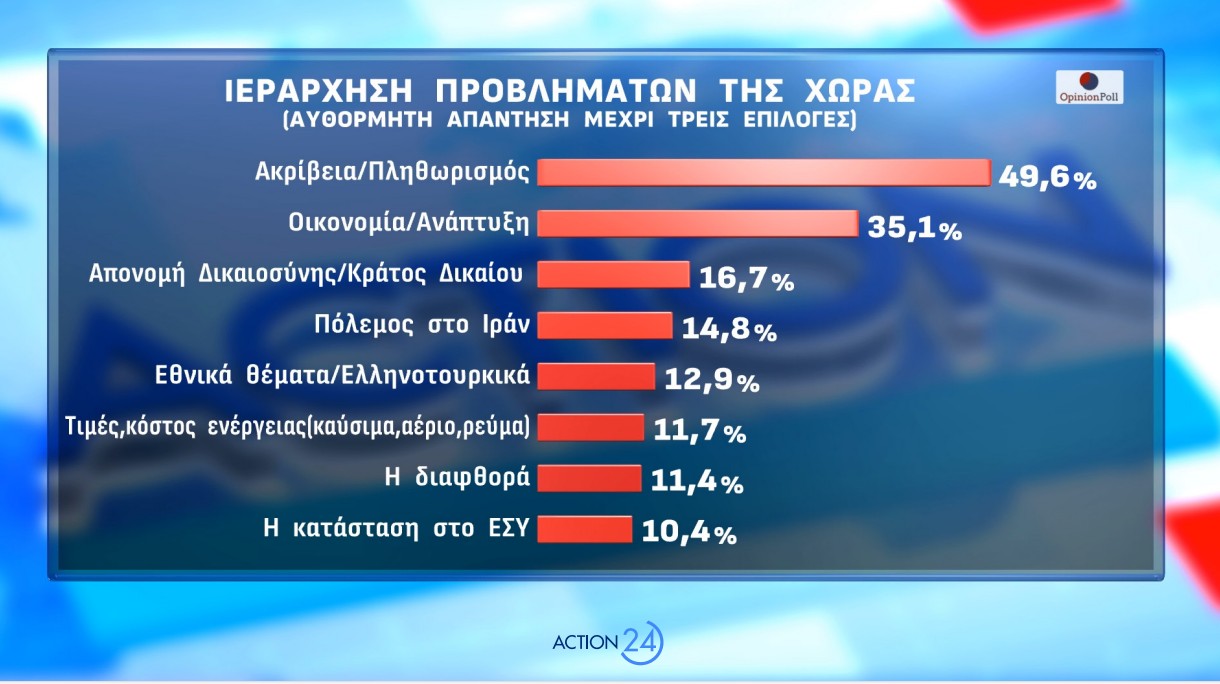
Inflation remains steadily in first place with Economy/Development issues following at 35.1%. Following are justice administration/rule of law at 16.7%, the Iran War appearing at 14.8%, National issues/Greek-Turkish relations 12.9%, energy prices/costs 11.7%, corruption 11.4%, the healthcare system situation now in 8th place with 10.4% in continuous gradual decline, etc.
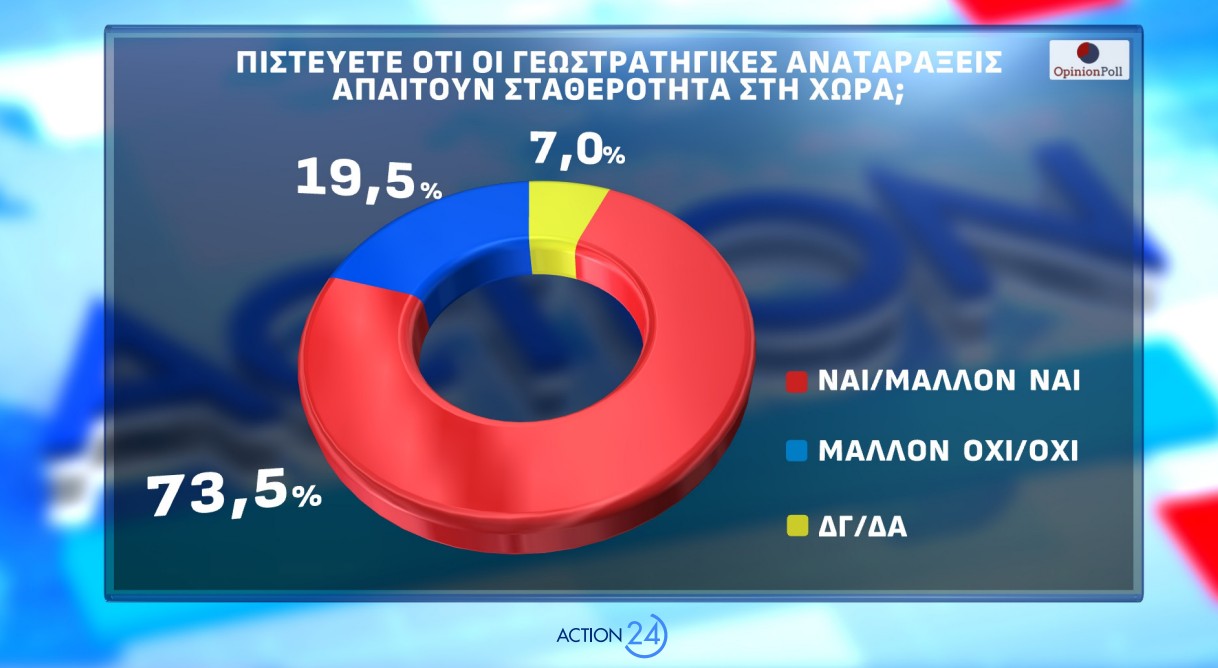
85.4% declare they are very and quite concerned (52% very, 33.4% quite) about international events, geostrategic upheavals and the war in Iran, regarding side effects and problems that may appear in the region and our country. 13.7% declare they are little or not at all concerned (9.6% little, 4.1% not at all).
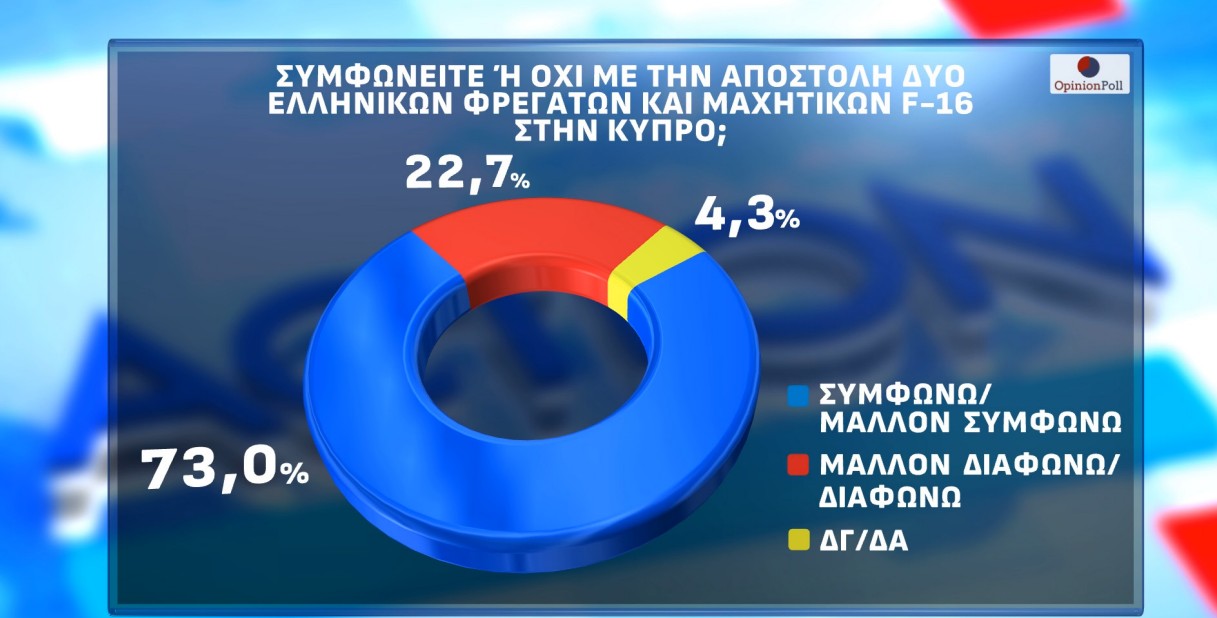
73% agree with the deployment of two Greek frigates and F-16 fighters decided by the Government, with 22.7% having an opposite view. It’s noted that in all party audiences except MERA 25, where there’s also positive opinion from 45.8%, the positive stance exceeds 50% and is the majority opinion.
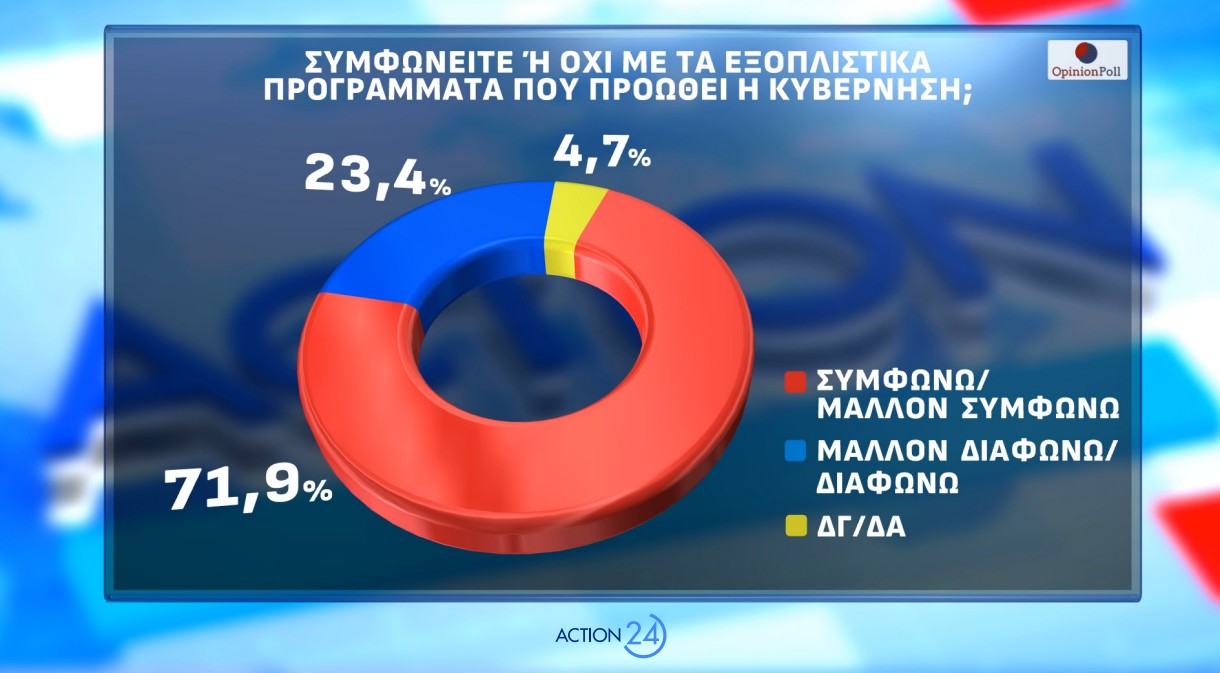
Simultaneously, 71.9% agree with the defense programs the Government is implementing, as they strengthen the country.
56.4% consider very and quite important (27.4% very, 29% quite) the energy agreements with the USA for extractions and the vertical corridor, for geostrategic stability, strengthening development and the country’s energy role. 35.2% consider them little and not at all important (little 16.1%, not at all 19.1%).