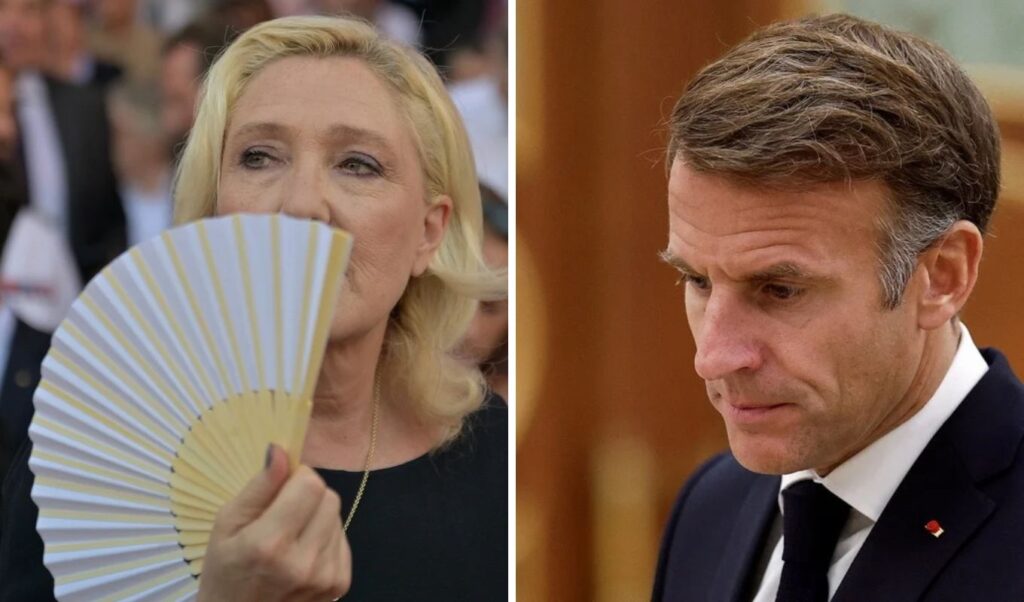
Those who have studied Emmanuel Macron closely can be almost certain he will not resign — despite the high-intensity social unrest gripping France. The country that stands as a symbol of western Europe is not exactly on its last legs, yet calm moments have been anything but the norm during his presidency. Macron now finds himself, in the twilight of his presidential term, confronting the most significant crisis of this decade — one that makes him an easy target for both the Left and the Right in France. And in 2027, 238 years after the French Revolution, the threat of the far right — which has been carefully plotting its rise to power for more than three decades — has never been more visible, embodied in the unmistakable figure of Marine Le Pen.
Read also: Politico: Political instability and energy crisis complicate EU decisions — Chaos in France and Europe’s “day after”
France: How this crisis differs from the Yellow Vests
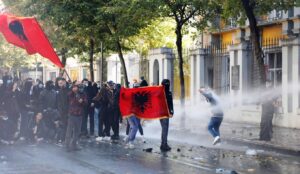
A lot of water has passed under the bridge since the Yellow Vest protests of 2019 — and not just figuratively, but in fiscal terms as well. Emmanuel Macron was able to contain those upheavals with money. Now, however, Europe — and France along with it — is suffering from the cost-of-living crisis, while grappling with high public debt and a staggering degree of political instability, for which Macron himself is partly blamed, having called snap elections in 2024. Macron is now watching unrest erupt from one end of the country to the other — a sight that, one way or another, has become something of a recurring theme for him and his team. The disturbances that began on Saturday, October 17, and have continued since, reflect a deeper fracture. In recent years, Macron has watched political figures resign around him and found himself in the almost farcical position of appointing as Prime Minister the very man who had just resigned 48 hours earlier — Sébastien Lecornu.
Parliamentary support… nowhere to be found
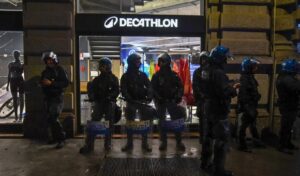
Macron also refused to accept the resignation of Interior Minister Laurent Nunez, even as the arrest toll from the unrest reportedly surpassed 2,500 — amid widespread looting, arson attacks on buildings, and vandalism of public infrastructure. At the same time, the words “parliamentary” and “support” have become virtually impossible to use in the same sentence. The President once promised to upend the traditional political establishment, push through sweeping economic reforms, and restore citizens’ trust in institutions. Yet he has been unable to restore the institutions’ own trust in each other — with the French government walking on eggshells since 2024. French citizens, meanwhile, are deeply dissatisfied with the state of public services.
Macron, who held an official meeting in Kuwait on Monday, October 19, is watching politicians — even those who were once firmly in his camp — grow openly scornful. “The end of this term is a slow martyrdom,” wrote Loïc Kervran, a former member of parliament from the presidential camp, on platform X. He squarely blamed Macron for dissolving the National Assembly in 2024, a move that plunged the country into political paralysis — and went on to describe it as one of the worst decisions in the history of the Fifth French Republic.
Marine Le Pen lurks in the wings
Situations like these are, traditionally, tailor-made for the far right. It is precisely in such environments that it thrives — appealing to people who feel desperate enough to vote for anyone willing to shake the foundations of the state. With the presidential election set for 2027, Le Pen has better odds than ever before — even compared to Jean-Marie Le Pen in 1998, when he played the suburban racial anxiety card. Back then, the French public showed reason and political reflexes. Now, however, the anger seems diffuse, flowing through every back street, every café, and every shop, fuelled by discontent over the cost of living, anxiety about public safety, and growing doubt over the government’s competence.
Le Pen has traditionally polled strongly, so it comes as no surprise that Reuters surveys show her in a commanding position ahead of the elections. Former Macron-camp MP Jean-Baptiste Moreau has noted that Le Pen barely needs to lift a finger — she simply needs to let the situation play out by the process of elimination. “Le Pen no longer needs to spend a single euro on her campaign,” Moreau told Reuters, arguing that the current trajectory overwhelmingly favours the National Rally leader. On Sunday, October 18, she posted a video message presenting herself as the antidote to the crisis, stating plainly that the current government is not up to the task.
He spoke, but said nothing
Le Pen is also being handed an advantage by Macron himself, whose televised address on the evening of Sunday, October 18, left the public deeply unsatisfied. “Mr. President, I heard you last night. Like millions of French people, I would have preferred to hear decisions and initiatives to restore order,” wrote former Prime Minister and potential presidential candidate Édouard Philippe on platform X. “Our country needs someone to govern it,” he added. Meanwhile, in Paris, the looting has turned notably classless — spreading into some of the city’s most affluent neighbourhoods. The following day, Prime Minister Lecornu announced the imposition of localised curfews.
Despite his criticism, Philippe continues to struggle to distance himself politically from Macron. The polls cited by Reuters also point to a competitive race for a spot in the presidential election’s second round, with radical left leader Jean-Luc Mélenchon appearing in some surveys marginally ahead of the former Prime Minister. Such an outcome, if confirmed at the ballot box, could prove decisive in shaping the dynamics of the runoff.
Questions raised over police intelligence
Macron has, in any case, ordered an inquiry into how intelligence was gathered and how police preparations were handled ahead of the unrest. These feel like the kinds of decisions that, even if not entirely reactive, do little to project the image of a government standing on firm ground. The riots are also sending ripples through financial markets. France is already under pressure due to its elevated public debt and high fiscal deficit, and the political instability is adding fresh uncertainty over the country’s economic direction in the period ahead.
As Reuters notes, Macron is caught between two conflicting demands: on one side, markets and fiscal constraints are pushing for spending restraint; on the other, citizens are demanding greater support and meaningful answers to the problems affecting their daily lives. Adding fuel to the fire, Macron left for Kuwait while the opposition was demanding he stay in France. The French side justified the visit as aimed at securing energy supplies and addressing some of the economic pressures weighing on French society. However, the timing of the trip risks reinforcing the narrative that the President is dangerously out of touch with what is happening at home. Further negative press came from images of Macron attending a Céline Dion concert with his wife Brigitte on the evening of Friday, October 16 — just hours before the unrest began. The images spread rapidly across social media and were seized upon by critics as evidence of political detachment.
Macron, for now, is not resigning — even as former allies are openly discussing the possibility of an early exit. Jean-Baptiste Moreau, who said he spoke with the President on Sunday, revealed that he urged him to consider a managed, early departure in order to break the political deadlock and avoid a prolonged period of paralysis. “He doesn’t want to give up — it’s not in his character. But that is what he should do for the good of the country,” he said. The weeks ahead are expected to be a critical test for the French government, which will need to simultaneously tackle the restoration of public order, fiscal stability, and the mounting challenge to its political legitimacy.