At least 30 children, the majority of them British, are estimated to have been conceived through IVF treatments in Northern Cyprus using the wrong sperm or egg donors, according to a BBC investigation. All parents report having carefully selected anonymous donors based on criteria such as medical history, appearance, personality, education level, and interests. However, they now have serious concerns that the sperm and egg donors they had chosen were not actually used in the fertility treatments they underwent.
This figure represents one of the new findings from the BBC investigation, which earlier this year had already uncovered the first seven cases. According to the BBC’s in-depth report, half of the 30 children were born following procedures carried out at one specific clinic — the Dogus IVF Centre. “It’s absolutely scandalous,” said one of the mothers, Rachel, who recently discovered that the clinic had used a different sperm donor from the one she had selected.
Northern Cyprus: what happened at the IVF clinic that misled British patients
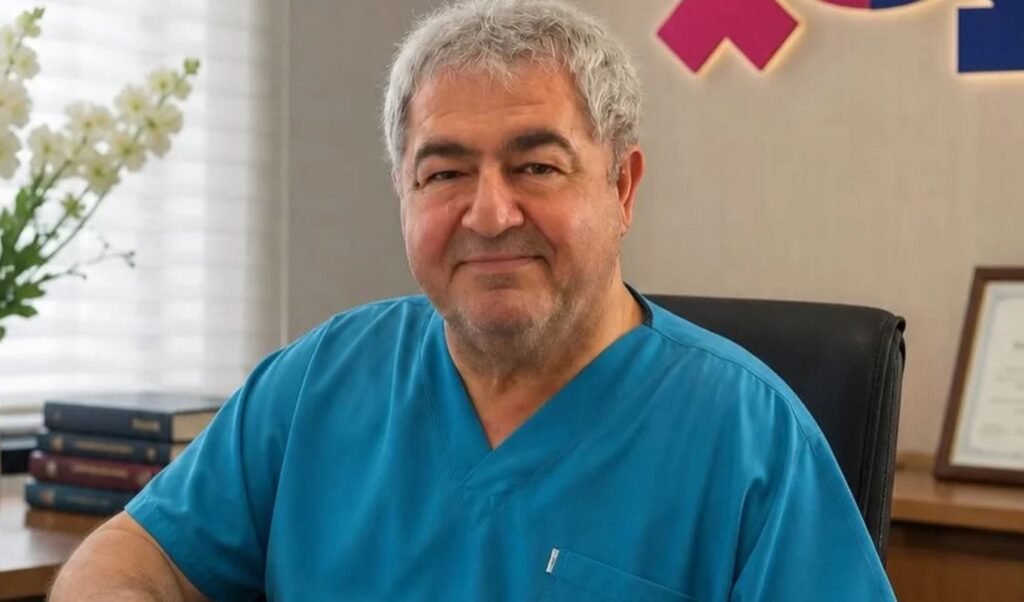
Three individuals — Dr. Firdevs Uguz Tip, Dr. Sevket Alpturk, and patient coordinator Julie Hodson — were involved in the care of many of the affected patients at Dogus. The parents suspect that these individuals may have deliberately misled them. Additionally, according to the BBC report, the world’s largest sperm bank, Cryos International, blacklisted the Dogus clinic as far back as 2016.
In Northern Cyprus — a region where EU laws do not apply and which is legally recognized only by Turkey — fertility clinics operate under loose regulatory frameworks and attract patients with promises of low prices, high success rates, and a wide selection of sperm and egg donors. The region has become one of the most popular destinations for British patients seeking fertility treatment abroad.
The BBC’s exposé
In March, the BBC first broke the emerging scandal when a small group of parents appeared to have been misled about the identity of their donors. In response to the allegations, the Northern Cyprus Ministry of Health stated that it had launched a formal investigation. Since then, more parents came forward to the BBC, with their stories sharing alarming similarities. The majority said the clinics had promised them screened, healthy donors from Western Europe, but they began to grow suspicious after their children were born.
The numbers
Eleven of the 30 children have now undergone commercial DNA testing, which indicates they have inherited genetic ancestry from Turkey or neighboring countries. This suggests that the donors their parents had selected were not used. The majority of children who underwent DNA testing were conceived through IVF between 2012 and 2024 at the Dogus clinic.
The unanswered questions
Families are now left with pressing questions about who their children’s real biological donors are and what their medical histories might be. “These reports are deeply troubling,” said Laura Bridgens, founder of the charity Donor Conceived UK. “It is a fundamental human right for a donor-conceived person to know the truth about their origins.”
Rachel says that for years she had wondered whether a different sperm donor had been used during her treatment at the Dogus IVF Centre. After reading the BBC’s first report, she and her 13-year-old donor-conceived son, Jonah, decided to take a DNA test. The results confirmed her worst fears.
“I thought the clinic had made a one-off mistake”
“I thought the clinic had made a one-off mistake,” she said. However, after the BBC informed her that other families had come forward with similar allegations, she said it “now feels like something much bigger and more deliberate.” Rachel had chosen Dogus in 2012 because of a “helpful and friendly” patient coordinator, Julie Hodson. Hodson’s role was to act as a liaison between Rachel and Dr. Firdevs Uguz Tip — known professionally as Dr. Firdevs — who carried out her treatment.
Rachel was 39 at the time and needed a sperm donor so that her eggs could be fertilized in a laboratory, an embryo created, and then implanted into her womb.
The cost
The IVF package cost approximately €4,000 — equivalent to around £3,200 at the time — and was significantly cheaper than equivalent treatment in the United Kingdom. The package included donor sperm from Cryos International, the world’s largest sperm bank, based in Denmark.
Rachel selected an anonymous Danish sperm donor through the Cryos website. Listed under the alias Ditto — not his real name — his profile stated that he would be willing to allow any child conceived with his donation to learn his identity upon turning 18. “I wanted my child to have the option to choose whether to contact the donor,” Rachel said. “For a child trying to understand who they are and where they belong in the world, that could really matter.”
Rachel’s story
Several patient coordinators at the IVF clinic, including Hodson, had told Rachel that Dr. Firdevs would arrange to order the donor’s sperm on her behalf.
Rachel traveled to Northern Cyprus to undergo the fertility treatment and became pregnant shortly afterward. She says she first began to worry that Ditto had not been used as the donor when patient coordinators — including Hodson — repeatedly refused to send her medical records confirming that his sperm had been used.
What the tests revealed
When Jonah was born, his physical appearance also raised questions, as it differed significantly both from Rachel’s own appearance and from the description in Ditto’s profile. Now, after 13 years of uncertainty, DNA tests on both Rachel and Jonah confirm that he is her biological son — but that Ditto was not the sperm donor.
After reviewing the DNA test results, BBC News contacted Cryos, which stated that it has no records showing it ever delivered sperm to the Dogus clinic. This is despite the fact that Dogus had advertised its partnership with the sperm bank as one of its key selling points for a number of years.
This detail further strengthens the belief among several families that they were misled about the true identity of the sperm donors used in their treatments. And there may be many more cases yet to come to light.
Ongoing anguish
Rachel says that none of what has been revealed changes her love for Jonah in any way. What troubles her most, however, is that Jonah may have lost the opportunity to contact his real biological donor in the future.
She also does not know whether the actual donor’s sperm was used in other IVF treatments. “It wouldn’t surprise me if there are genetic siblings of his out there,” she adds. When the BBC presented the findings of its latest investigation to a number of fertility experts, they expressed shock at the prospect of 30 children potentially being affected.
What experts said
Experts noted that accidentally using the wrong donor during an IVF procedure is extremely rare, and that an error of this scale — which appears to have occurred repeatedly — points to either “negligence” or “deliberate deception.”
Of the 15 cases linked to Dogus, three members of staff appear to have been repeatedly involved. Dr. Sevket Alpturk is the owner and “responsible director” of the clinic. According to the Northern Cyprus government, his role includes approving all procedures and activities carried out at the clinic.
He had personally overseen the treatment of the parents of six children at Dogus, all of whom told the BBC they suspect they may have been given the wrong sperm or egg donors. The BBC put these specific allegations to Alpturk, but he did not respond to questions.
The individual cases
The other nine children linked to Dogus were treated by Dr. Firdevs. She, however, maintains that Alpturk was responsible for final approval of all procedures at the clinic and denies ever having misled patients. Dr. Firdevs was also the treating physician in nine additional similar cases at two other clinics, following her departure from Dogus in 2015.
The majority of these cases occurred at Miracle IVF, which she currently runs. She insists that her clinic has always operated in compliance with the law. She also states that patients sign consent forms explaining how donors are selected. However, many of the parents who spoke to the BBC say they were not adequately informed.
The third individual linked to many of the Dogus cases is Julie Hodson, who served as the primary point of contact for most British patients.
In emails to patients, Hodson repeatedly stated that Dr. Firdevs would order sperm from the Cryos sperm bank on their behalf.