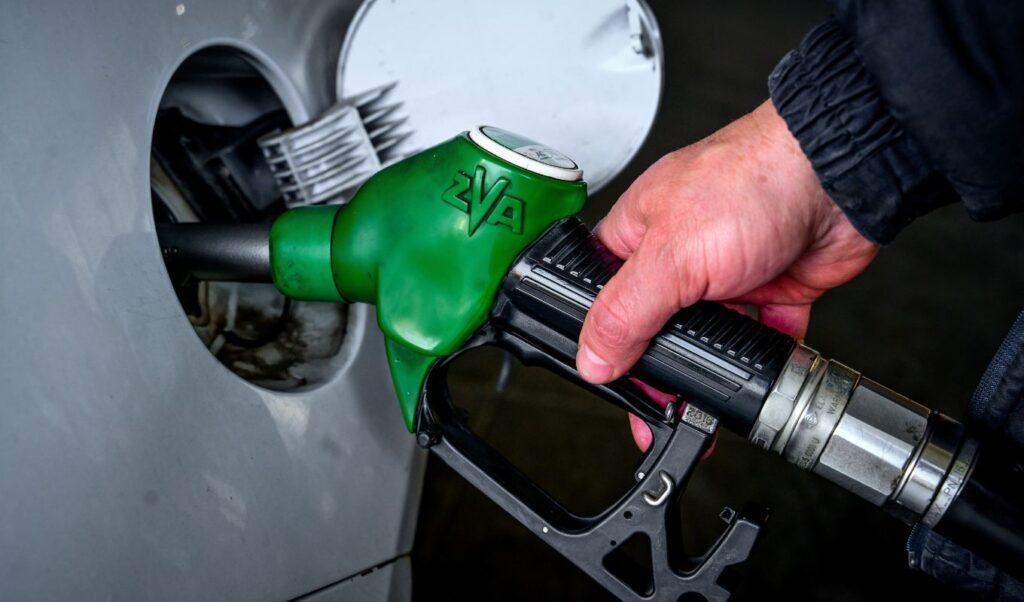
The Hellenic Competition Commission is reviving ten proposals on fuel market regulation that it had originally presented back in 2012, noting that none of them have ever been implemented. The authority stresses that conditions for effective competition are still not being observed in the market. The Commission’s plenary session unanimously adopted Decision 896/2025 on December 10, 2025, which was subsequently published in the Government Gazette on November 2, 2026. The decision carries regulatory weight regarding the prohibition of exclusivity clauses in fuel storage and service contracts at third-party privately owned facilities.
Read also: Ryanair considering employee wage freeze to cover rising fuel costs
The ten Competition Commission proposals on fuel
- Detailed cost reporting at refineries. The Commission has proposed requiring refining companies to provide a detailed breakdown of cost components included in the surcharge they levy on trading companies and large end consumers. This data would be disclosed to the Regulatory Authority for Energy (RAE) and the Ministry of Development.
- Independent body for strategic fuel reserves. The proposal calls for the establishment of a non-profit entity, under the supervision of the competent authority, to maintain fuel reserves on behalf of obligated parties. Costs would be allocated based on each party’s total consumption during the previous year. The Commission has also recommended regulated third-party access to storage facilities owned by refineries, trading companies, or other businesses.
- Utilization of existing storage facilities. The Competition Commission is calling for the use of storage facilities at decommissioned military bases and at large end-consumer installations for the purposes of maintaining strategic reserves.
- Five-year maximum lease cap. It is proposed that the minimum duration of a lease or concession for storage space — required for obtaining a wholesale liquid fuel trading license — should not exceed five years.
- Independent fuel stations’ accountability. Independent fuel stations are proposed to bear exclusive responsibility for the quality and quantity of the products they sell.
- Unified age limit for tanker trucks. The proposal relates to establishing a common maximum age limit applicable to all fuel tanker trucks operating in the market.
- Electronic price displays on motorways. The Commission has recommended installing digital roadside boards to inform drivers of the current prices of unleaded petrol and diesel at the next three fuel stations ahead.
- Review of motorway service area contracts. The proposal involves investigating the possibility of revising contracts at motorway service areas (ΣΕΑ) to remove any clauses that may restrict competition.
- Price and quantity on receipts. The Commission has proposed making it mandatory for fuel stations to print both the price and quantity of fuel on customer receipts.
- Inflow-outflow monitoring systems. The installation of such systems is proposed across all stages of petroleum product distribution and logistics.
What Decision 896/2025 provides for
The decision specifically targets exclusivity clauses in fuel storage agreements. Contracts governing the use of third-party privately owned facilities must be revised to eliminate provisions that restrict storage use exclusively to a single fuel company.
In parallel, the Competition Commission puts forward proposals for the establishment of a Central Stock-Holding Entity under the supervision of RAAEY (the Regulatory Authority for Waste, Energy and Water), the creation of a national registry of fuel storage facilities, and the development of a digital application displaying real-time fuel station prices. Regarding refinery pricing, the Commission recommends that price notifications to trading companies be communicated through individualized, transparent channels.
The authority also highlights that refineries offset a significant portion of their market risks by passing them on to their customers. According to the Commission, the combination of market factors and current pricing practices enhances the ability of refining companies to profitably raise prices — ultimately at the expense of consumers and downstream businesses.