Will Russia’s S-400 missiles ultimately be transferred to a Gulf country, as reported by Hürriyet? The issue is far more complex than the Turkish press is letting on. Like an unsolvable puzzle, the S-400s are caught between Turkey — which wants to offload them in exchange for F-35s — Trump’s America, which is yielding to its “friend’s” request, and Athens, Nicosia, and Tel Aviv, which are pushing back. But above all, the situation hinges on Russia, which has yet to show its hand.
Why Ankara wants to get rid of the S-400s
The issue was ignited by an article from pro-government Hürriyet journalist Abdulkadir Selvi, who — just two days after the conclusion of the NATO summit — presented it as a fait accompli that the “S-400s are going to a third country.” He was so confident in the story that he previewed an official announcement from the Turkish government, which he said would come last Friday. “We should be asking ‘what happened to them?’ not ‘what will happen to the S-400s?'” he wrote in the pro-government paper. He was so certain, in fact, that he noted: “By breaking free from the S-400s, Turkey won’t just escape CAATSA sanctions — it will also make money by selling them.”
Endy Zemenides: Why Qatar and the UAE are not easy solutions
However, Endy Zemenides, Executive Director of the Hellenic American Leadership Council (HALC), argues in an interview with parapolitika.gr that transferring the S-400s to Qatar or the United Arab Emirates simply cannot happen. As he points out, both countries host US military bases equipped with F-35s, making them fundamentally incompatible with the S-400 system. He stresses that “the core problem is that when you sell it to a third country, that country would also have to face CAATSA sanctions. What country would accept such a blow for Turkey’s sake?” he asks.
Trump’s role in lifting CAATSA sanctions
Another Turkish journalist, Yunus Paksoy, framed the issue more simply. To lift the CAATSA sanctions, all President Trump would need to do is send a letter to Congress requesting their removal. As the journalist notes, in this scenario Trump would need to certify in his letter to Congress that the S-400s are no longer operational, are no longer on Turkish soil, and that he has received a commitment from Erdoğan that no similar arrangements with Russia will be pursued in the future.
Russia holds the keys to the whole affair
Yet Russia has clearly not said its final word. Although Kremlin spokesman Dmitry Peskov acknowledged yesterday that Russia and Turkey have been in talks over the S-400s for some time, he described the matter as “extremely sensitive.” He declined to answer whether the Turkish government had formally requested Moscow’s consent for the transfer — a requirement under the original sale agreement, since Russia retains the rights to the weapons system. “We are in contact with the Turkish side on this matter and will continue to maintain those contacts,” Peskov stated, without elaborating on the progress of those talks, which appear to have intensified following Foreign Minister Hakan Fidan’s visit to Russia last June.
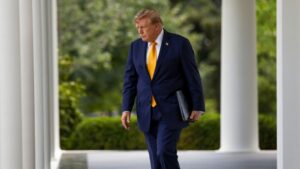
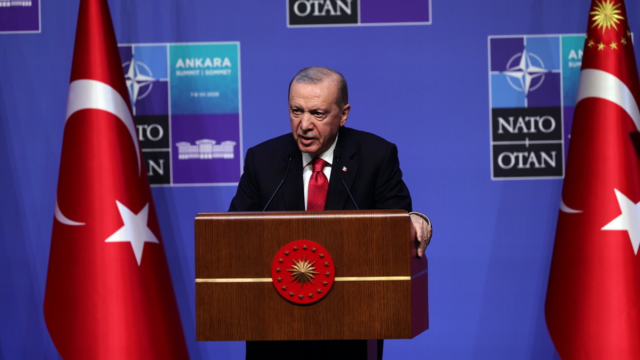
Even on the sidelines of the NATO summit in Ankara, many had expected official announcements regarding the removal of the Russian missiles as a step toward Turkey’s reinstatement in the F-35 program. That did not happen. Instead, the US President limited himself to expressing his personal desire to meet the Turkish president’s expectations. “I haven’t fully decided, but my inclination is to say: look, he has done everything, he has helped us in so many different ways,” was his closing statement on the matter.
Nevertheless, it is clear that the situation is moving in that direction — toward Ankara’s return to the F-35 program. It is equally clear that the process will be difficult and potentially lengthy. What Turkey has already secured, however, is the supply of F110 engines, which will allow its domestically developed KAAN fighter jets to fly. This development came after the Greek-American lobby failed to block the engine sale to Turkey in the US Congress.
The Greek-American lobby and Congress’s stance
According to Zemenides, this matter is now effectively closed. As he explains, “the Committee Chairman, whose jurisdiction it fell under, never brought the joint resolution submitted by nine Democratic members of Congress — introduced by Dina Titus — to a vote for approval or rejection, because he did not want to displease Trump and did not allow members of Congress to take a position on the issue.”
Following this development, the processes between the US and Turkey for the sale of F110 jet engines to Turkey — to be integrated into the KAAN aircraft — are expected to begin shortly. According to Hürriyet, still riding high on the momentum of the NATO summit, Turkey achieved what the paper dubbed “NATO 3.0 becoming TURKEY 3-0,” claiming the country secured three key goals: first, the lifting of CAATSA sanctions; second, the provision of engines for the KAAN; and third, the opening of a path toward the purchase of F-35 fighter jets.