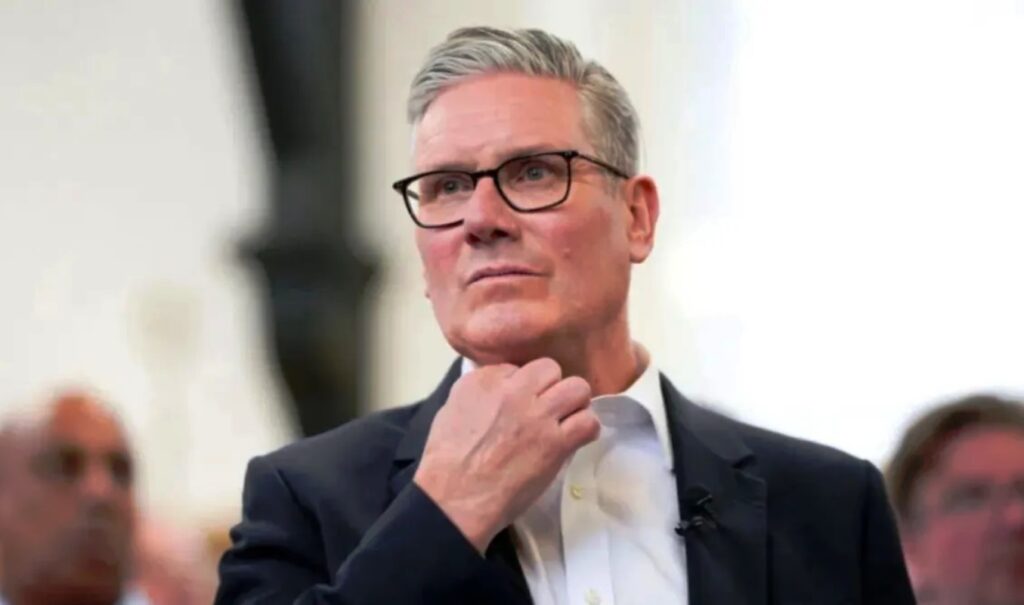
The succession of Keir Starmer and the next chapter for Labour are adding to the political turbulence gripping Britain, following the announcement of Starmer’s resignation as party leader and Prime Minister. The development triggers a specific and strictly defined internal party process through which a new Labour leader will be chosen — one who will simultaneously assume the duties of Prime Minister. The first names have already begun circulating loudly behind the scenes, with Andy Burnham becoming the first to officially announce his intention to run for the leadership. At the same time, senior figures with a strong presence in the party — such as Angela Rayner and Shabana Mahmood — are being closely watched by the British media, as they are considered likely contenders. Attention is now focused both on the rules governing the election process and on the political balances that will take shape within the party in the coming weeks.
Read: United Kingdom: A bitter Starmer could still set traps for his successor
Starmer succession: The rules for electing a new leader
Labour Party rules set out specific requirements for any candidate wishing to contest the leadership. The first and most fundamental step is securing the support of at least 20% of the Parliamentary Labour Party. Given that the party currently holds 403 seats in the House of Commons, any prospective candidate must gather the backing of at least 81 MPs, including themselves. Support from local party organisations and affiliated bodies is also required. If more than one candidate secures the necessary nominations, a vote will follow in which Labour members and affiliated organisations will participate.
The winner will automatically assume both the leadership of the party and the office of Prime Minister. The timetable is expected to be finalised by the relevant party bodies; however, Keir Starmer has indicated that the nominations process will open on 9 July and close before the summer parliamentary recess on 16 July. The outgoing Prime Minister has also made clear that, should a contest take place, it must be concluded before Parliament returns on 1 September. Of particular interest is the possibility of a single candidate coming forward. In that scenario, no vote would be held and the sole candidate would be automatically declared the new party leader and Prime Minister.
The figures drawing all the attention
The first to officially declare his candidacy is Andy Burnham. In a social media post, he confirmed he would enter the race, stressing that Britain needs stability, seriousness and a genuine focus on the problems facing ordinary people. According to Burnham, the key priorities must be economic growth, tackling the cost of living, strengthening public services, housing policy and creating opportunities for younger generations.
His candidacy received a significant boost from the public endorsement of Wes Streeting. The former Health Secretary announced he would not be standing and openly threw his support behind Burnham, arguing that he possesses the qualities needed to lead the party into its next phase. Meanwhile, considerable activity is being reported around Angela Rayner. The former Deputy Prime Minister remains one of Labour’s most recognisable figures and, according to reports, has already secured approximately one million pounds in funding for a potential leadership campaign. The name of Shabana Mahmood has also been at the centre of discussions.
The Birmingham MP and former Justice Secretary is regarded by many as a rising political force. Should she ultimately be elected, she would make history as the first female Labour leader to become Prime Minister and simultaneously the first Muslim Prime Minister of the United Kingdom. The coming weeks are expected to be decisive for Labour’s future, as it becomes clear who will ultimately contest the leadership and whether the process will develop into an open internal contest or an uncontested election. The Starmer succession is not merely a matter for the party — it will shape the broader political direction of Britain for years to come.