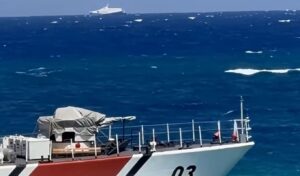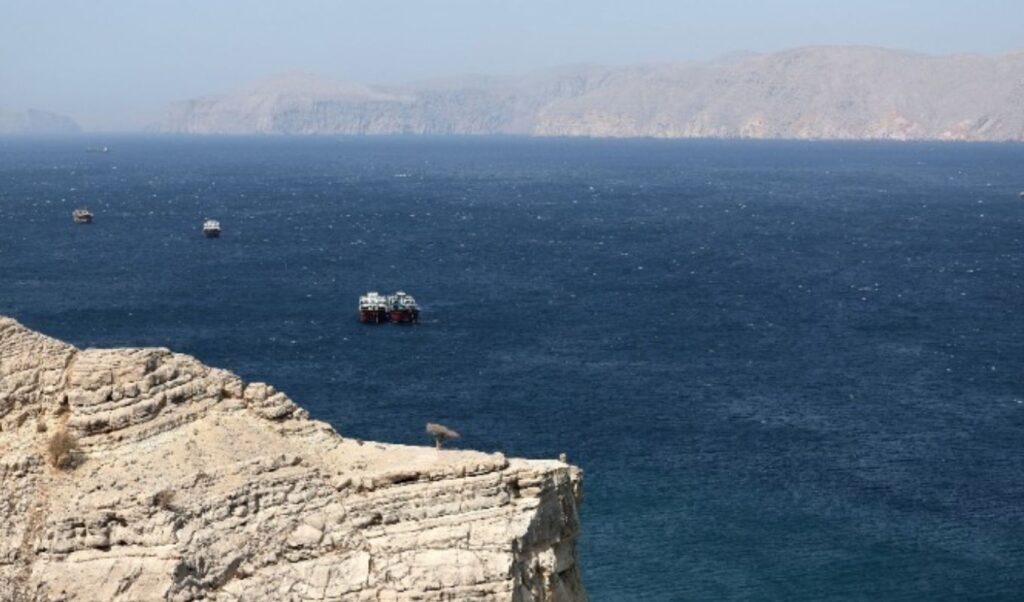
The potential deployment of Greek warships to the Strait of Hormuz is emerging as a critical issue following the agreement between the US and Iran. The question preoccupying Athens and other European capitals is how to ensure the free passage of oil tankers through this vital maritime route, through which a significant portion of the world’s oil supply flows. Mine clearance and the protection of navigation in the Strait of Hormuz are high-risk missions that require careful planning.
Franco-British initiative for a naval operation
Paris and London announced their readiness to lead a naval operation in the Strait of Hormuz, with the participation of Italy and the Netherlands. French President Emmanuel Macron suggested the mission could be launched within three days of the agreement’s completion. Greece has expressed support for the Franco-British initiative, albeit with specific conditions.
Since the outbreak of hostilities, the prospect of international intervention had been on the table. However, NATO declined to take on a substantive role in any military operation in the Persian Gulf. At the same time, the European Union is struggling to even maintain its “Aspides” operation in the Red Sea, where only Greece, France, and Italy now participate.
The terms of the deal and the question of transit fees
The implementation of the US-Iran agreement remains fragile, primarily due to Israel’s stance as it continues operations in Lebanon. Tehran emerged as the real winner of the four-month war, holding absolute control over the Strait of Hormuz.
A key element of the agreement is that Iran secured free passage without fees for only sixty days. After this period expires, Tehran intends to impose transit fees of one dollar per barrel on oil tankers. This scenario is facing strong opposition from European countries, including Greece.
What is mine clearance and why is it considered dangerous?
Mine clearance is a military and naval operation involving the removal or neutralization of mines from a specific maritime area. It is a high-risk mission requiring specialized personnel and equipment. Greece has experience in such operations, as the Ministry of Foreign Affairs has funded Non-Governmental Organizations for mine clearance activities in third countries such as Bosnia and Herzegovina, Lebanon, and Iraq.
A potential operation in the Strait of Hormuz means deploying warships into a potentially active conflict zone. Participating vessels would essentially be at the mercy of Tehran, which has demonstrated in recent months that ships and combat aircraft worth billions can be struck by drones costing just a few thousand euros.
The debate in Brussels and Athens’ position
The US-Iran agreement and developments in the Strait of Hormuz are on the agenda of the European Union Summit in Brussels. Government sources stress that Athens welcomes recent developments and underlines the importance of reopening the Strait of Hormuz and immediately restoring freedom of navigation, as Prime Minister Kyriakos Mitsotakis has emphasized.
The issue is also expected to be discussed at the NATO Defense Ministers’ Summit. However, the primary topic remains Ukraine. It is unlikely that NATO, which avoided any operation in the Persian Gulf during the four-month war, will become involved now.
Conditions for Greek participation
Foreign Minister Giorgos Gerapetritis has clarified the conditions for potential Greek participation in an “Aspides”-type operation in the Strait of Hormuz. First, peace must have been established in the region. Second, the agreement of all parties involved is required.
Consensus at the European Union level on this issue appears unlikely. All indications suggest that any potential mission will not take place under the auspices of NATO or the EU, but rather as part of a “coalition of the willing” under Franco-British leadership.
The decision-making process and the challenges ahead
If a decision is made for Greek participation — whether under the EU or NATO framework, or as part of a coalition of willing European nations — the mission will first be discussed at the Government Council on Foreign Affairs and Defence (KYSEA).
A critical parameter is the need to maintain sufficient naval forces and support assets in the Aegean Sea. The summer of 2026 may prove equally critical as that of 2020, with Turkey remaining a potential threat that requires a deterrent naval presence in the Aegean.
The question that remains unanswered is what the participating countries will do if Iran ultimately imposes transit fees at the Strait of Hormuz after the sixty-day grace period expires. The mission to the Strait of Hormuz remains an open question that will shape both Europe’s energy security and international stability across the broader Persian Gulf region.