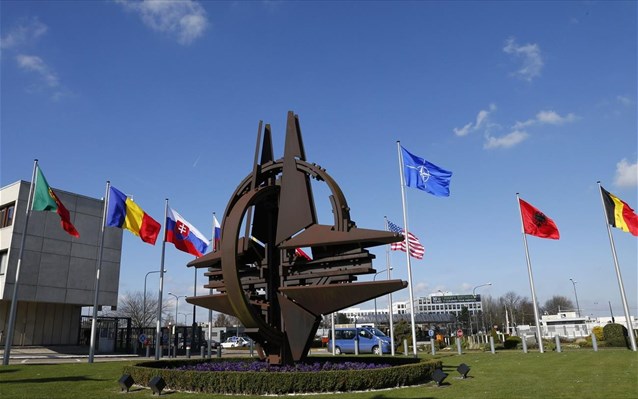
A heavy legacy appears to be left in the Old Continent by geopolitical developments, with the United States, according to a report by the American network Politico, taking another step toward their withdrawal from NATO. In this climate of challenges and realignments, Europe is called upon to demonstrate quick reflexes, strengthen its defense and prepare for the transition to a new era, possibly under new circumstances in relations with the US. Serious concerns have been raised in recent hours by the fact that Washington reportedly informed its allies that it will gradually reduce the number of strategic bombers, fighter aircraft, drones, submarines and warships it provides to NATO, continuing to pressure Europe to take on a greater share of responsibility for its defense.
The announcement was made a few days ago, in a closed-door meeting of NATO policy directors, by Pentagon adviser Alexander Velez-Green, according to two North Atlantic Alliance diplomats who spoke on condition of anonymity. The proposed cuts by the US reflect Donald Trump’s multi-year effort to redefine America’s role in an alliance he has repeatedly characterized as not useful to Washington. Trump had caused concern among European allies when he announced he would withdraw 5,000 soldiers from Germany, which was later revealed to include 4,000 soldiers from Poland, before ultimately changing course and declaring he would deploy an additional 5,000 soldiers to Poland.
The exact nature of the cuts has not yet been finalized, the diplomats reported, according to Politico, while the US did not provide a specific timeline for the reductions. Meanwhile, Washington assured allies that there would be no changes to its nuclear deterrent capability.
NATO: How US and Europe relations are evolving
European allies and the US are expected to discuss the participation issue further at NATO’s Force Generation conference next month, according to the two diplomats. This is a meeting where national military planners determine what capabilities they can offer to the Alliance and under what conditions.
The details are strictly classified, but Washington now wants to limit these commitments. Jennifer Kavana, director of military analysis at the think tank Defense Priorities, said the cuts will create gaps that will be particularly difficult to fill quickly, especially in assets like submarines and strategic bombers.
However, she argued that European allies should not seek to replace exactly what is lost. “The important thing with these American withdrawals is not for Europe to fully cover what is being withdrawn, but to identify what it really needs to defend itself and acquire those capabilities,” Kavana said. “Overall, Europe can achieve this within five years.”
US Secretary of State Marco Rubio clarified to his NATO counterparts on Friday that further reductions of American troops and weapons systems are coming, but assured that this will be done in a coordinated manner.
“It is widely understood in the Alliance that the US military presence in Europe will be adjusted, this process is already underway and is being done in coordination with our allies,” Rubio told reporters.
NATO spokesperson Alison Hart told Politico that “there has been excessive dependence on American forces and capabilities” within the Alliance, adding: “As Europe and Canada invest more in defense and develop more capabilities, the balance of responsibilities can shift.”
“This change strengthens NATO’s defense plans by reducing excessive dependence on a single ally, and reflects a broader shift that is underway within the Alliance,” she concluded.