The exchange of fire in the Strait of Hormuz has put the ceasefire in the Middle East at risk, resulting in the resumption of Iran’s attacks against the United Arab Emirates.
According to CNN, US President Donald Trump refused to confirm in an interview with radio host Hugh Hewitt whether the ceasefire remains in effect. “If I answered that question, you’d say this man isn’t smart enough to be president,” he said.
Tensions in the Strait of Hormuz are escalating following Donald Trump’s announcement that a US military operation will be conducted to restore traffic through the strait, which Iran has effectively closed.
The American president threatened, according to Fox News reports, that the Iranians would be pulverized, would be “wiped off the face of the Earth” as he put it, if they target American warships.
Meanwhile, five people lost their lives following US attacks on two civilian vessels carrying goods to Iran, according to Iranian state media citing a military source.
The attack comes in the wake of statements by Donald Trump, who claimed that the US shot down a series of “small boats” in the Strait of Hormuz on Monday. The US president wrote on Truth Social: “We shot down seven small boats or, as they like to call them, ‘fast’ boats.” “That’s all they have left.”
Earlier, Tehran had claimed it had struck an American warship near the Strait, a claim that was rejected by the US military.
Araghchi: “A political crisis cannot be solved militarily”
Iran’s Foreign Minister Abbas Araghchi emphasized that recent incidents in the Strait of Hormuz confirm that “a political crisis cannot be solved militarily.” His statement was made through social media following an incident recorded on Monday in the strategically important maritime area, while the involved parties presented conflicting versions.
Meanwhile, Iranian state media claimed that the country’s forces hit an American warship with two missiles, preventing its entry into the Strait.
The attacks, the first against civilian installations in a Gulf country after more than a month, stirred concerns in the markets, where oil prices increased dramatically.
The oil facility in Fujairah, one of the few accessible in the region without passage through the strait, was targeted by a drone that caused a fire. Three Indian nationals were “injured,” though not seriously, according to local authorities.
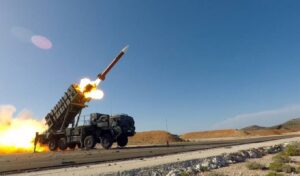
The UAE also reported being targeted by four cruise missiles “launched from Iran,” three of which were intercepted and one fell into the sea, according to the Defense Ministry. A tanker of the national oil company ADNOC was also targeted by two Iranian drones.
The country condemned the “dangerous escalation” and indicated it reserves the right to retaliate.
“The US should choose diplomacy, not get trapped in deadlock again,” message from Iran’s foreign minister
The Islamic Republic “had no plan to target the UAE,” Iranian state television assured, citing a high-ranking official who was not named. The same official condemned the consequences of “American military adventurism,” referring to the operation aimed at getting commercial ships blocked in the Gulf through the Strait of Hormuz.
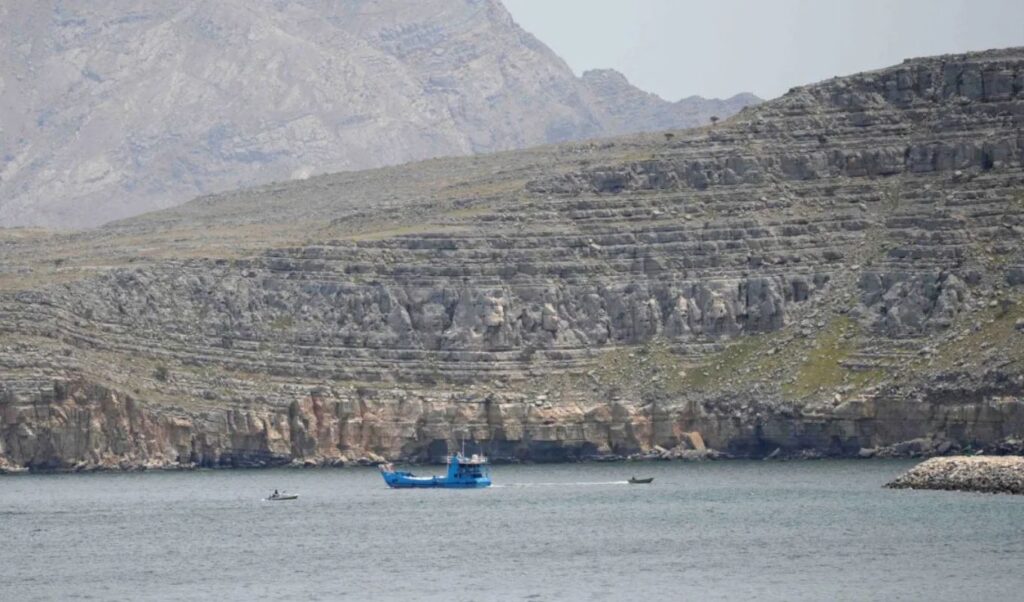
In Oman, two people were injured in an attack against a property in Bukha, in the Strait of Hormuz, according to the sultanate’s state media.
“The events in the Strait of Hormuz make it clear that there is no military solution to a political crisis,” Iran’s Foreign Minister Abbas Araghchi emphasized via X. He called on the US to choose the path of diplomacy and not be drawn into being “trapped in a deadlock again.”
The differences remain enormous between the two countries’ governments and efforts to restart negotiations have so far failed, following the first—fruitless—meeting in Islamabad on April 11. Tehran reported on Sunday that it received a response, whose content has not been disclosed, to its most recent proposal for terms to end the war.
Oil prices rise even higher
Iran, which has imposed de facto transit fees on the strait, warned the US against any intervention. “If they intend to approach or penetrate, they will be targeted and attacked,” warned General Ali Abdollahi, chief of staff.
However, the American president expressed satisfaction with this initiative, which is going “very well” according to him. He also repeated for the umpteenth time that there is no question of allowing Iran to acquire nuclear weapons—an ambition that Tehran has denied harboring for decades.
Two commercial vessels under American flag passed “successfully” through the Strait, according to the joint command of US armed forces responsible for the Middle East (CENTCOM, “central command”).
According to CENTCOM chief Admiral Brad Cooper, US armed forces destroyed six Iranian vessels and intercepted missiles and drones launched by Iranian armed forces against American warships and commercial ships.
Tehran denied that commercial ships passed through the strait and that the US military destroyed Iranian warships.
Seoul reported an “explosion” and fire on a South Korean ship in the Strait of Hormuz.
Against this backdrop, the price of North Sea Brent crude, the international benchmark variety, closed yesterday Monday at $114.44 (+5.8%).
Expressing skepticism about the possibility of immediate restart of shipping and normalization of the situation in the strait, Eurasia Group analysts warn that if the disruption of ship traffic continues, prices will increase even more.