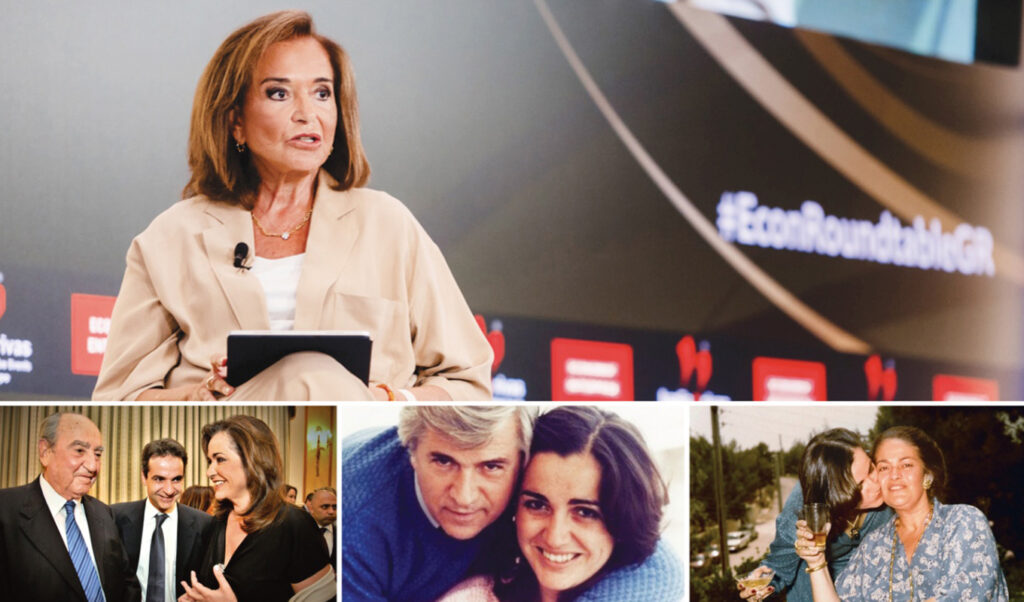
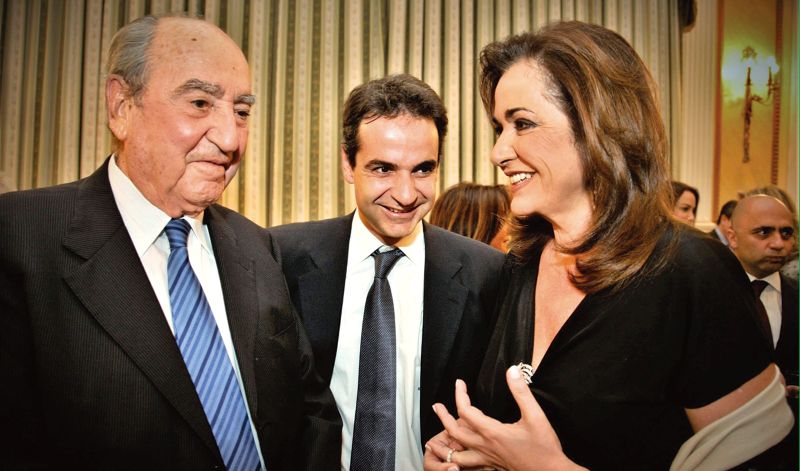
Dora Bakoyannis had been turning the idea of writing an autobiography over in her mind for many years. Following the COVID-19 pandemic, she made the decision to document more than 700 pages of her lived experiences — both alongside her father, Konstantinos Mitsotakis, and as a leading figure and key member of New Democracy during pivotal moments in the country’s post-junta political history. The late Konstantinos Mitsotakis always maintained that politicians should write and leave their actions — and their own perspective on events — to the judgment of history, a conviction that Bakoyannis clearly shares wholeheartedly.
In recent days, her close associates have been finalizing the details — including the rare photographic material to be featured throughout the book, which has been edited by journalist Makis Provatas. Notably, the title of the book, to be published by Patakis Publishers, has not yet been finalized. It is expected to hit bookstore shelves around the end of November, with a launch event also in preparation — tentatively scheduled for November 25th. Naturally, considerable interest will surround the personalities Bakoyannis chooses to present her book, and even more so whether any of them will be political figures.
Dora Bakoyannis: From exile in Paris to Pavlos
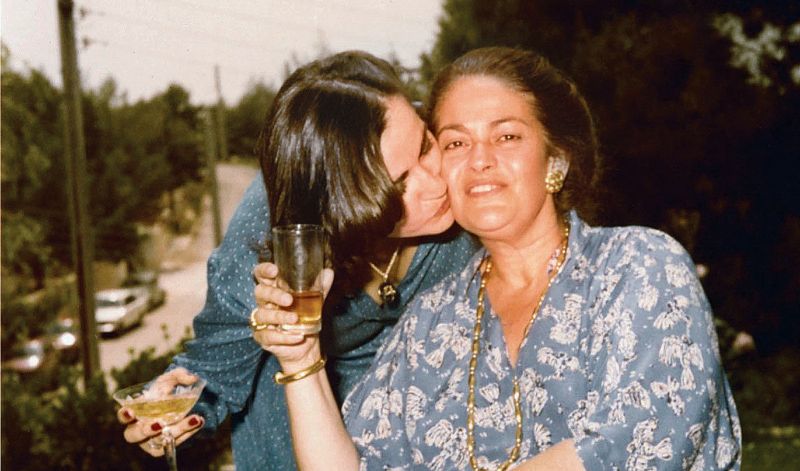
The book spans several distinct periods, beginning with the turbulent events of 1965 — known in Greek history as the “apostasia” (political defection crisis) — and continuing through the years of the military junta, with particular focus on the years of exile in Paris. It was there that Bakoyannis had the opportunity to spend precious time with her father and her mother, Marika, while also working as a young woman to maintain contact with Greek communities living abroad.
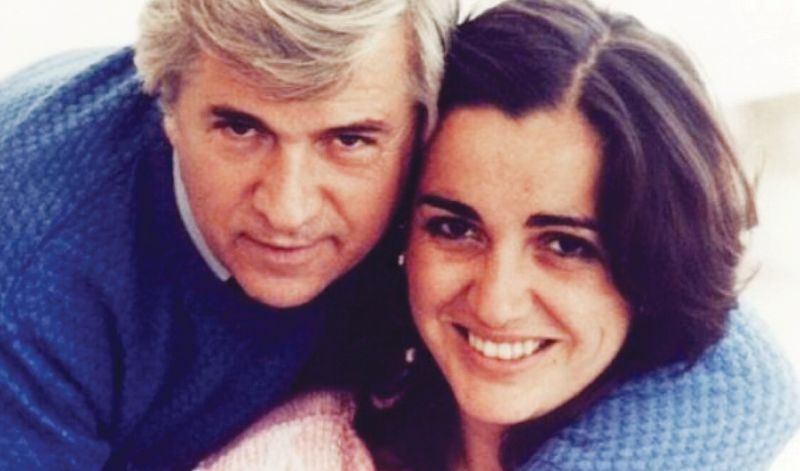
It was also during this period that she met Pavlos Bakoyannis, the iconic Deutsche Welle journalist and a powerful voice for Greeks fighting against the military dictatorship. The references to Pavlos Bakoyannis are extensive, covering among other things the role he played in shaping her own personality, the family they built together years later, and their two children, Alexia and Kostas. Many passages also describe her first encounters with Konstantinos Karamanlis, who was also living in Paris during the junta years. Bakoyannis developed an almost paternal bond with the future founder of New Democracy, recounting significant moments from the preparations being made within the Greek community for Karamanlis’s return to Greece.
November 17, Mitsotakis and Samaras
Several chapters are dedicated to the period when Konstantinos Mitsotakis led New Democracy and later served as prime minister, from 1984 to 1993. These sections cover her own role during the early years at her father’s side, her interactions with prominent figures such as Andreas Papandreou, New Democracy’s major victories in the 1986 local elections, and Pavlos Bakoyannis’s active involvement in the party’s activities and political program. What follows is an account of the turbulent summer of 1989 and the assassination of Pavlos Bakoyannis by the November 17 terrorist organization. The book also covers the coalition government with the unified Left, the referral of Andreas Papandreou to the Special Court, and her own increasingly active role in government as a member of parliament for Evrytania and a senior government official alongside the prime minister. She focuses significantly on Antonis Samaras — and in particular the tactics and methods he used in 1993 to bring down Konstantinos Mitsotakis’s government. Sources indicate that the passages addressing this subject are set to reignite long-standing debates.
The Athens mayoralty, foreign affairs and the battle for party leadership
The following chapters cover the period during which her stock was rising within New Democracy under the leadership of Miltiades Evert, as well as behind-the-scenes details surrounding the election of Kostas Karamanlis as party leader. Her tenure as Mayor of Athens and the 2004 Olympic Games form a standalone chapter, as does her appointment as Foreign Minister and the close working relationship she maintained with Prime Minister Kostas Karamanlis.
Her account of the 2009 intra-party proceedings against Antonis Samaras is also expected to generate significant discussion, along with her expulsion from the party over her vote in favor of the first bailout memorandum and her return to New Democracy in June 2012. The former minister also offers her own assessment of the years of economic crisis, when the country teetered on the brink of bankruptcy, as well as the election of Kyriakos Mitsotakis as New Democracy leader — and the fact that he chose to leave her outside his government. Particularly noteworthy, according to sources, is her evaluation of Mitsotakis’s time as prime minister and the key figures of his government.
In short, this is an autobiography that cuts across defining moments of modern Greek history, and one that is certain to generate interest, debate and strong reactions — bearing, as it does, the signature of one of Greece’s most prominent political figures, someone whom friends and foes alike have always credited with never mincing her words.
Published in the newspaper “Parapolitika”.