Greece is entering a period of opportunity — one that will require careful preparation to make the most of the new wave of funding expected in the post-Recovery Fund era, ensuring that resources are directed toward viable investment projects capable of transforming the country’s productive economic model. At the center of this effort are small and medium-sized enterprises (SMEs), which make up 99.9% of Greece’s business landscape, and the enhanced role that the Greek Development Bank is set to play. Having secured its Pillar Assessment, the bank is now positioned as a key driver for investment across strategic sectors, both within Greece and abroad. This unlocks direct access to approximately €2 billion from the Recovery and Resilience Facility and, through leverage, around €7 billion in financing for the Greek economy over the next two years.
The sectors that should receive business financing
Athens recently hosted a high-level meeting of the Network of European Financial Institutions for SMEs (NEFI), attended by senior European Commission officials. The gathering set out the new priorities for directing business financing. As Europe prepares its Multiannual Financial Framework (MFF) for 2028–2034, national development banks are being called upon to serve as key implementing partners and must be integrated from day one into the new National and Regional Partnership Agreements. They must also be backed by a substantially reinforced InvestEU programme — with a budget of at least €40 billion, drawn from the €17–70 billion range proposed by the European Commission.
According to what emerged from the closed-door meeting, the key priorities are: a) ensuring that European funds reach SMEs, local economies, and regions that continue to face significant financing gaps; b) boosting competitiveness through funding directed at innovation, artificial intelligence, advanced technologies, energy, defence, and security; and c) promoting Europe’s external economic engagement through instruments such as Global Europe, supporting European businesses operating outside the EU — particularly in neighbouring countries and Ukraine.
What the president of the Greek Development Bank said
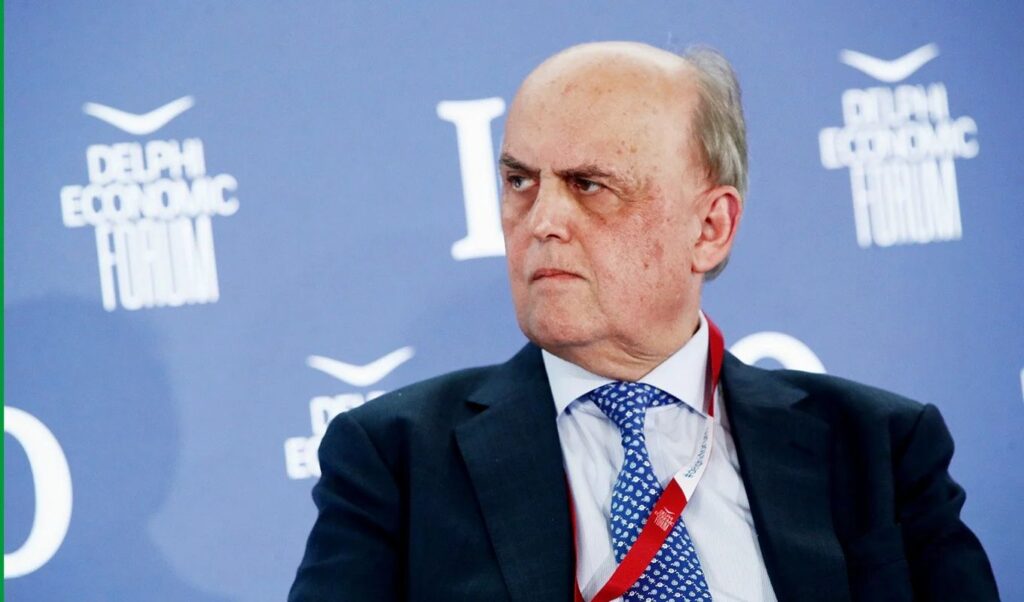
Speaking at the NEFI conference, the president of the Greek Development Bank, Giorgos Zavvos, stressed that development banks must expand their financing into defence, security, and resilience — and become “smart” institutions capable of reading an economy that constantly shifts like “shifting sand,” translating those shifts into precisely targeted financial tools.
At the heart of this transformation will be investment in innovation — not as the preserve of a few pioneering companies, but as a force that can permeate the entire productive base, and above all, small and medium-sized enterprises. Banks and development institutions must also reinvent themselves as platforms that help SMEs gain access to artificial intelligence capabilities, data, expertise, and services they could not develop on their own. As Zavvos noted in an interview with MoneyPro, outlining the challenges ahead, Greece’s development strategy cannot be designed around the economy we are leaving behind — it must be built around the economy that is already taking shape. If Greece wants to be at the center of developments rather than on the sidelines, the defining challenge is now the transformation of its productive potential.
Originally published in Money Pro by Parapolitika