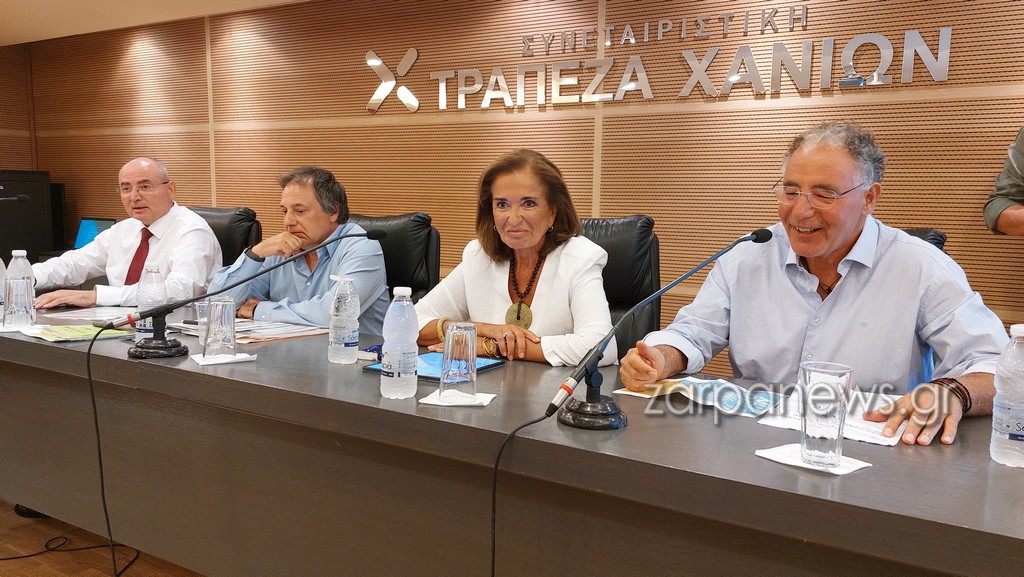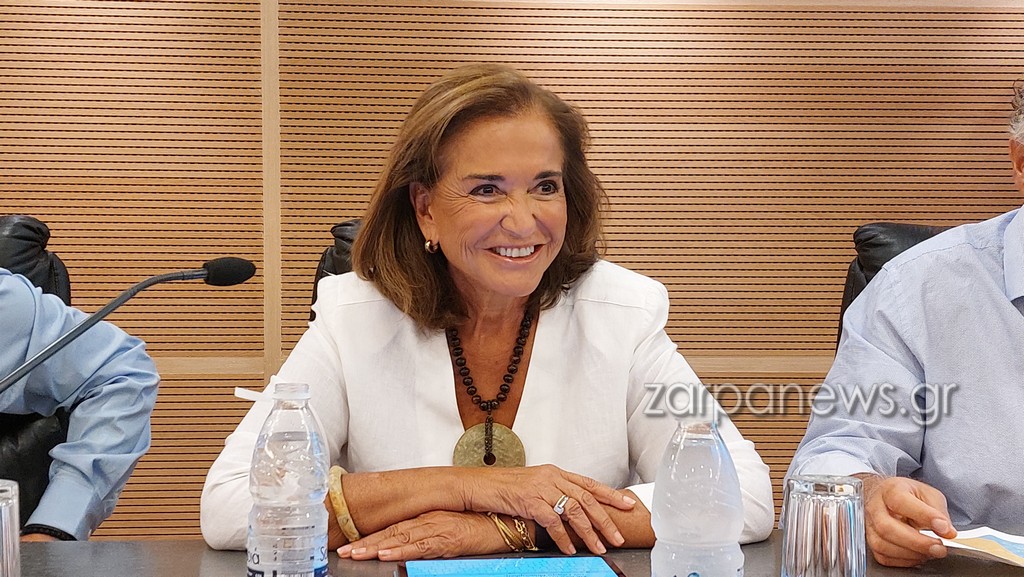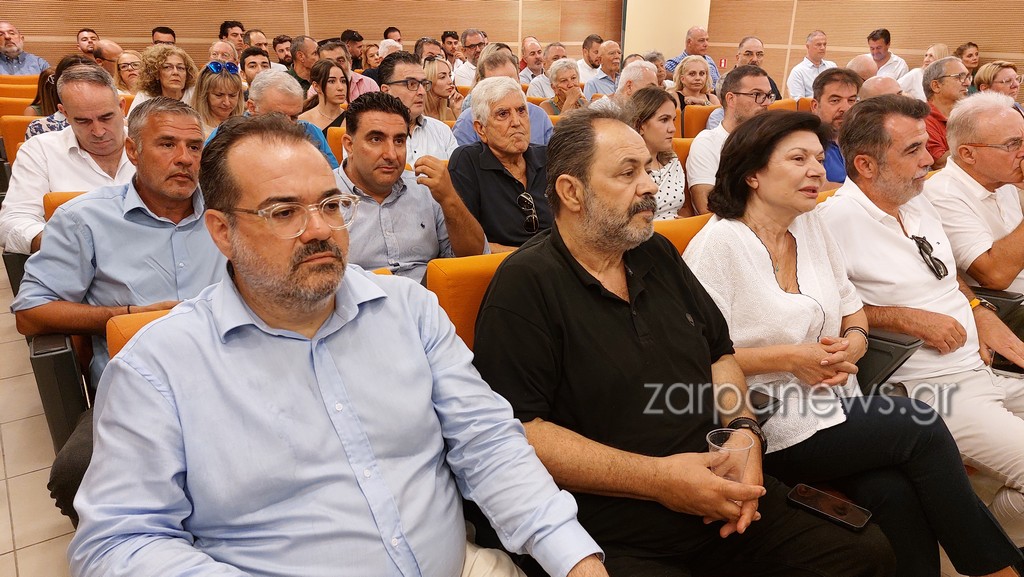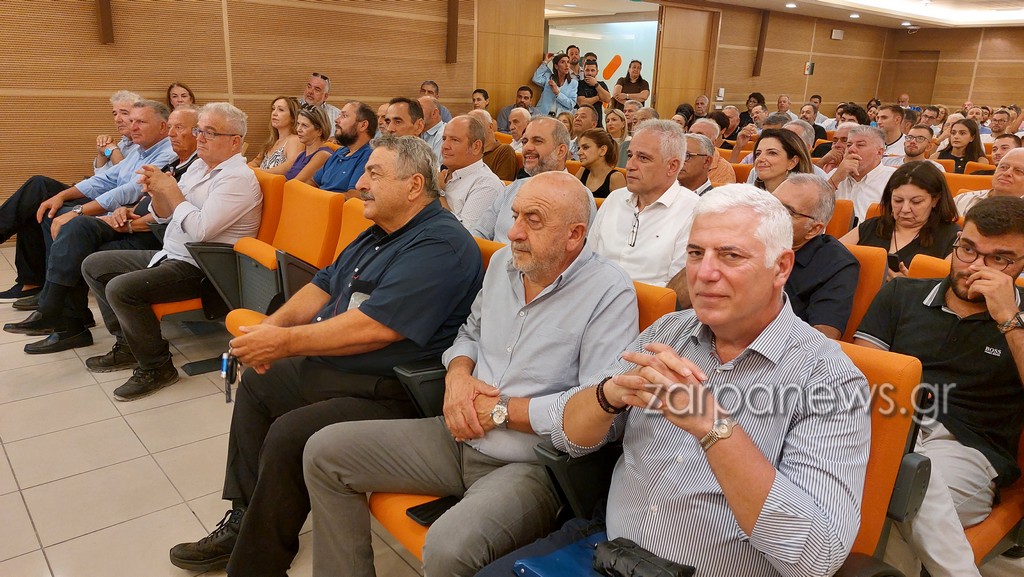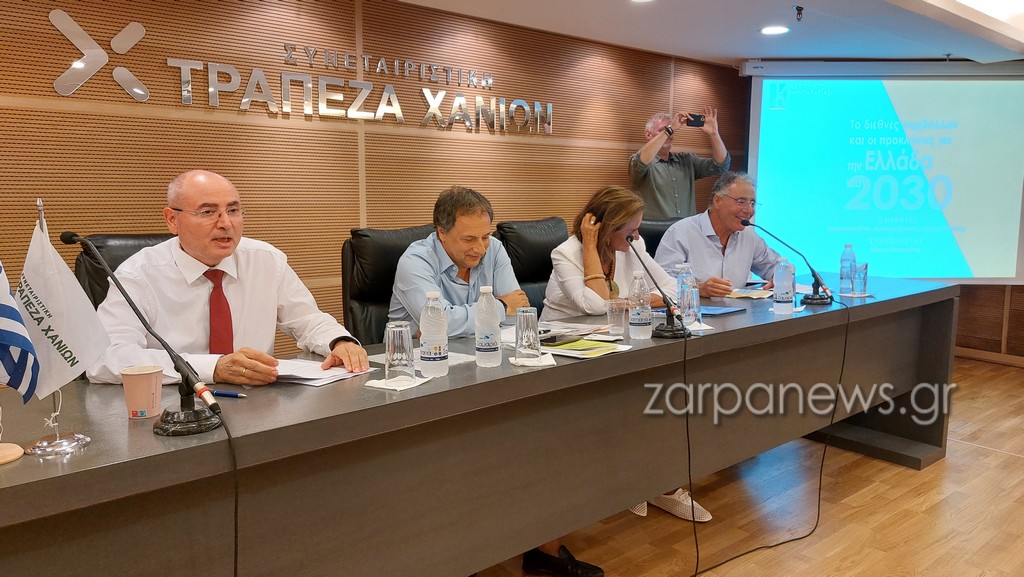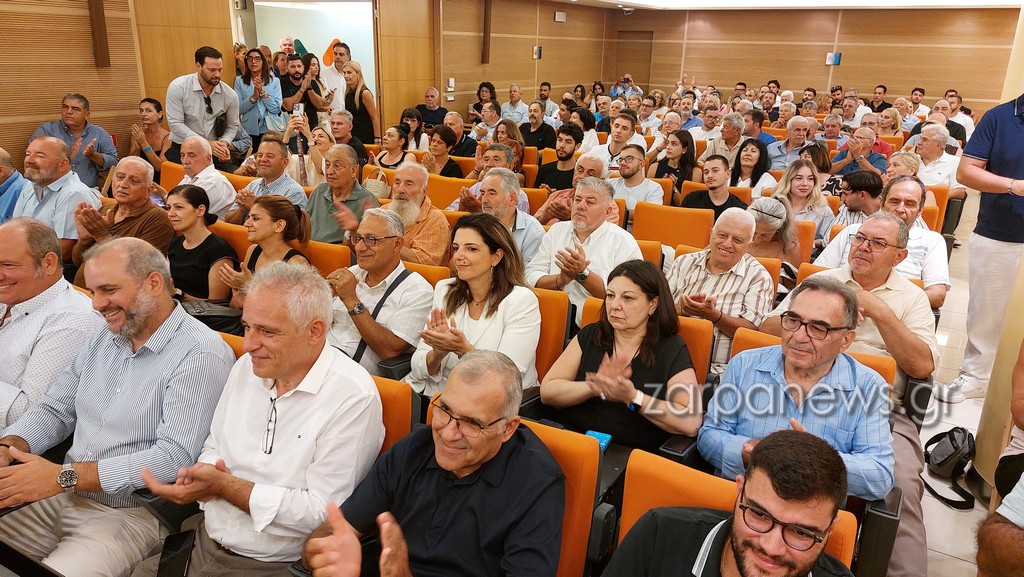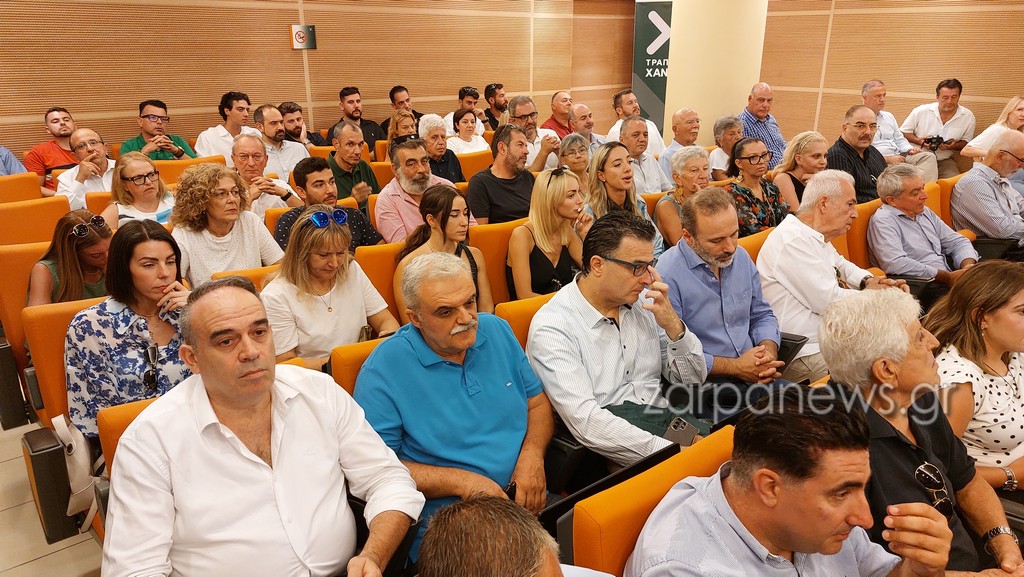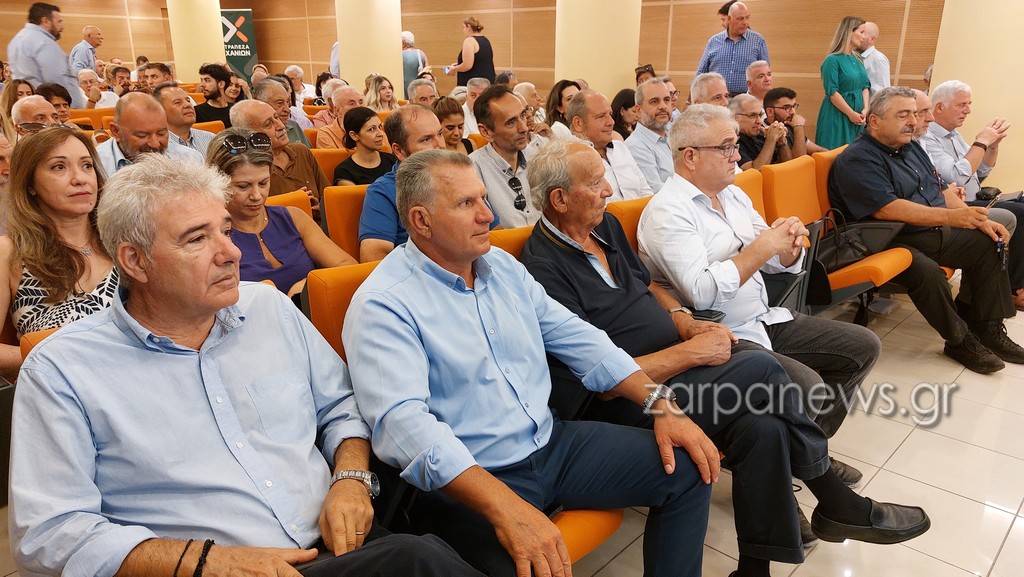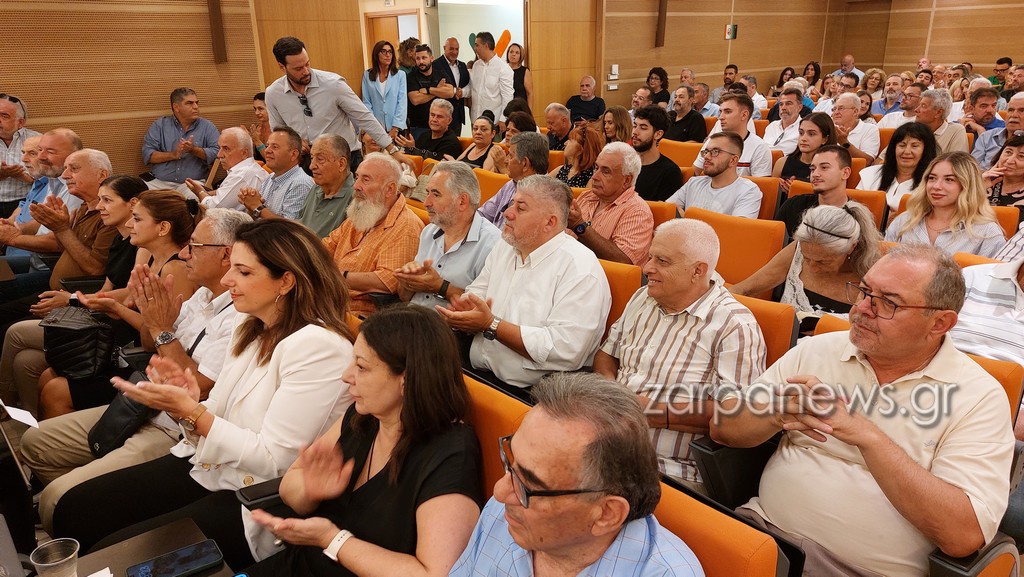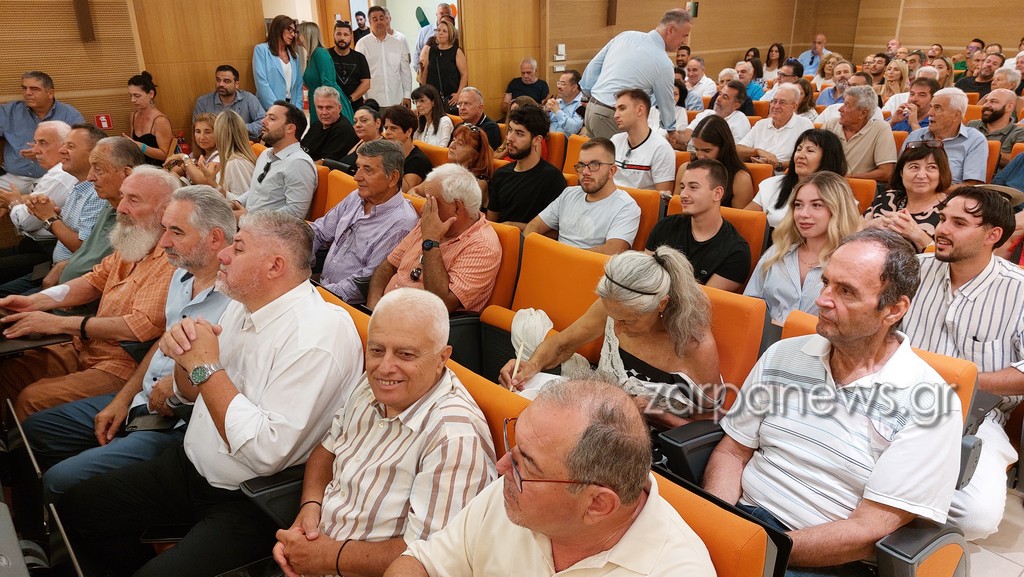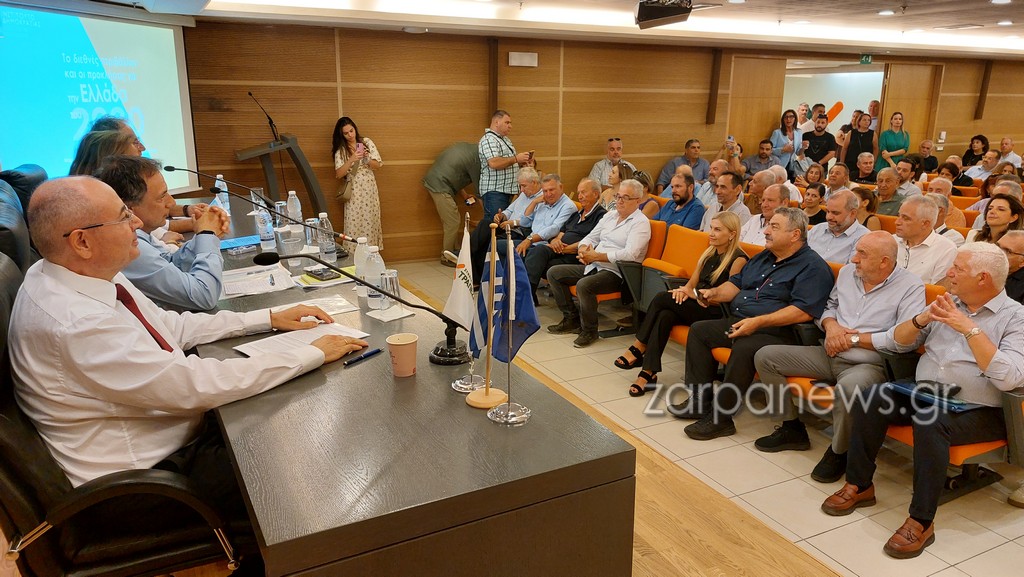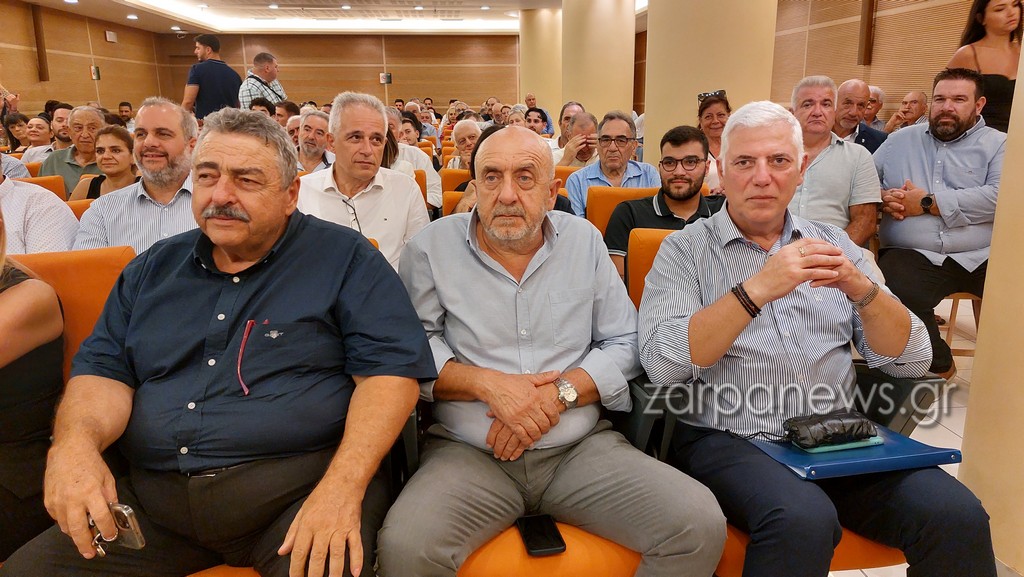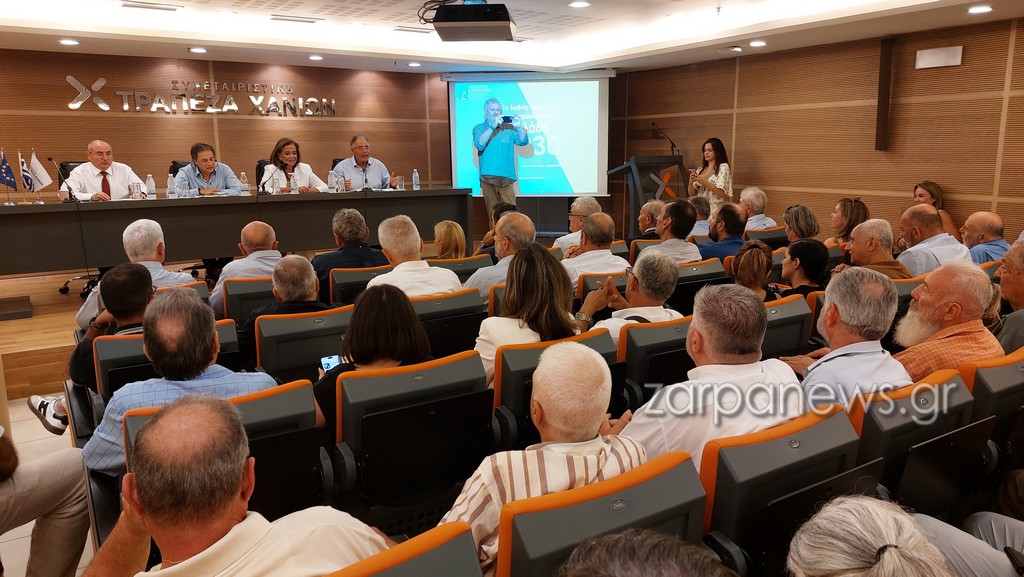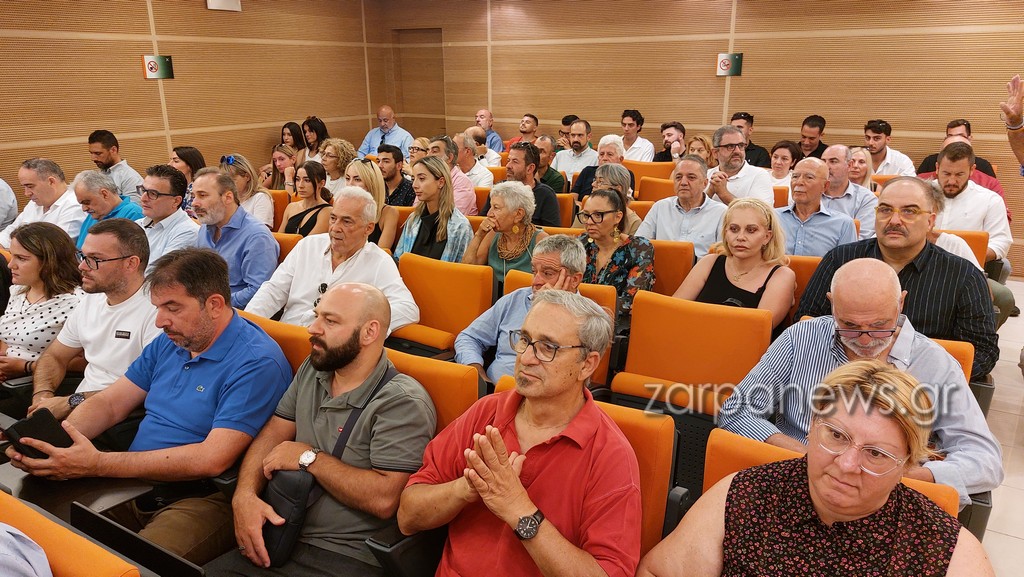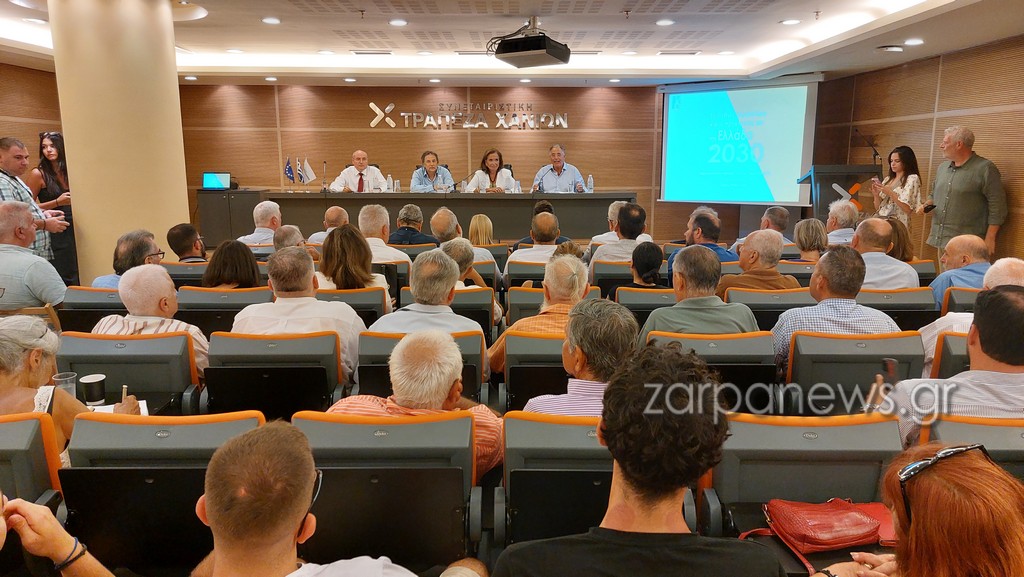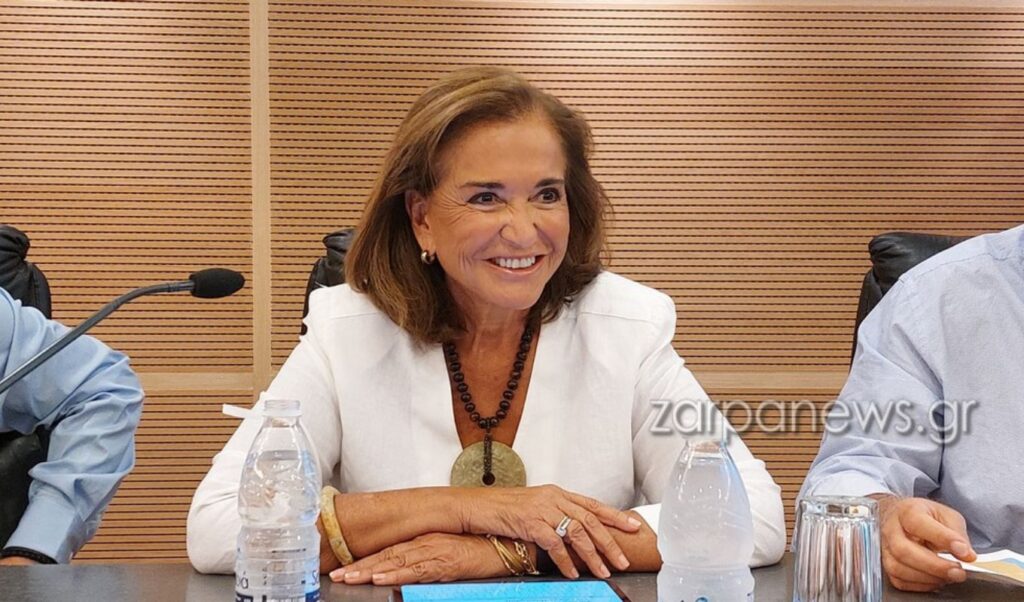
A clear message that national elections will be held as scheduled, at the appointed time, was sent from Chania by New Democracy MP and chair of the National Defence and Foreign Affairs Committee, Dora Bakoyannis. Ms. Bakoyannis spoke at an event focused on global challenges and Greece’s path into the new decade, organized by the “Konstantinos Karamanlis” Democracy Institute on Thursday afternoon (6/8) at the Amphitheatre of the Cooperative Bank of Chania.
Responding to a question from zarpanews.gr, the former minister moved to put an end to speculation about an early snap election, stating characteristically that “the universe has now grasped that this is simply not an issue.” She also called for an end to the surrounding speculation about her own candidacy, stressing that public debate should focus on the real challenges facing the country. Dora Bakoyannis underlined that the government remains firmly committed to addressing critical issues such as the climate crisis, geopolitical developments, and Greece’s energy security.
Dora Bakoyannis: Crete holds a pivotal position, both geopolitically and geostrategically, as well as on the energy map of the wider region
“Today we are talking about tomorrow — about the opportunities and the risks taking shape within a new geostrategic, climate, and energy reality. Our goal is to open a meaningful dialogue, to highlight the possibilities that exist, and to examine how we can better prepare for the challenges ahead.
Crete holds a pivotal position, both geopolitically and geostrategically, as well as on the energy map of the wider region. At the same time, it is a place already experiencing the consequences of the climate crisis. That is why it is essential that we prepare as thoroughly as possible, drawing on knowledge and scientific evidence. Together with experts, we will analyse what we can realistically do to effectively protect both our society and our natural environment,” Ms. Bakoyannis remarked.
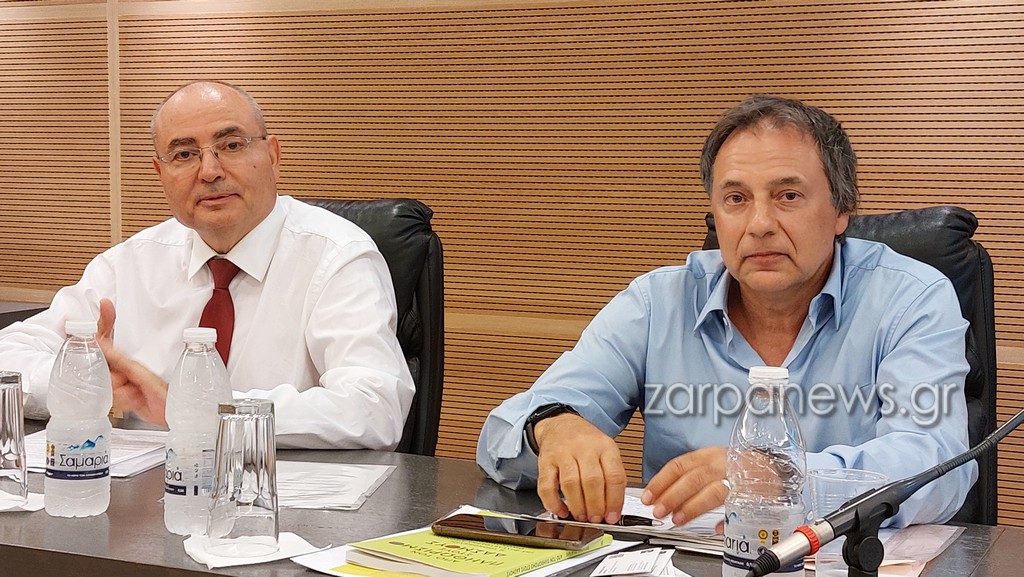
Other speakers at the event included the Deputy Governor of the Bank of Greece, Professor at the University of Piraeus and member of the IDKK Scientific Council, Theodoros Pelagidis, Associate Professor at the Technical University of Crete, Giorgos Atsalakis, and the event’s moderator, Professor and Director of M.A.I.CH., Giorgos Baourakis.
Responding to a question from zarpanews.gr about non-performing loans, Bank of Greece Deputy Governor Theodoros Pelagidis highlighted the importance of maintaining Greece’s growth trajectory as a prerequisite for effectively managing the non-performing loan (NPL) problem. He noted that the issue of bad debt has largely shifted from the banking sector to the private sector, and that as long as the economy continues to grow and incomes are maintained or increase, the conditions are created for more debt restructuring arrangements and smoother loan repayment.
He also noted that significant progress has been made within the banking system, stressing that the key challenge is to sustain economic growth. As he warned, if economic momentum stalls and incomes decline, the non-performing loan problem could return with greater intensity.
Associate Professor at the Technical University of Crete, Giorgos Atsalakis, emphasised the pivotal role Crete can play in the new geostrategic reality, as international politics and economics increasingly turn their focus to the security of energy, trade, and digital networks. He noted that the island’s geographic location — at the crossroads of Europe, Africa, and the Middle East — makes it a strategic hub for the passage of new energy corridors, interconnections, and data transmission networks.
He further pointed out that Crete has the potential to become a key pillar of the country’s development, leveraging its advantages in the sectors of energy, shipping, transport, and tourism. He stressed, however, that capitalising on the opportunities being created requires proper planning, stable governance, and strategic investment, so that the island can evolve into an international hub delivering added value to the Greek economy.
The need for Greece to prepare for the major challenges of the next three years was addressed by M.A.I.CH. Director Giorgos Baourakis, who noted that the event centred on issues such as geopolitical security, climate change, the economy, unemployment, and human capital.
He placed particular emphasis on Crete, highlighting the island’s significant competitive advantages — including its unique natural environment, rich biodiversity, high-quality agri-food products, strong tourism offering, and its universities and research institutions. He stated that the goal is to leverage these strengths so that Crete can develop into a model and hub for sustainable development, making a strong contribution to the country’s overall growth.
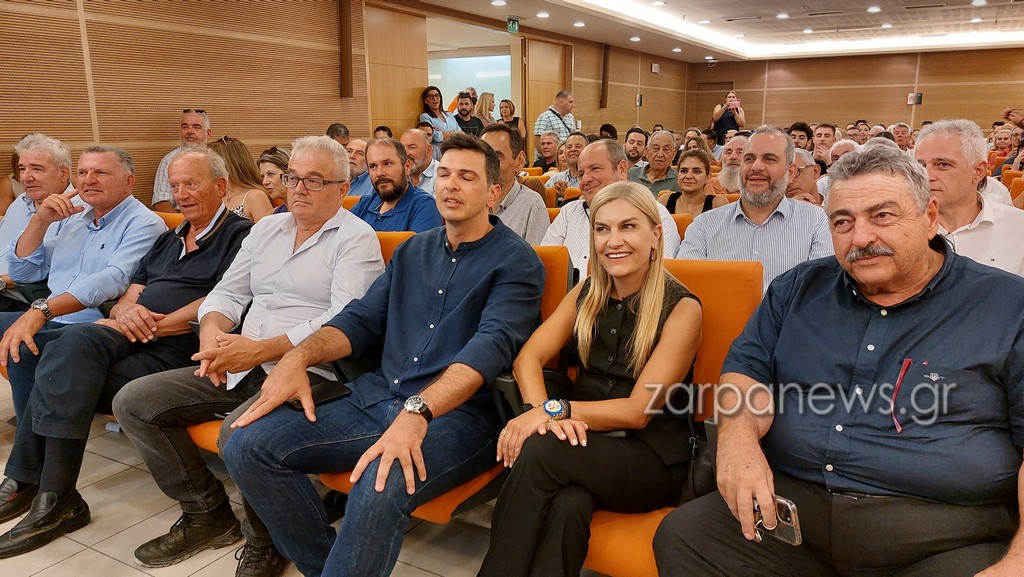
Also present at the event were Deputy Minister of Migration and Asylum Sevi Voloudaki and New Democracy MP for Chania Alexandros Markogiannakis, among others.