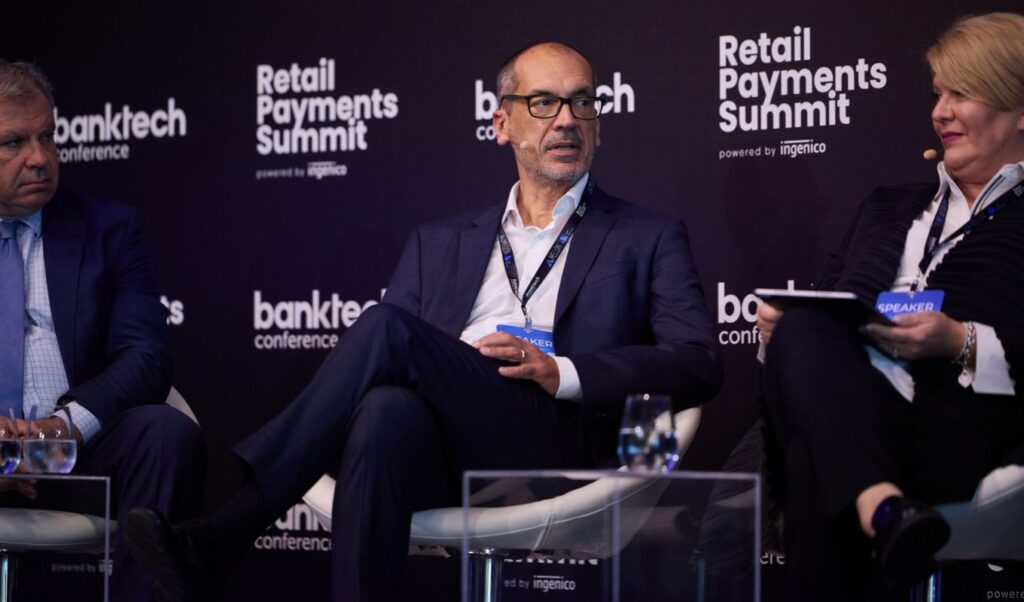
In an environment where the boundaries between physical and digital commerce are fading and payment options are multiplying, the future of transactions will not be defined by a single payment method or technology. It will be shaped by the ecosystem’s ability to combine different infrastructures, channels, and services into a unified, secure, and flexible experience for both businesses and consumers. This transition was brought to the forefront by NBG Pay at the Banktech Conference 2026, through the participation of Christoforos Chatzopoulos, Managing Director NBG Pay & General Manager Global Payments, and Antigonos Papadopoulos, Deputy Country Head, Global Payments Greece NBG Pay and Managing Director EDPS, in two discussions that highlighted both the evolving role of payment providers and the new demands being placed on infrastructure, interoperability, and the coexistence of different payment rails.
Read: ECDM Expo 2026: Comprehensive electronic payment and eCommerce solutions from NBG Pay and EDPS
The common thread running through both executives’ contributions was the shift toward a more open and pluralistic payments landscape, where cards, digital wallets, instant account-to-account payments, and emerging technologies will coexist. In this new environment, value will be determined both by providers’ ability to meaningfully address business needs and by the capacity of infrastructure to support different payment methods with security, reliability, and interoperability.
From transaction processing to strategic partnership
In the panel focused on what merchants truly evaluate and how acquirers must evolve to remain their most trusted business partner, Christoforos Chatzopoulos highlighted the expanding role of the modern payment provider.
Pricing remains an important factor for every business. However, as digital payments become an inseparable part of daily operations, value is gradually shifting away from the transaction itself toward the full suite of services surrounding it: infrastructure reliability, security, technical support, integration with business systems, and access to data that can drive better business decisions.
In this context, reporting takes on particular significance, as a comprehensive view of transactions can help a business better understand its activity, monitor cash flows more effectively, and leverage data as a management and growth tool.
At the same time, value-added services such as instalment payment options, loyalty software, split payments, and instant payments are further broadening the acquirer’s role. The payment provider is no longer positioned solely at the end of the transaction — it is now called upon to contribute to operational efficiency, enhanced customer experience, and ultimately the growth of the business itself.
As Christoforos Chatzopoulos, Managing Director NBG Pay & General Manager Global Payments, noted: “A business’s relationship with its payment provider can no longer be evaluated solely on the cost of a transaction. Merchants need a partner who understands how they operate, delivers reliability and security, and can turn technology and data into real business value. The evolution of acquiring lies precisely there: in the transition from transaction processing to a long-term partnership that helps businesses operate better and grow.”
Cards and A2A payments: The future is coexistence
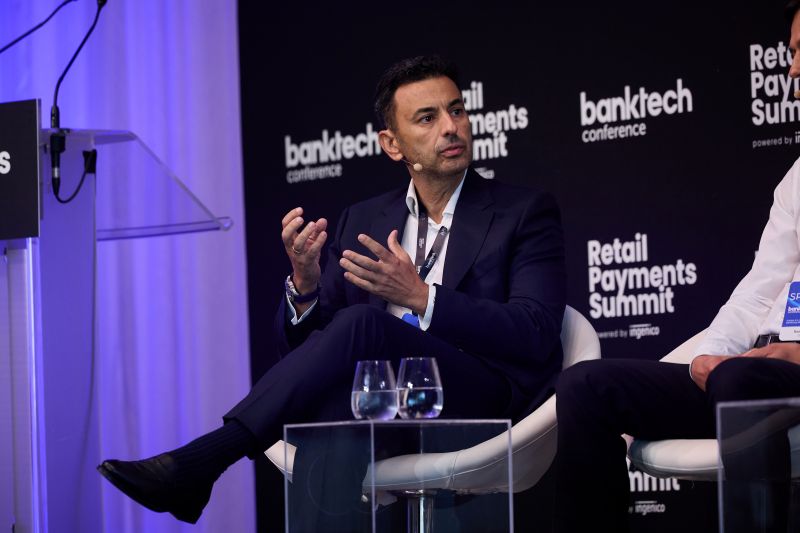
The evolution of the same ecosystem from an infrastructure perspective took centre stage in the panel “Two Rails, One Checkout: How Cards and A2A Will Coexist”, in which Antigonos Papadopoulos participated.
As instant account-to-account payments expand their presence in everyday commerce, the checkout experience is evolving into a multi-rail payment environment. In this transition, specialised technology infrastructure and transaction routing and switching systems — such as those provided by EDPS — play a pivotal role, ensuring seamless connectivity and interoperability between different networks.
This evolution extends beyond acquiring. It concerns the entire infrastructure underpinning payments and its capacity to support different payment methods and networks securely and reliably, even at significant scale.
Particularly at the European level, the growth of A2A payments across more markets will depend significantly on the ability of infrastructure to support this connectivity consistently, securely, and reliably.
As Antigonos Papadopoulos, Deputy Country Head, Global Payments Greece NBG Pay and Managing Director EDPS, noted: “The conversation about the future of payments is not about whether cards will be replaced by account-to-account payments. As acquiring and payment acceptance technology providers, we don’t represent a specific payment method — our business is payments, regardless of the method or infrastructure used. For merchants, the goal is to generate real business value. Through NBG Pay and EDPS, we combine the acquiring side with acceptance technology, aiming to offer more options through a simple, secure, and reliable experience. At the end of the day, merchants need more successful payments with as little complexity as possible.”
The road ahead: More options, less complexity
These developments are converging toward a model in which payment is embedded ever more naturally into the purchasing experience, while technological complexity moves to the background. In a market where the needs of a small business, an e-shop, a retail chain, or a tourism company differ significantly, technology alone is not enough. Differentiation will be determined by the provider’s ability to understand the business environment, unify different channels and payment methods, and translate innovation into tangible value.
With this in mind, NBG Pay and EDPS — drawing on their deep knowledge of the Greek market and the international expertise and technological infrastructure of Global Payments — aim to serve as long-term partners for Greek businesses, supporting their day-to-day operations, digital transformation, and growth within a payments ecosystem that is becoming increasingly complex at the infrastructure level and increasingly simple for the end user.