Hope for Democracy has entered a period of open internal conflict, as former members of the newly established political movement have gone public with their disagreements with the leadership, triggering fresh tension over how the party is being organized and run.
“We didn’t leave over seats”: Heavy criticism from the “22”
Just days ago, 22 former party members released a joint statement outlining the reasons behind their departure. According to the statement, they had initially believed that ordinary citizens would play a meaningful role in shaping the party’s structures, processes, and decisions. Over time, however, they say a centralized model took hold, with key decision-making powers concentrated in the hands of a small circle of individuals. They also cited a lack of collective processes and transparency, as well as a culture of inner circles, factions, and behind-the-scenes power struggles.
Thanasis Avgerinos struck a similar tone, launching a fresh attack against Maria Karypstianou following the publication of the joint statement by the “22.” Among other things, he called for an open discussion about what, in his view, went wrong with the project and why “virtually the entire magnificent Tempi Movement was left outside of Hope for Democracy” — concluding pointedly that “Hope may be the last to die — but it is dying…”
The Karypstianou camp strikes back
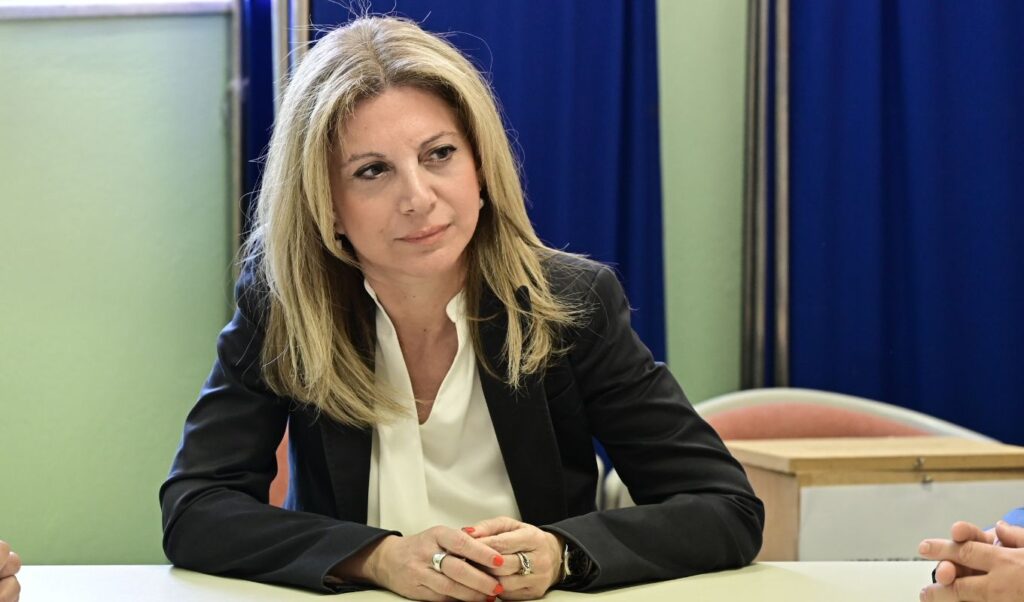
As resignations from Hope for Democracy continue to mount and accusations from former members pile up, the party leadership appears largely unbothered by the internal turmoil. Instead, it has chosen to turn its fire on the media, claiming that the real target is Maria Karypstianou‘s movement — not the “corrupt power establishment.”
“SYRIZA is shedding members… within PASOK, the internal knives are being sharpened from afar, while in New Democracy more than 1,000 members and candidates from across the country have already defected to Antonis Samaras,” reads the party’s official statement, which goes on to add: “Stormy winds are blowing across the political landscape — and yet, curiously, the majority of Greek media spend every single day obsessing over one member from Messolonghi who resigned from the Hope for Democracy movement the day before yesterday. Because the real target is Maria Karypstianou’s movement — not the corrupt system of absolute cronyism and entrenched power. The facts speak for themselves.”
The day after the departures
The crisis engulfing Hope for Democracy highlights the profound difficulty of transforming a powerful wave of public sympathy and personal appeal into a cohesive, functioning political party.
While the leadership believes that removing dissenting voices will strengthen and consolidate the party, the “22” faction is warning of further revelations about the movement’s inner workings.
With some of the closest allies from the party’s early days now firmly in opposition, the central question is whether Maria Karypstianou will pursue a genuine political de-escalation — or whether the movement will continue its slide toward further fragmentation.