“The €160 million will serve as a springboard for the renovation of the historic infrastructure of our historic institutions,” said Prime Minister Kyriakos Mitsotakis, referring to the new donation of €160 million from Greece’s four systemic banks for the upgrade of universities.
Read also: Mitsotakis sends message ahead of elections: “We have very good chances of a third term — the center defeats populism through results and consistency” (Photos)
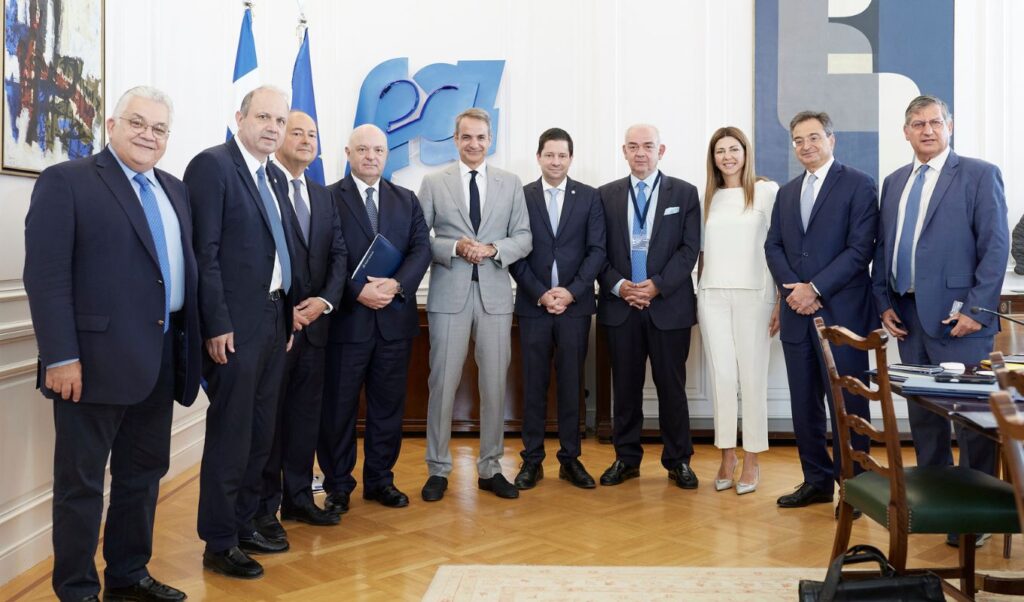
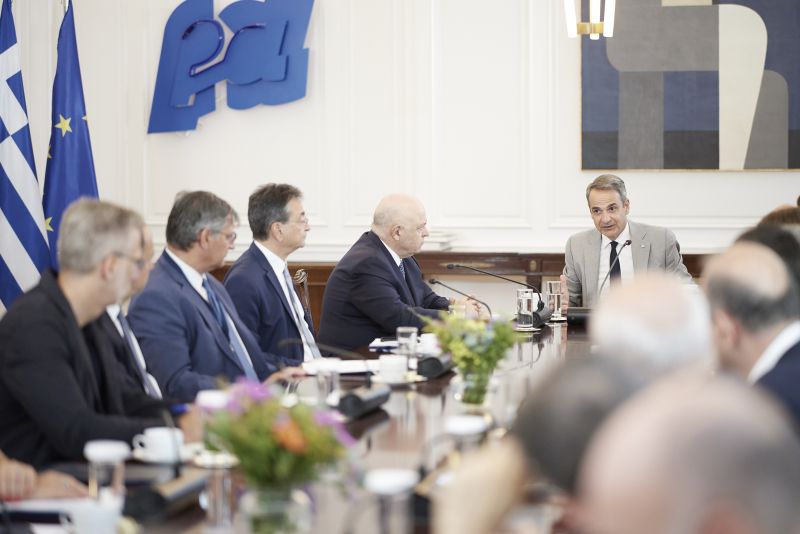
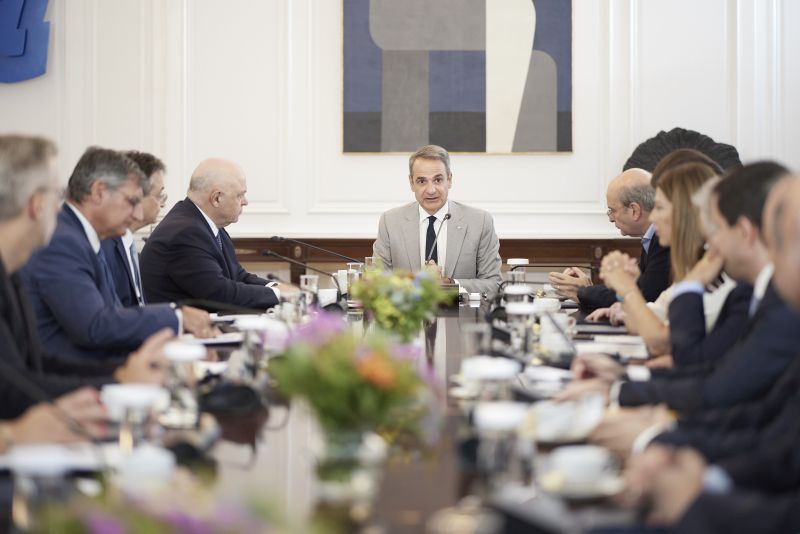
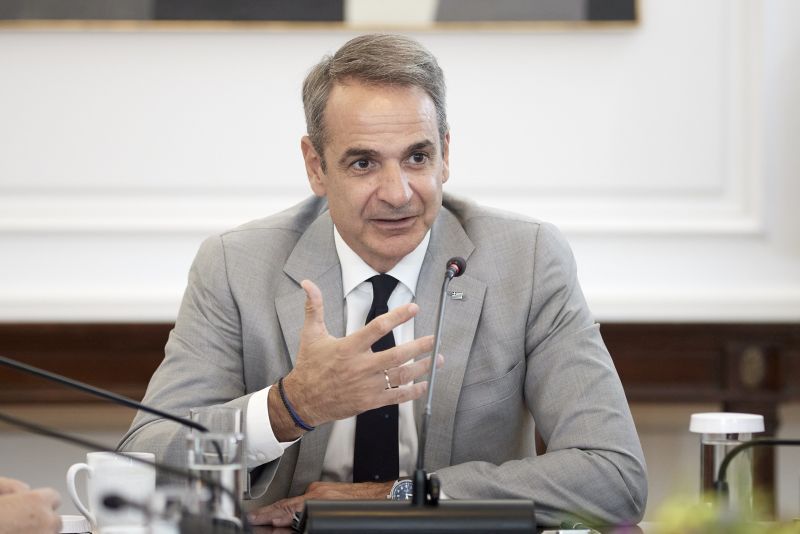
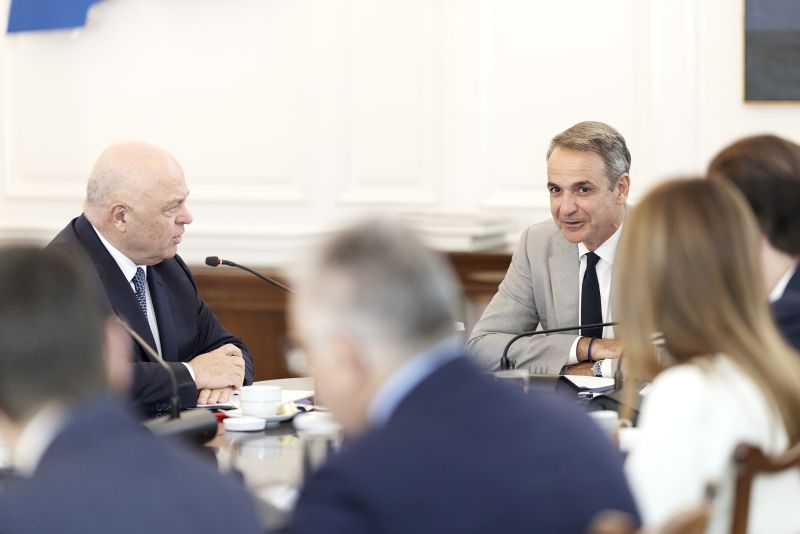
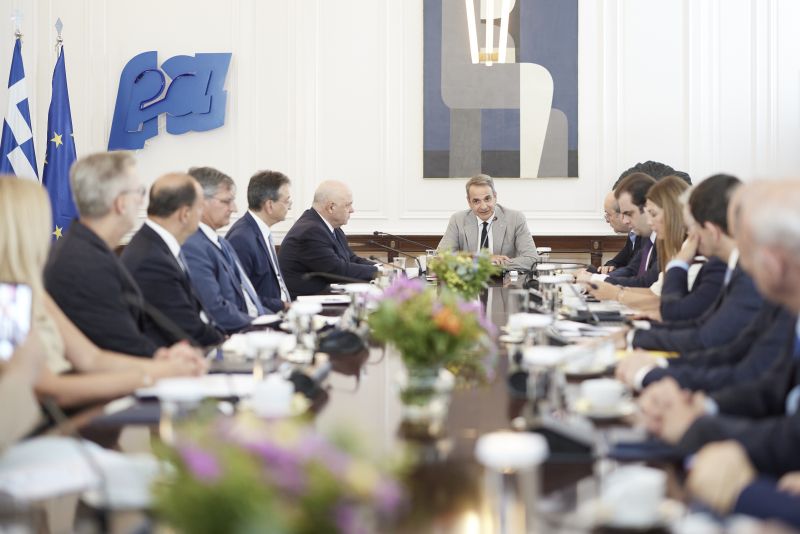
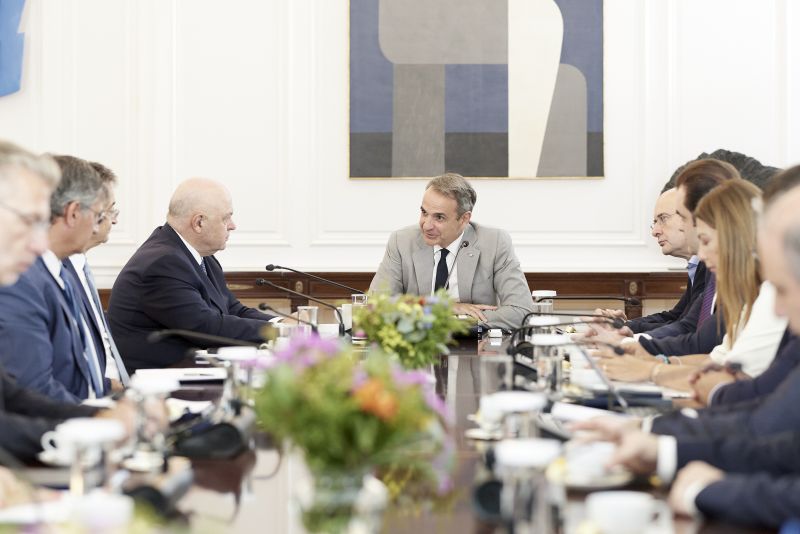
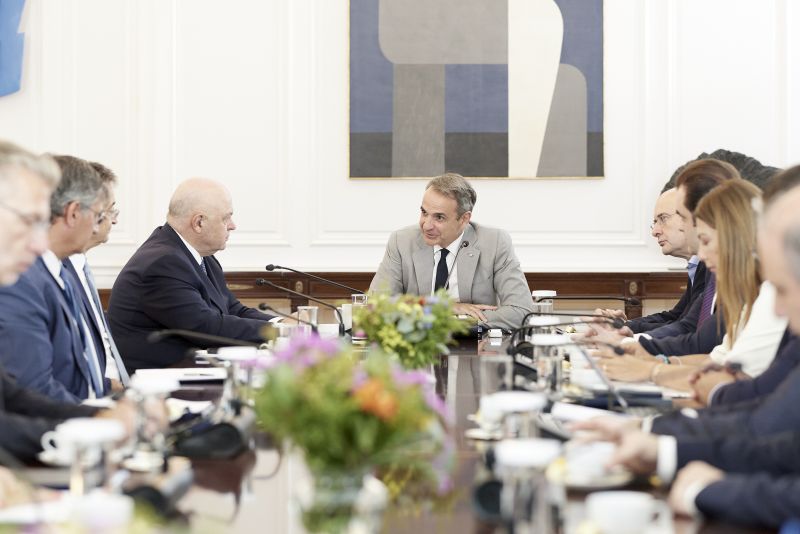
The donation aims to radically renovate and upgrade the facilities and building infrastructure of the National and Kapodistrian University of Athens (NKUA), the Aristotle University of Thessaloniki (AUTH), and the National Technical University of Athens (NTUA). It was announced on Friday (17/7) by the Chairmen and Chief Executive Officers of Alpha Bank, Eurobank, National Bank of Greece, and Piraeus Bank, during a meeting chaired by the Prime Minister at the Maximos Mansion.
Mitsotakis on the €160M bank donation for university upgrades: “A decisive step — a new day is dawning”
More specifically, the initiative aims to create modern and accessible facilities at three of the country’s largest and most historic academic institutions. It includes the preparation of studies for the redesign of the university campus and the maintenance of teaching, administrative, and common-area buildings at NKUA; the renovation of student dormitories at AUTH, along with the upgrade of lecture halls and shared spaces; and the renovation of the iconic Gini Building at NTUA.
As Prime Minister Kyriakos Mitsotakis stated: “With the initiative we are presenting today, a very decisive step is being taken toward upgrading our public universities, as the €160 million donation from Greece’s four systemic banks will serve as a springboard for the renovation of the historic infrastructure of our historic institutions.”
The donation will complement interventions financed through national and European funds for the modernization and upgrading of public university infrastructure, as part of the broader investment in public education. The Prime Minister added: “I am absolutely confident that these significant resources will be put to good use and will add to the important expenditures already made from national funds and from the Recovery Fund.” He further noted: “I believe that a new day is now dawning for our public universities — one without occupations, with libraries, meeting spaces, and spaces for joy and knowledge. That is the public university we want, and that is what we will all work toward.”
This new donation follows the earlier contribution by the four systemic banks to fund the “Marietta Giannakou” programme, through which a total of 670 public schools across the country have been or are being renovated. As Kyriakos Mitsotakis noted: “The ‘Marietta Giannakou’ programme is being implemented for the second consecutive year. I have to say that, as you have also seen, it brings great joy to local communities, who can see that schools which had been neglected are being upgraded, made accessible, repainted, and having their sports facilities repaired — all of which brings so much happiness to children and to every neighbourhood. And I believe that these donations truly have a very significant social and educational impact.”
Attending the meeting were Deputy Prime Minister Kostis Hatzidakis, Minister of National Economy and Finance Kyriakos Pierrakakis, Minister of Education, Religious Affairs and Sports Sofia Zacharaki, Minister of State Akis Skertsos, Deputy Minister of Education, Religious Affairs and Sports Nikos Papaioannou, CEO of the public entity “Building Infrastructure” Thanasis Gianaris, Rectors of NKUA Gerasimos Siasos, AUTH Kyriakos Anastasiadis, and NTUA Ioannis Chatzigeorgiou, Alpha Bank Chairman Dimitris Tsitsiragkos representing CEO Vassilis Psaltis, Eurobank CEO Fokion Karavias, National Bank of Greece CEO Pavlos Mylonas, Piraeus Bank Senior General Manager Vassilis Koutentakis representing CEO Christos Megalou, Hellenic Bank Association Chairman Giorgos Zanias, and Acting HBA Director General Charoula Apalagaki.
View photos:
Statement by Sofia Zacharaki
For her part, Minister of Education, Religious Affairs and Sports Sofia Zacharaki stated: “This is a significant day, Prime Minister, building on the actions that the Ministry of Education, Religious Affairs and Sports has been taking in recent years. With particular emphasis from the two previous terms — through my predecessors Niki Kerameus and Kyriakos Pierrakakis — and with the current political leadership alongside Nikos Papaioannou, we are working to strengthen Greek public universities through a very significant increase in public funding.
I should already note that since April, the regular subsidy exceeding €110 million for universities’ operating costs has been disbursed. An amount exceeding €120 million for maintenance works has already been allocated from the public investment programme — known in the new programming period as EPA. And of course, let us not forget that the very optimistic and ambitious, I would say, project of building student dormitories at both regional and central universities is underway. We will surpass the target of constructing 8,500 new beds for our students over the next five years — a PPP project that itself exceeds €700 million.
Today, all of this is being complemented by an excellent initiative from the banks, to strengthen three historic institutions that also carry a very large — and I would say, time-worn — building stock. Let me note in closing that this is in line with your own direction over recent years: strengthening the Greek public university through infrastructure, but also through increases in permanent staff, academic faculty members, and other provisions aimed at the internationalization and outward orientation of Greek universities.”
Zanias on the donation
Hellenic Bank Association Chairman Giorgos Zanias spoke on behalf of the four donor banks:
“The four systemic banks — Alpha, Eurobank, National Bank, and Piraeus — have decided to respond to the new call, yours and the state’s more broadly, to contribute to the radical upgrade of three iconic Greek universities. Two of them are also the largest Greek universities. In this way, we believe that the production and transmission of knowledge that takes place in universities will be further strengthened.
This initiative runs in parallel with the ongoing ‘Marietta Giannakou’ school renovation programme, to which the systemic banks are contributing €400 million over the next two years. And now they are contributing an additional €160 million for higher education — meaning a total of €560 million for all levels of education across the country.
This is possible today because, after everything we went through during the crisis, the Greek banks are now strong and can play their developmental and social role. Within the framework of corporate social responsibility — under which this initiative also falls — the banks, including this donation, will have contributed approximately €1 billion in recent years.”
Prime Minister Kyriakos Mitsotakis’ full statement:
“Today is truly, ladies and gentlemen, a beautiful day, because with the initiative we are presenting, a very decisive step is being taken toward upgrading our public universities, as the €160 million donation from Greece’s four systemic banks will serve as a springboard for the renovation of the historic infrastructure of our historic institutions.
I want to begin by thanking the four systemic banks for yet another important corporate social responsibility initiative, which adds to the €400 million already being made available, over a four-year period, for the upgrade of our school infrastructure. The ‘Marietta Giannakou’ programme is being implemented for the second consecutive year. I have to say that, as you have also seen, it brings great joy to local communities, who can see that schools which had been neglected are being upgraded, made accessible, repainted, and having their sports facilities repaired — all of which brings so much happiness to children and to every neighbourhood. And I believe that these donations truly have a very significant social and educational impact.
This particular donation — which came out of a conversation I had with the Rectors as well — adds to the dedication that Greek banks show in supporting our national education system. And now we are turning our attention to the universities: the three oldest and most iconic universities, with a donation aimed at making substantive interventions in university campuses, which, as we know and as the Rectors themselves have noted, have unfortunately been somewhat neglected over time and are in need of significant additional intervention, beyond the resources already provided by the state.
I believe that with this very significant donation — with NKUA benefiting the most, but with substantial amounts also allocated to NTUA and AUTH — the Rectors’ offices will be given the opportunity to carry out very important interventions. There is indeed, I would say, a mismatch between the significant progress our universities — our public universities — have achieved, especially in terms of international outreach, and the state of their infrastructure, particularly the large campuses, which now unquestionably require a more substantive and “heavy” intervention — one that can now be financed through this donation.
I also want to take this opportunity to congratulate the Rectors: first, for the fact that you have embraced the government’s policy direction to invest in the international outreach of our universities. The fact that we can today attract foreign students — both undergraduate and postgraduate — to English-language programmes, in the numbers that have been mentioned, is, I believe, a great achievement for the Greek public university, which is now breaking free from an insular mindset, engaging more closely with the market, and forging important agreements with foreign institutions. And in doing so, it is clearly also improving the quality of educational services it provides — which is, after all, its primary objective.
But I also want to congratulate you for the great determination you have shown on matters relating to the enforcement of law and order within your universities. This has been the direction of the Greek state — from the reform of the asylum law to the explicit instruction I have personally given to the Minister for Citizen Protection that whenever police intervention is requested, it must be able to intervene to address incidents of unlawful behaviour.
We have made very significant progress in this direction, with the result that there are essentially no active occupations within the universities, and spaces that had been under occupation for many decades have been returned to the public universities — to the benefit of students, faculty, visitors, and staff. And this could not have happened without the active participation of the Rectors. I know very well, gentlemen, that you have done this and continue to do so at personal cost. I want to acknowledge that, and I want you to know that you will continue to have our unwavering support in this direction. This chapter — of a historic anomaly, where anyone, simply by invoking some ideological preference, could occupy public space — must close definitively and irrevocably. And this is a non-negotiable political priority. That, of course, also requires investment on your part in systems such as controlled-access entry. I know that steps are being taken in this direction; I believe we can move even faster.
And of course, a broader intervention is also needed regarding student dormitories, to which I want to give particular attention. A modern university that cannot provide students living in dormitories with an environment that is attractive, aesthetically pleasing, and above all safe is simply not conceivable today.
It is our commitment that we will invest significant additional