With the cost of living remaining the government’s Achilles’ heel, the Prime Minister’s office is deploying new tools to manage rising living costs — which citizens consistently rank as their most pressing daily concern.
The Mitsotakis government intensifies its battle against the cost of living crisis
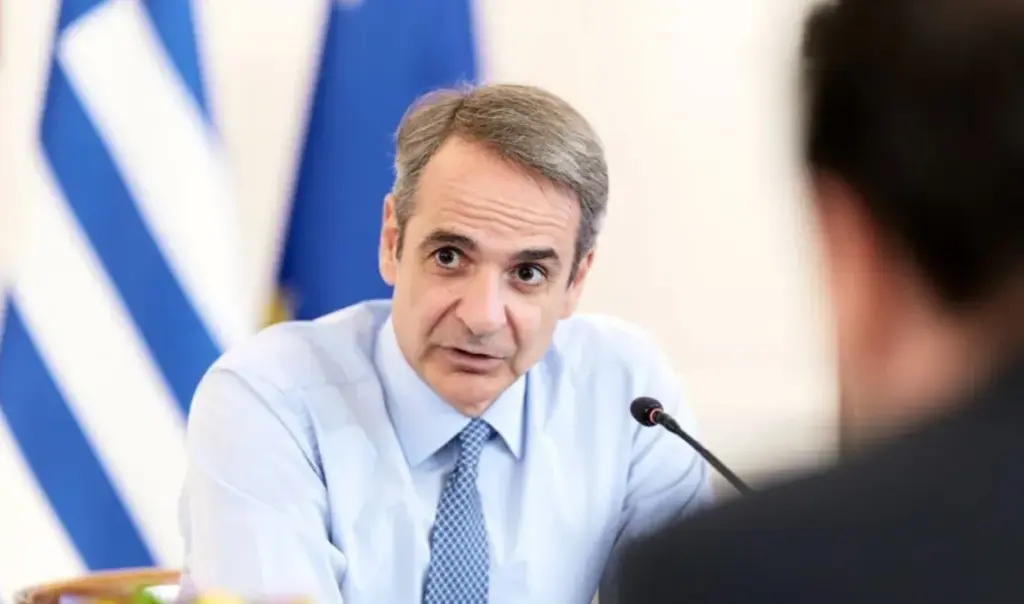
Against this backdrop, Prime Minister Mitsotakis announced on Friday a reduction of 10 cents per litre on petrol and 5 cents per litre on diesel, following an agreement with the country’s two major oil refineries. This came after a deal struck in preceding days between the government, the food industry, and supermarket chains to freeze all shelf prices for the next two months, followed by price reductions on essential goods from September onwards — sending a clear message that the government is actively intervening in the ongoing battle against inflation.
Major infrastructure projects set for delivery this July
Against a shifting political backdrop, the government is signalling that the Prime Minister and his cabinet are pressing ahead with their governing agenda, with a clear eye on the spring 2027 elections, placing particular emphasis on the delivery of flagship infrastructure projects. As part of this push, the first of 25 new trains being introduced to the country has been officially handed over, as part of a broader programme to modernise Greece’s rail network. The second train is scheduled to arrive within July. Also due this month are the extension of the Thessaloniki Metro towards Kalamaria, expected at the end of July, and the opening of the E65 motorway to traffic on 23 July. The Prime Minister’s summer tour schedule — covering destinations both within and beyond the Attica region — will be shaped around the inauguration and handover timetable for these projects, with visits continuing throughout July. Tomorrow, meanwhile, the contract signing for the Skaramagkas triple interchange is planned, in the presence of Prime Minister Kyriakos Mitsotakis, at the Diomedes Botanical Garden.
Scenarios for snap elections after the Thessaloniki International Fair remain on the table
Measures to ease the burden on citizens struggling with high living costs, combined with the delivery of major infrastructure projects, sit at the core of the government’s strategic planning — which officially points to elections in spring 2027. Nevertheless, proposals for a snap election in the autumn, following the Prime Minister’s announcements at the Thessaloniki International Fair, have not been taken off the table. Mitsotakis considers an outright parliamentary majority to be a realistic and achievable goal, and he continues to make the case that, under current conditions, a single-party majority government is the best outcome for the country. His associates have stressed that there is currently no credible alternative governing proposal on offer, nor any viable coalition partner among the existing parties. As long as the opposition remains fragmented, without a unified pole capable of mounting a serious challenge for power — and continues to fail to capitalise on the government’s declining approval ratings — the ruling party believes a majority victory is firmly within reach.
What the latest polls show for New Democracy and the opposition
On the other side of the ledger, recent polling data reveals that approximately one in two citizens would like to see a general election held within 2026, according to findings from a Pulse survey. Meanwhile, the most preferred outcome for the post-election period is the formation of a single-party majority government, rather than post-election coalition arrangements. A common thread running through the polls is New Democracy’s consistent lead and the consolidation of Alexis Tsipras’ party in second place, while the ruling party is showing clear signs of strengthening its internal cohesion.
The signal the government is sending is that the Prime Minister and his cabinet ministers are carrying on with their governing duties as normal, with the spring 2027 elections firmly in their sights.
Scenarios for a new party led by Antonis Samaras
The internal climate within New Democracy is nevertheless being affected by the resurgence of speculation surrounding former Prime Minister Antonis Samaras and his potential launch of a new political party. According to sources, Samaras is ready to “press the button” just before the next general election is called. His TikTok videos, his moves in the wiretapping scandal, and reports of intense behind-the-scenes activity and preparations by his inner circle in both Athens and the regions are being interpreted by New Democracy insiders as clear “signals” that he has reached a final decision to establish a new political movement.
New Democracy mobilises its party machinery
In this climate, New Democracy’s headquarters are planning a series of actions for the remainder of July aimed at boosting party cohesion and further activating the party’s grassroots machinery. Tomorrow, according to information from Kyriakátiki Apogevmatini, the 150 members of the party’s Political Committee — elected at the recent party congress — will gather at New Democracy’s central offices, in an initiative by party secretary Konstantinos Kyranakis to mobilise the party’s cadres ahead of the pre-election period. As part of the same effort, visits by ministers and senior officials to smaller islands and mountain municipalities — areas not yet reached by New Democracy delegations — are being planned. September will mark the launch of the “Northern Campaign”, beginning with tours of Macedonia ahead of the Thessaloniki International Fair, and then continuing across the entire country.
At the end of the month, New Democracy’s parliamentary group will also convene to discuss members of parliament’s proposals for the Thessaloniki International Fair package. In parallel, work is advancing on the preparation of candidate lists, with strong interest reported from prospective candidates wishing to be included on the party’s electoral tickets. The party’s strategic aim is for these lists to combine the experience of established figures with the fresh energy of new candidates. In the coming days, New Democracy is also expected to announce a new wave of parliamentary candidates in Attica and the regions, with the explicit goal of bringing “new blood” into the pre-election campaign.
By Penny Avramidi / Published in Apogevmatini tis Kyriakis