This summer is shaping up to be one of the most critical periods for Greece’s public infrastructure program, as a series of major road, rail, and urban projects move into either their completion phase or the final stretch of construction. From Attica and Thessaloniki to Crete and Thessaly, the coming months will be marked by the opening of new motorway sections, the launch of new Metro stations, the start of major traffic improvement interventions, and progress on long-pending projects.
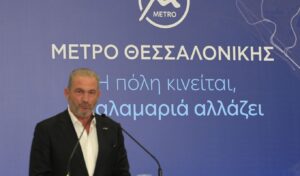
In Thessaloniki, the most significant milestone involves the Metro extension toward Kalamaria. Provided the final tests and required international certifications are completed successfully, the 5 new stations are set to open in July, extending the network into the city’s eastern neighborhoods. The extension is expected to significantly boost passenger numbers and further ease road congestion — during the Metro’s first 16 months of operation, vehicle traffic has already fallen by approximately 15%, according to data from the Transport Institute of EKETA. At the same time, construction on the Thessaloniki Ring Road Flyover is advancing at an intensive pace. Physical progress has already exceeded 53%, with the project now entering an extensive concrete-pouring phase. The target remains completion within the first half of 2027, with the new elevated highway expected to double traffic capacity — from approximately 5,000 to 10,000 vehicles per hour.
Road safety and traffic flow improvements
In Attica, works are set to begin in July at the Metamorfosi interchange on the Attiki Odos motorway — a relatively limited intervention in construction terms, but one of significant importance for daily traffic flow. Currently, vehicles traveling from “Eleftherios Venizelos” airport toward the national road merge with traffic coming from Elefsina into a single lane, causing major delays. The new project will create two independent lanes — one for each direction of origin — substantially reducing congestion. Completion of the intervention is scheduled by the end of 2026.
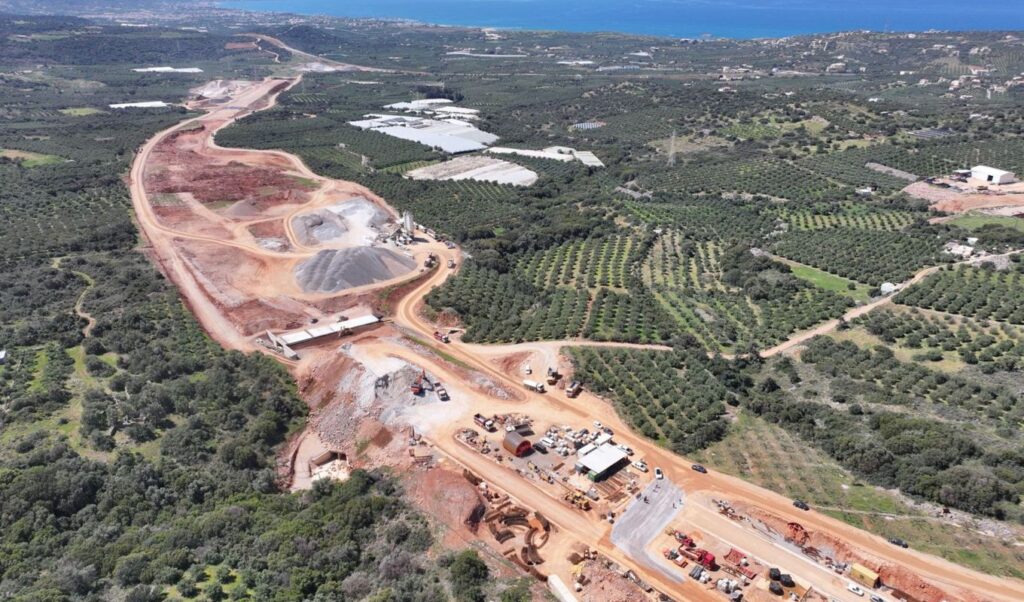
On July 13, the contract signing for the triple interchange at Skaramagkas is also planned — a project that aims to comprehensively upgrade traffic conditions in Western Attica. It includes the connection of the Western Aigaleo Ring Road with the national road and Schistown Avenue, the upgrading of three key interchanges, and the widening of the Schistou Bridge. Upon completion, within a 36-month timeframe from contract signing, average traffic speed is estimated to increase from 27 to 48 kilometers per hour, while access for heavy vehicles heading to the industrial zone and the port of Elefsina will also be significantly improved. In Crete, construction sites continue to expand along the North Road Axis of Crete (BOAK), with works progressing in Chania, Rethymno, and Heraklion. By the end of July, five more road safety interventions are expected to be completed, while the first 10 kilometers of the new motorway on the Neapoli–Agios Nikolaos section are set to open to traffic during the summer, marking the project’s first meaningful operational delivery. The completion of the northern section of the E65 motorway also represents a significant milestone.
Within the coming weeks, approximately 45 kilometers connecting Kalambaka to the Egnatia Odos are expected to be opened to traffic, completing one of the country’s most important north–south road axes. The opening of this final section will noticeably improve travel connections to Western Macedonia and Epirus, considerably reducing journey times.
Infrastructure restoration
Alongside the new projects, a race against time continues to restore infrastructure damaged by Storm Daniel, funded through the Recovery and Resilience Fund. AVAX is implementing one of the three major railway restoration projects in Thessaly and estimates it will be the first company to complete its scope of work, targeting delivery by the end of July.
Also underway is a particularly demanding road restoration program covering approximately 130 to 140 different sites across Northern Evia, Domokos, Almyros, Farsala, Sofades, and Mouzaki. Although the first phase of the contract calls for 70% of the physical scope to be completed, the company is aiming to exceed this target and approach full completion of the interventions. Of the contract — valued at approximately €175 million — it is estimated that work equivalent to roughly 70% of the total scope will have been executed by the end of August, with an additional €20 to €30 million in works expected to be added by year-end.
The coming months are set to mark a critical turning point for the largest infrastructure program currently underway in Greece. The delivery of new projects, the signing of major contracts, and the advancement of landmark construction works reflect the construction sector’s transition into a new phase — one in which projects long left dormant are finally being completed, while the path is simultaneously being cleared for the next investment cycle in road, rail, and urban infrastructure.
Published in “Kyriakatiki Apogeumatini”