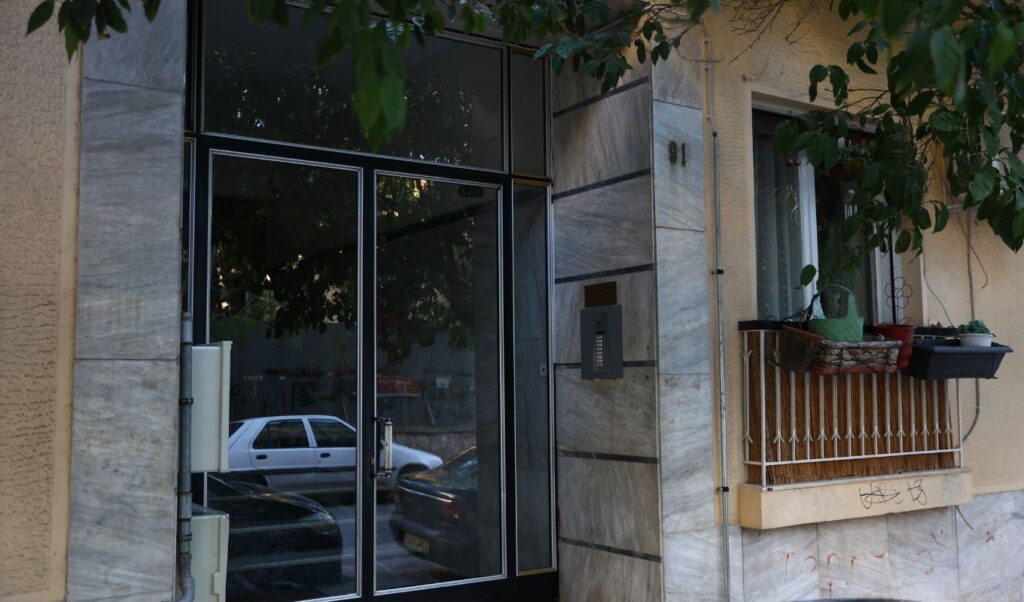
Two seemingly ordinary vials were enough to trigger a full emergency response in Kallithea on the afternoon of Tuesday, October 6th, prompting the precautionary evacuation of two residential apartment buildings and the deployment of specialized Explosive Ordnance Disposal (EOD) personnel to manage the situation.
A day after the operation, attention has turned to the identity and — more critically — the condition of the substance found inside the vials. According to information available so far, authorities are investigating the possibility that the vials contained picric acid in crystalline form, with a definitive answer expected following laboratory analysis of their contents. And it is precisely the reference to “crystalline form” that largely explains the heightened response from authorities.
Why an old vial can become dangerous
Picric acid, or 2,4,6-trinitrophenol, is a chemical compound with a long history in both laboratory applications and use as an explosive. Its critical characteristic is that its behavior changes significantly when it loses moisture.
For safety reasons, picric acid is typically stored in a wetted state. However, when a container is left stored for an extended period and the water gradually evaporates, the substance can become dehydrated. In its dry state, it becomes far more sensitive to impact, friction, and heat.
Particular caution is required when crystals have formed around the lid or threads of an old container. In such cases, even attempting to unscrew the cap can cause friction against the material. For this reason, international safety guidelines specify that suspicious old containers must not be opened or moved by untrained personnel.
This is the key factor that sets such a discovery apart from an ordinary forgotten chemical product. Until the condition of the substance is confirmed, all handling is carried out under elevated safety protocols.
Questions surrounding the origin
At the same time, the question of how these particular vials ended up in two Kallithea apartment buildings — and how old they were — remains open. Their age is not merely a background detail in the case. It may be directly relevant to assessing the condition of their contents, as long-term storage of picric acid containers without monitoring increases the likelihood of moisture loss. What remains to be clarified is who originally owned them, why they were acquired, and how long they had been stored.
From ammunition to laboratories and medicine
Picric acid is not a substance associated exclusively with explosives. On the contrary, its varied uses over time help explain why old containers of it continue to be discovered decades later.
From the late 19th century onward, it was used as a powerful explosive and served as a filler in military munitions, before being gradually replaced by other compounds. It was also used in medicine and continues to have specialized applications in chemistry.
It is precisely this history of laboratory use that has created a particular problem worldwide: forgotten vials in old laboratories and storage facilities. Hazardous materials management agencies have issued specific guidelines for such incidents, as a container that was once safely stored may, after years without inspection, be in an entirely different condition.
How the Kallithea operation unfolded
The emergency response began on the afternoon of Tuesday, October 6th, when authorities were notified of the suspicious vials in two residential buildings in Kallithea. Police forces were deployed to the area, while an EOD team was dispatched to the scene to carry out the inspection and retrieval of the vials. At the same time, a precautionary evacuation of both buildings was ordered, ensuring the operation could proceed without placing residents at risk.
The alarm caused among residents was captured in one eyewitness account, with a local resident reporting that he received a phone call telling him that “bombs had been planted” on Laskaridou Street and that he needed to leave the building immediately. Ultimately, the EOD team safely removed the vials and the operation concluded without incident.
The focus now shifts to the analysis of the vials’ contents. The results will reveal whether the substance was indeed picric acid and in what condition it was found, while investigators continue to seek answers regarding the origin and age of the two containers.