A recent incident of illegal industrial waste dumping into the Kifissos River has brought a long-standing problem back into the spotlight — one that, according to scientific research, is neither new nor isolated. On September 22, police in Aigaleo caught a 41-year-old tanker truck driver in the act of dumping highly acidic liquid industrial waste into a fuel station drain. According to the Greek Police, the waste made its way through the stormwater network into the Kifissos and ultimately into the sea along Athens’ coastal front. In response to the incident, Andreas Kallióras, professor at the School of Mining and Metallurgical Engineering at the National Technical University of Athens (NTUA), spoke to Parapolitika about the overall condition of Attica’s largest river — a picture with two faces: on one side, the ongoing contamination of the water system from multiple pollution sources, and on the other, a persistent flood risk stemming from decades of unregulated urban development across the Attica basin.
Kallióras on Kifissos: “A receiver of water from many different sources”
“The river functions as a receiver of water from many different sources,” Professor Kallióras points out. He explains that from the area of Metamorfosi all the way to the river’s mouth, the Kifissos receives both direct discharges and contaminated water through the stormwater drainage network. This assessment is not based on observation alone. An NTUA research team has been monitoring the Kifissos for years, studying both its pollution levels and flood risk, and a major European research program was recently completed as part of this ongoing effort.
“Heavy pollution loads”
“We have very recent scientific results from accredited laboratories showing heavy pollution loads — both from industrial-origin contaminants and from other sources,” he states. According to Kallióras, analyses of both the Kifissos River and Attica’s groundwater have identified a wide range of compound categories: organic solvents linked to industrial activity, pharmaceutical substances, and compounds that serve as markers of everyday human activity — such as caffeine and nicotine — and even illegal drugs.
“Forever chemicals”
Particular concern surrounds chemical compounds capable of persisting in the aquatic environment for extended periods of time. Professor Kallióras refers specifically to so-called “forever chemicals,” noting that some of these substances can remain in the environment for decades.
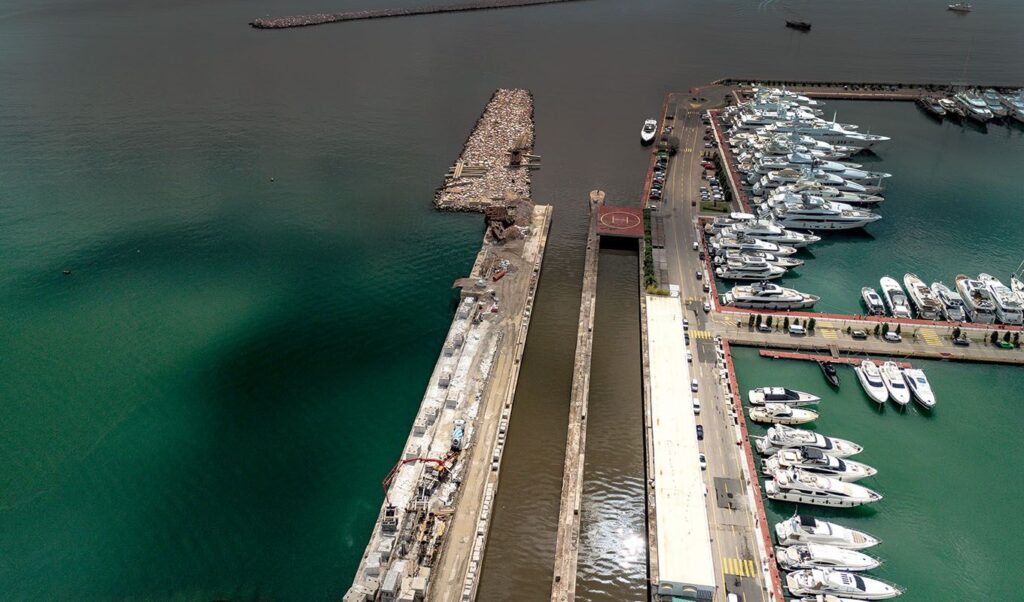
The contamination pathway does not end at the river. The sea is the final recipient, while potential human exposure can also occur through the food chain. “Humans can come into contact with these pollutants through the food chain at a primary level — that is, through the consumption of fish,” he notes, drawing a distinction between chemical loads and microbiological ones, the latter being more closely associated with bathing water quality.
To address the problem, beyond cracking down on illegal dumping, the NTUA professor also raises the issue of infrastructure. Sewage and stormwater networks, he argues, represent potential pathways for pollutant transport and are in need of modernization in order to minimize leakage as much as possible.
What rainfall can trigger
The second major challenge concerns the Kifissos River’s flood management capacity. Professor Kallióras describes a river that has undergone extremely intense human intervention. “We have drastically reduced its drainage capacity while, at the same time, increasing its flow load,” he notes. The shrinkage of the natural hydrographic network combined with extensive urbanization means that even the same amount of rainfall today can have very different consequences compared to 60 or 70 years ago.
On this particular issue, he insists that the root cause should not be attributed to climate change: “This is Attica’s problem, and it has nothing to do with climate change — it has everything to do with the way we have developed our urban environment.” He considers the southern part of the Kifissos basin to be the most exposed area — just below Nea Filadelfia and extending toward the coastal front — as these lower-elevation zones concentrate the large volumes of runoff flowing down from upstream areas.
Despite the ongoing risk, the situation is not identical to that of previous decades. According to the professor, the impact of flooding across the Attica basin has been reduced in recent years, and he attributes a significant part of this improvement to infrastructure upgrades. Large sections of the Kifissos running through the urban fabric have been channeled and lined with reinforced concrete, making the structure considerably more resilient than in the past.
That said, this does not mean the danger has been eliminated. People with limited capacity to respond quickly — such as the elderly and those with mobility issues — remain particularly vulnerable in the event of a flood.
For Professor Kallióras, “the long-term answer lies in reclaiming the river within the urban fabric, through significant public investment and interventions comparable to those undertaken in major cities abroad.” In this light, the illegal waste dumping incident serves as nothing more than a trigger for a much broader conversation: about a Kifissos River that continues to bear the environmental footprint of an entire metropolis, while simultaneously being called upon to function as the primary drainage outlet for the city every time heavy rain falls.
Published in Parapolitika