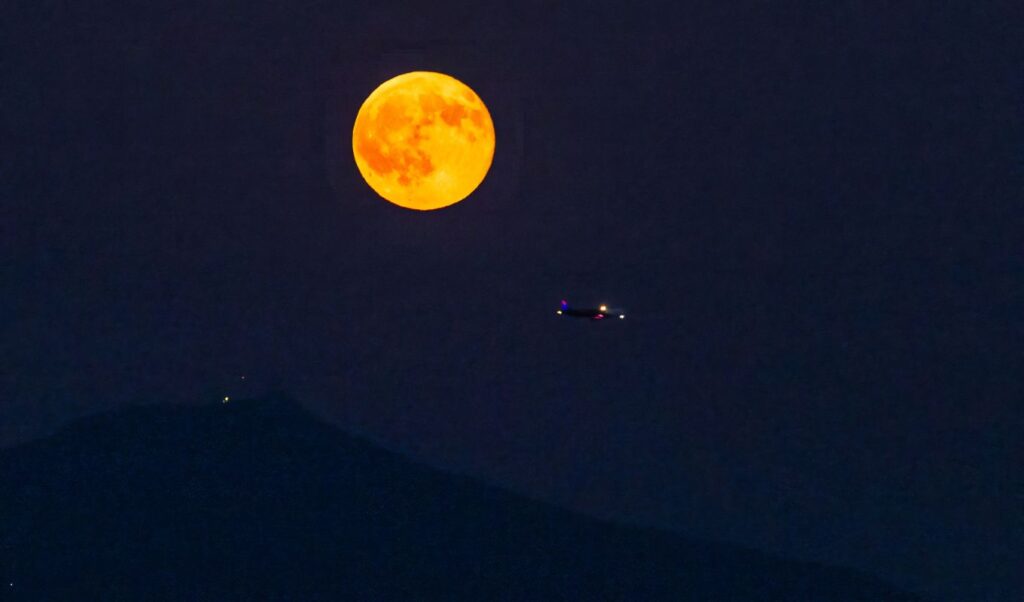
The countdown is on for the full moon of September to light up the night sky. The Harvest Moon will appear on Saturday, September 26, just a few days after the autumnal equinox, reaching its peak fullness at 19:49 (Greek time).
September full moon: Why it’s called the “Harvest Moon”
The September full moon is widely known as the “Harvest Moon.” The name — rooted in agricultural tradition — is given to the full moon that falls closest to the autumnal equinox, which this year occurred on Wednesday, September 23.
Historically, the bright moonlight following sunset gave farmers extra hours to complete their crop harvests. According to the Royal Observatory Greenwich, another name used for the full moon during this period is the “Corn Moon,” as it is associated with crops traditionally harvested at this time of year.
The Harvest Moon does not necessarily appear in September every year. If the October full moon falls closer to the autumnal equinox, then that moon earns the Harvest Moon title instead.
Why the moon can appear red
As the moon rises, it can appear yellow, orange, or even red. This phenomenon is not unique to the Harvest Moon — it’s caused by the way moonlight travels through Earth’s atmosphere when the moon sits low on the horizon.
At that angle, the light must pass through a much greater thickness of atmosphere. Shorter wavelengths, such as blue light, scatter more readily, allowing the warmer tones of yellow, orange, and red to become more visible to the naked eye.
As a result, those who glance at the moon shortly after it rises may be treated to a stunning warm-hued display — though this is an atmospheric effect rather than a distinct astronomical event.