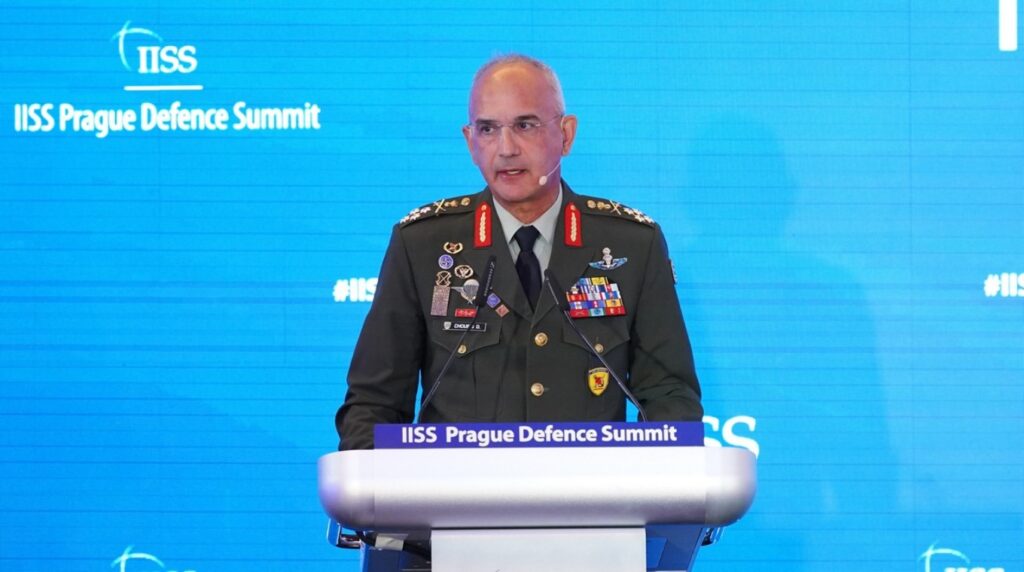
A different model of military service, reserve forces, and mobilization was outlined from Prague by the Chief of the Hellenic National Defence General Staff (HNDGS), General Dimitrios Houpis, within the framework of Greece’s “Agenda 2030.” At the core of this new philosophy lies the concept of the “Soldier-Citizen,” in which conscripts — and later reservists — take on a more active role in national defence and are geographically connected to their place of origin or permanent residence. The plan also places greater emphasis on technology, rapid operational readiness, and digital mobilization.
Read also: Mitsotakis: Silicon Valley and Stanford headline the first leg of his five-day US visit — Roundtable with 30 top institutional investors in New York
The role of the “Soldier-Citizen”
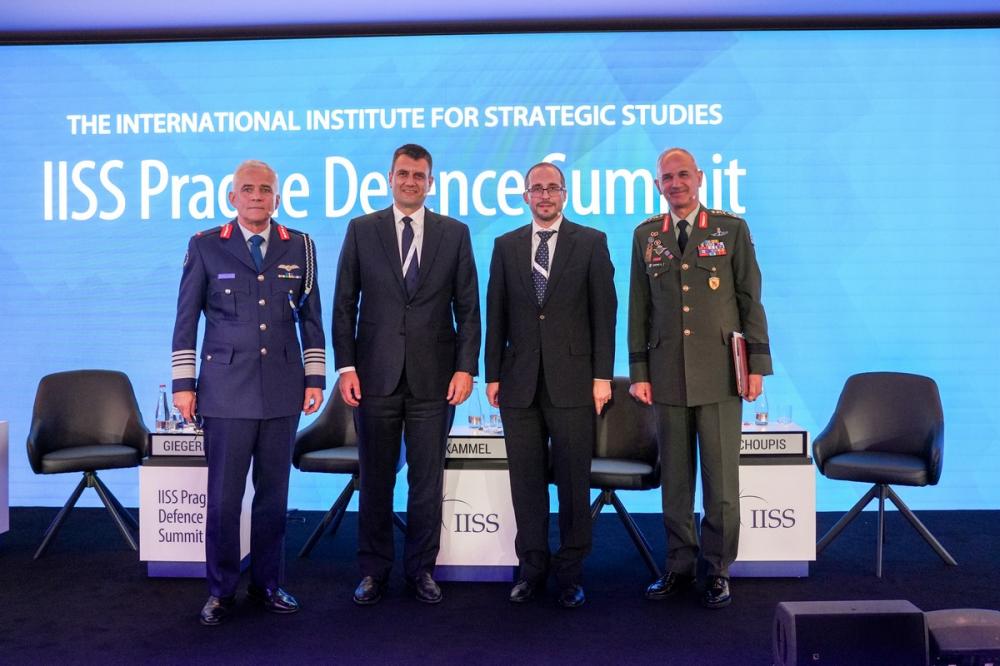
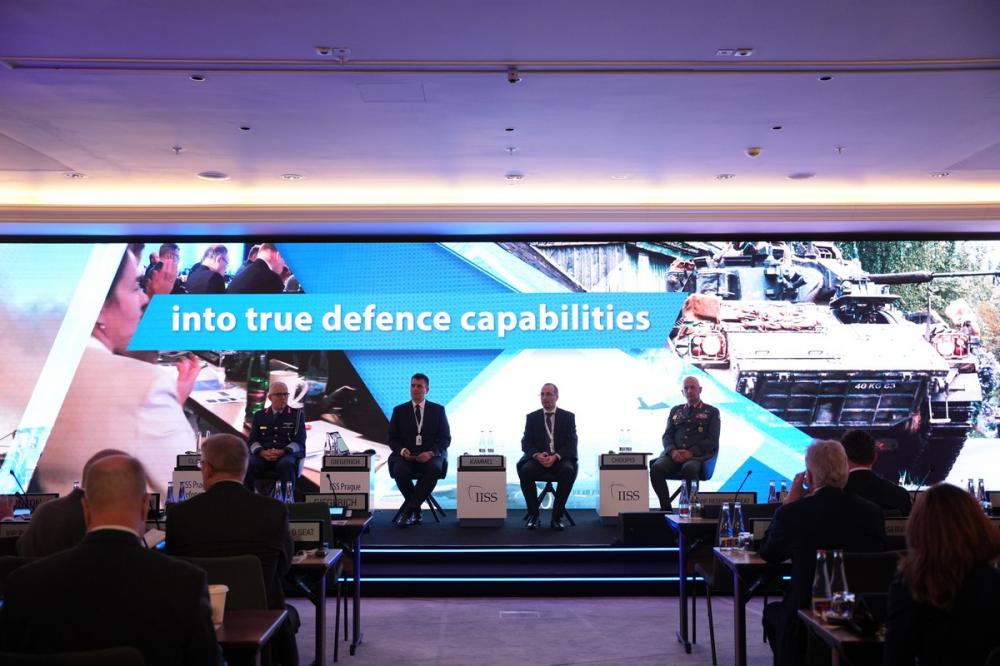
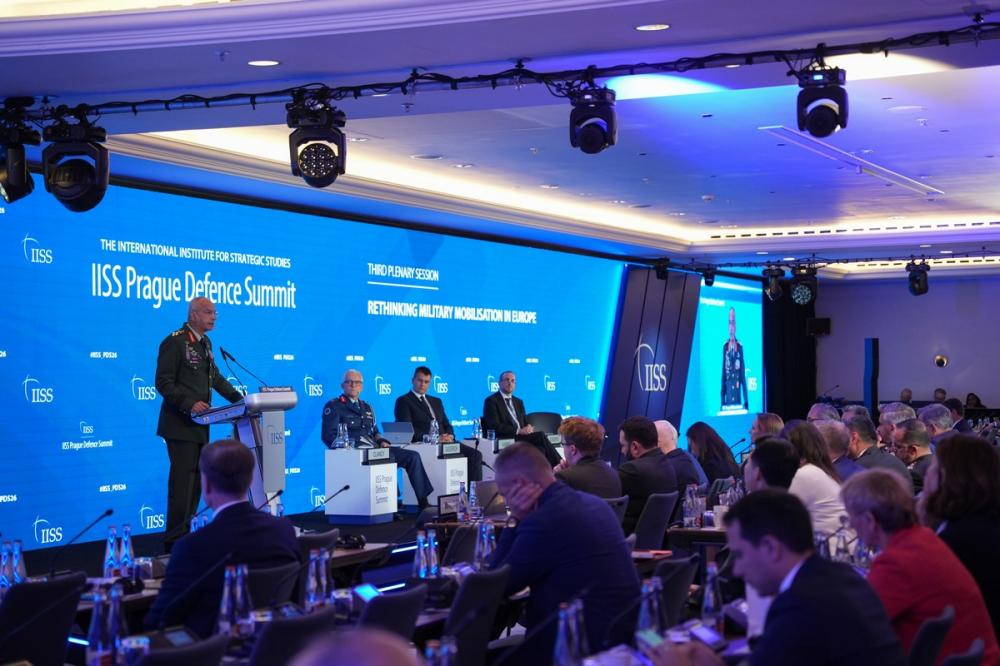
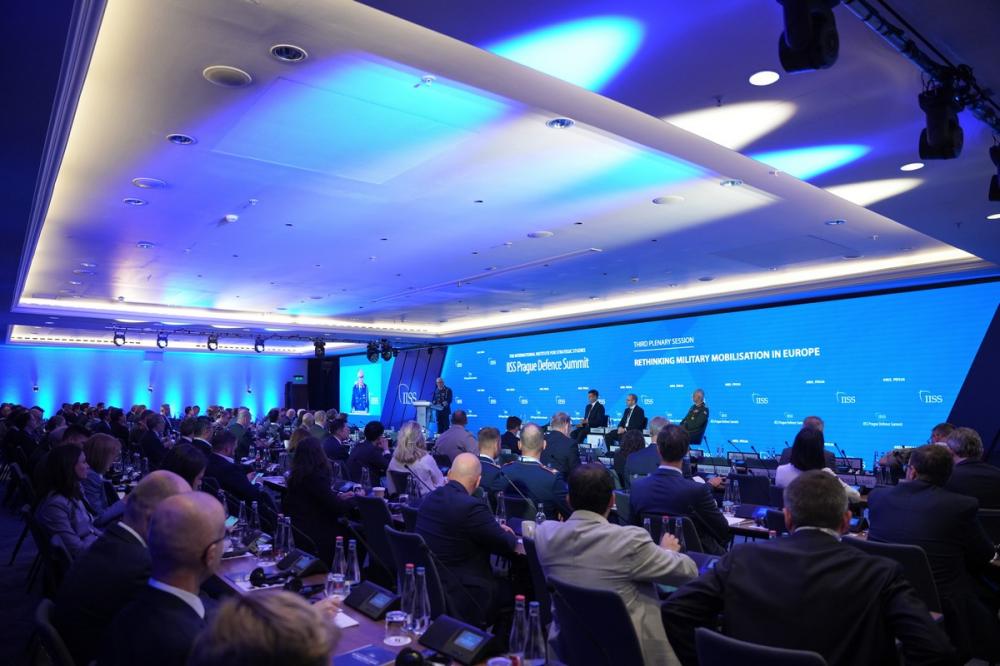
Speaking at the IISS Prague Defence Summit, during the session on re-examining military mobilization in Europe, Dimitrios Houpis presented the rationale behind “Agenda 2030.” A key premise is that an exclusively professional military — even one with a high level of training and technology — cannot easily secure the human resources required by a large-scale, prolonged conflict. The return of high-intensity warfare to Europe, combined with rapid technological change, is reviving options that several European states had abandoned in recent decades. According to the logic presented by the Chief of HNDGS, a country must be able to sustain combat operations not just for weeks, but for months or even years — something that demands personnel, infrastructure, technology, and a society prepared for conditions of full mobilization.
Professional armed forces and conscripts, under this approach, do not share exactly the same mission. Professional forces are designed for continuous high readiness and expeditionary operations, while conscripts take on particular importance for territorial defence and the rapid deployment of large numbers of personnel. Mobilization is therefore treated as a matter that goes beyond narrow military boundaries and concerns society as a whole. General Houpis connected this concept to the ancient Greek notion of the citizen who bears a parallel responsibility for defending his city, invoking Homer: “There is one best omen: to fight in defense of one’s country.”
Reservists to be linked to their hometown or place of residence
A significant change concerns the active reserve. The “Soldier-Citizen” model envisions a geographic link between the conscript — and later the reservist — and their place of origin or permanent residence. The rationale is that a person called upon to defend an area they know well, and to which they have personal ties, approaches the mission very differently from a reservist assigned to an unfamiliar location.
The content of military service is also set to change, with particular reference to Generation Z. The goal is for conscripts to engage with modern systems and acquire technological skills. Drones, artificial intelligence, cyber operations, and advanced lethal and non-lethal systems are all integrated into this philosophy, ensuring that military service does not interrupt the professional and technological development of young people. The plan also projects that 70% of conscripts will be able to reach operational readiness within the first 14 weeks, significantly reducing the gap between training and actual operational deployment.
Digital mobilization and specialized civilian expertise
The new approach includes digital platforms for notifying conscripts and reservists, personalized online training, secure communications, and distributed command capabilities. Technological infrastructure will also need to be protected against cyberattacks, ensuring that the state can maintain communications and command functions even under conditions of digital assault.
General Houpis also referred to a pilot program for the conscription of women, aimed at deploying them professionally in specific specializations, as well as the possibility of drawing on skilled professionals from the private sector. Cybersecurity, telecommunications, data analysis, and logistics are among the fields where specialized personnel are needed — with the possibility of establishing contractual relationships already during peacetime, so that a ready pool of people is available in the event of mobilization.
The “total defence” model
The new philosophy extends to civilian infrastructure, since in a prolonged war, armed forces depend on ports, roads, rail networks, telecommunications, industries, and supply chains. In this context, Greece is moving toward dual-use infrastructure — assets that serve civilian needs in peacetime and can be mobilized for military purposes in the event of a crisis.
The Chief of HNDGS identified the next three to five years as a critical window, estimating that states which successfully combine technology, active reserves, civilian infrastructure, and specialized human capital will possess significantly stronger overall deterrence capabilities by 2035. By contrast, those that remain tied to Cold War-era mobilization models risk fielding forces that are numerically large but technologically inferior. As General Dimitrios Houpis pointedly stated, “Geography produces History.”