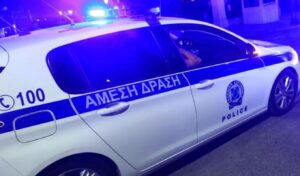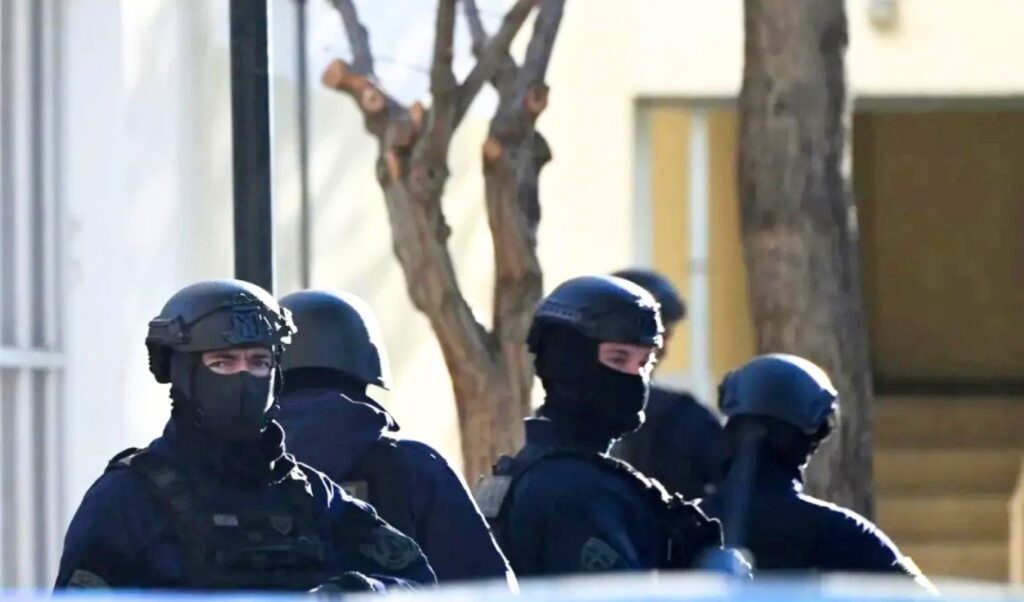
Under the codename “Operation Harvest,” DAOE, known as the Greek FBI, is exposing and striking against the chronic activities of organized crime in OPEKEPE subsidies. Specifically, journalistic analysis of Hellenic Police data reveals that over the past six months, authorities have successfully dismantled five criminal groups operating from Crete to northern Greece, exposing the extensive and long-term involvement of organized crime—with no connection to the agricultural community—in the illegal siphoning of subsidies from OPEKEPE.
Operation “Harvest”: Criminal network targeting illegal OPEKEPE subsidies with 1,151 defendants
Files from the Directorate for Combating Organized Crime demonstrate that organized crime activities date back to at least 2018, providing further evidence of the chronic problems in agricultural subsidies, while also dispelling the prevailing narrative that fraud was primarily committed by farmers and livestock breeders with political connections.
The DAOE operations, codenamed “Harvest,” were initiated under orders from the current political leadership long before the OPEKEPE case became public, and the numbers are staggering. The defendants involved in the five cases investigated by the “Greek FBI” total 1,151. To date, more than 90 have been arrested, with at least 17 ordered into pretrial detention and approximately 40 temporarily detained before being released under restrictive conditions. The damage from the activities of these five criminal groups has not yet been determined with absolute precision as investigations continue, but it is estimated to exceed 17 million euros.
Government source statement
“We’re not talking about isolated ‘small’ cases here. Those exist too, obviously, and dozens of embezzlers have already been convicted by the Justice system or are under trial,” stated a government source with knowledge of the entire effort to clean up the agricultural subsidy mechanism, referring to the tens of millions of euros that have been frozen in various investigations across Greece.
“In these five cases, however,” the same source continued, “we see organized groups with distinct roles, hierarchy, and years of operation. This is a very different and significant aspect of the OPEKEPE case that is generally unknown to the public.”
Methods of operation
Examination of the five major cases reveals common methods of operation. The criminal groups identified agricultural plots that had subsidy rights for crops and pastures but had not been declared by other applicants to OPEKEPE. In many cases, these were areas belonging to unsuspecting citizens, deceased persons, or even the State.
Subsequently, leading members of each criminal organization or members with accounting knowledge registered the plots in the property declarations of their associates or relatives, who appeared as supposed owners or lessees. Using this false proof of ownership, they submitted subsidy applications. The plot registrations in the E9 forms of the alleged owners were deleted shortly after, in an attempt to erase traces of the fraud.
Police discovered that perpetrators who appeared as pasture owners also took care to “inflate” their herd sizes, seeking even greater benefits. In two cases, the criminal groups were supported by staff from Reception Centers for Declarations, which operate as intermediaries between producers and OPEKEPE. This way, the perpetrators either had access to OPEKEPE’s cartographic representations and could more easily identify undeclared agricultural plots, or received favorable treatment in registering their applications.
One criminal group operated differently: it established two companies that circulated fictitious sales documents and fake seed certification labels. Illegal profits came when associates of the two businesses submitted applications to OPEKEPE, attaching the irregular invoices as “proof” of their “activity.”
Geographic distribution of defendants
The wide geographic distribution of defendants is also striking, reflecting the extensive penetration of organized crime into the primary sector subsidy space. The first organization dismantled, leading to charges against more than 40 people, operated in Crete and Samos. The second, dissolved in early April and involving 290 individuals, was active in Kilkis and other areas of northern Greece.
Then, in May alone, DAOE uncovered the activities of one group operating in many areas of Crete and two more groups based in Macedonia, whose “tentacles” reached as far as Crete, Athens, Santorini, and Epirus. One of these, estimated to have been active since at least 2018, involves 404 defendants.
Systematic approach
Separate information also shows how much emphasis the Greek Justice system and Police have placed on combating the illegal extraction of agricultural subsidies for years.
Indicatively, according to information, a total of 70 audits have been ordered for potential irregularities in OPEKEPE subsidies, concerning both natural and legal persons, with the first actions dating back to 2010.
“Each investigation requires a lot of time, gathering evidence, thorough evaluation and cross-referencing. We still have a lot of work ahead, but it’s always important to see an effort bearing fruit,” noted a senior DAOE official who insisted on anonymity. “What matters is that we now have measurable results and with each case, we too understand better how all these groups were formed and operated,” he continued.
Beyond the extensive investigation ordered by the prosecutor supervising the “Greek FBI,” there are completed and ongoing investigations ordered by both district prosecutors and appointed representatives of the European Public Prosecutor’s Office.