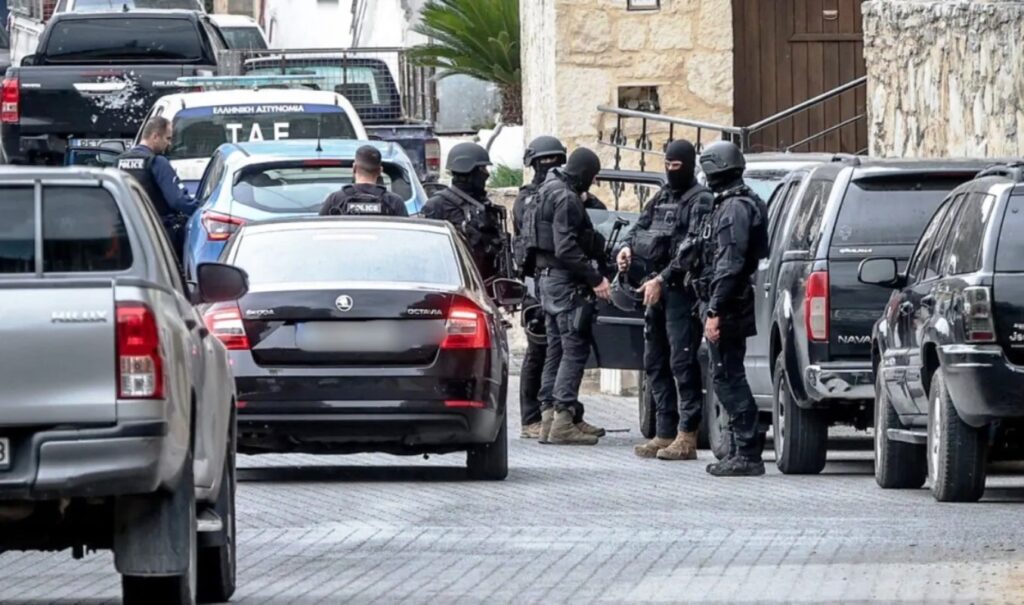
The OPEKEPE (Agricultural Payments Organization) is once again under the authorities’ microscope in one of the largest investigations conducted in recent years regarding illegal agricultural subsidies, with the Greek Police announcing new arrests and operations across various regions of the country. The police spokesperson, Konstantia Dimoglydou, revealed that the cases filed so far include more than 100 individuals involved, while the criminal networks’ activities appear to have started as early as 2019. According to the investigation’s findings, the criminal organizations exploited access to data on undeclared agricultural plots, illegally submitting subsidy applications for land that did not belong to them. The financial damage calculated exceeds 4.5 million euros, while police emphasize that the investigation is still in full development and new revelations are expected. Dozens of arrests have already been made in Crete, Thessaloniki and other regions of Northern Greece, while bank accounts, tax identification numbers and individuals allegedly involved in the illegal subsidies network are under scrutiny.
Read: OPEKEPE scandal in Crete: Deputy mayor in the network with illegal subsidies of 3 million euros
OPEKEPE: How the subsidy fraud networks operated
Konstantia Dimoglydou, speaking to ERT, mentioned that operations by the Organized Crime Unit are ongoing throughout the country. Following the 22 arrests in Crete, police proceeded with 17 additional arrests in Thessaloniki and other areas of Northern Greece, as well as one arrest in Attica.
According to the police spokesperson, members of the criminal organizations used data for agricultural plots that had not been declared for subsidies and subsequently submitted applications, even though the land did not belong to them. This way they managed to illegally obtain monetary amounts from OPEKEPE subsidies.
The damage calculated to have been caused both to the European economy and to the country’s revenues reaches approximately 4.5 million euros. The networks’ activities appear to have started as early as 2019, according to data collected so far by the authorities. The investigations began after extensive cross-referencing of data and tax identification numbers by the Economic Police Subdivision, which revealed suspicious cases of individuals continuously receiving subsidies without the necessary supporting documents.
IBAN accounts and new police operations
The case file for Northern Greece also includes individuals who, according to police, participated by providing bank accounts for channeling illegal subsidies. As Konstantia Dimoglydou explained, some people provided only their account IBAN to be used for collecting money from illegal subsidies.
Those arrested are initially brought to local prosecutor’s offices and then transferred to Athens, to the European Public Prosecutor’s Office headquarters in our country. The same procedure is followed for both the 22 arrested in Crete and the 17 arrested in Thessaloniki.
The police spokesperson clarified that operations will not stop here, as there is still a large volume of material being processed by police services. “Certainly these operations will not stop here,” she stated characteristically, announcing new operations and new case files in the coming period.
According to data collected so far, those involved in the two major case files already exceed 100, while authorities are examining the possibility that there are additional individuals who have not yet been identified.