With natural gas prices surging to record levels, storage reserves running dangerously low, and global LNG markets in turmoil, it is becoming increasingly clear that Europe is once again facing a serious energy crisis. The deteriorating situation is fueling fears of a brutal winter ahead, while simultaneously bringing back into focus the warnings issued by leading Greek business figures who had sounded the alarm — warnings that, until recently, were largely dismissed as overly pessimistic. The European benchmark natural gas price reached €90 per megawatt-hour today, marking a 17% rise within a single month and a staggering 68% increase year-on-year. Although a slight price dip was recorded on Wednesday (October 20), it does little to change the broader picture: gas prices remain more than double last year’s levels, and the market is now entering a period of peak demand with virtually no safety buffer.
Read also: Kontogeorgis: “Immediate action needed at European level on cost of living” — The energy crisis, possible additional interventions, Greek-American relations & future cooperation scenarios
Exarchou’s warnings about a new energy crisis in Europe
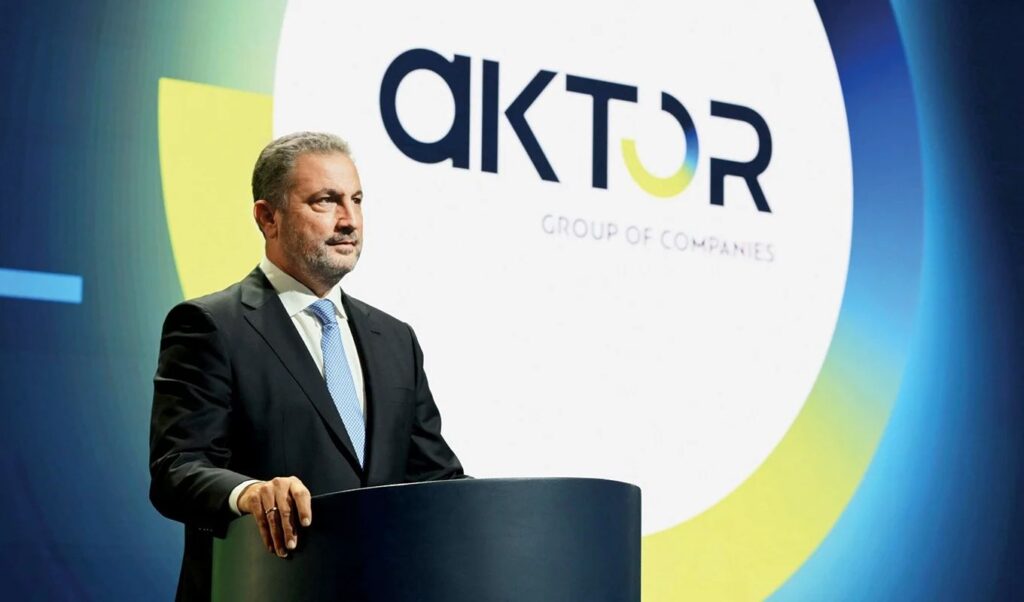
Against this backdrop, the warnings issued by Alexandros Exarchou, President and CEO of the AKTOR Group, are now carrying significant weight. Exarchou had been stressing since the beginning of the year that Europe must secure adequate natural gas volumes through long-term contracts, to avoid being left exposed to the volatility of the spot market. Relying on cargo purchases made at the moment of need, he warned, leaves European countries vulnerable to competition from Asia and to sudden, sharp price swings.
In June, he issued a further warning about the arrival of a new energy crisis, highlighting that the problem would not be limited to cost alone — it could also involve an outright inability to secure sufficient natural gas volumes. He simultaneously criticized the European Union for its tendency to react to crises after the fact, with costly delays and poor coordination. He firmly advocated for the conclusion of long-term supply agreements and proposed a joint European financing mechanism — modeled on the Recovery Fund — to cushion the impact of any future energy shock.
His most striking warning came in September, when Exarchou revised his price forecast upward, estimating that natural gas prices could reach as high as €110/MWh over the winter — up from his earlier projection of €85/MWh. Prices had already approached €75 in the early days of that month, before seasonal demand had even begun to increase. In his view, such a scenario could reignite inflation, keep interest rates elevated for longer, and severely constrain investment. To address these risks, he proposed a dedicated European financial mechanism and argued forcefully that Europe must never again become dependent on a single source of supply.
Today’s reality validates those warnings in full. The conflict involving Iran and the disruption of shipping through the Strait of Hormuz have tightened global LNG supply, while European storage facilities remain below levels considered safe for the season. At the same time, European buyers are locked in fierce competition with Asian counterparts for available LNG cargoes. According to data cited by Reuters, EU gas storage stood below 58% in August — a historic low for that time of year. Closing that gap now requires purchasing LNG at premium prices, at precisely the moment when demand is set to surge ahead of winter.
Mytilineos sounds the alarm on market risks
A similarly stark warning had been issued around the same period by Evangelos Mytilineos. As early as May, the head of METLEN had pointed out that, without a de-escalation in either the Middle East or Ukraine, Europe was heading toward an exceptionally difficult winter, with conditions in the LNG market beginning to echo those of the previous energy crisis.
Mytilineos had emphasized that prices at the time — then hovering around €40–45/MWh — did not fully reflect the underlying market risks. He added that if more LNG cargoes were redirected toward the Far East, Europe would be forced to offer significantly higher prices in order to secure the volumes it needs.
He also expressed reservations about the European decision to ban Russian natural gas imports, arguing that restricting available supply sources without simultaneously guaranteeing sufficient alternative volumes would heighten risks for both energy prices and the competitiveness of European industry.