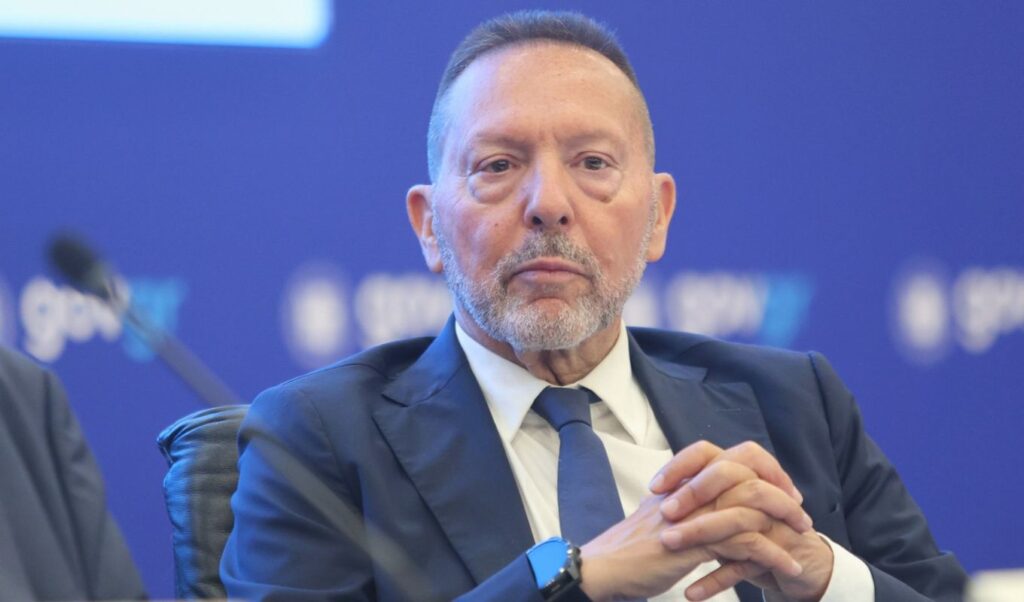
The Greek economy is growing at a rate of approximately 2%, nearly double that of the eurozone average, serving as a model of recovery after a deep economic crisis, said the Governor of the Bank of Greece, Yannis Stournaras. Speaking on a panel at an economic forum in Istanbul, Stournaras noted that the key drivers of growth are investment, as well as revenues from tourism and shipping. As he pointed out, Greece has valuable lessons to offer on how to navigate complex economic challenges.
Read also: Stournaras: Athens is the engine of the economy, but faces the cost of its own success
According to the Bank of Greece Governor, investment stood at just 11% of GDP in 2019, compared to 18% today. This investment surge is being driven by the private sector and foreign direct investment, as well as projects funded through the European Recovery and Resilience Facility. Stournaras described Greece’s economic trajectory as a “success story,” adding that growth is expected to remain close to the 2% mark.
Despite this positive outlook, inflation remains above the eurozone average. In September, it stood at 5.1% in Greece, compared to 3.8% across the eurozone. Stournaras attributed this partly to the strong performance of tourism and shipping. Tourism continues to break records, with this year expected to be one of the best in recent memory, even in the context of broader global uncertainties. In the shipping sector, rising freight rates — driven in part by the energy crisis and geopolitical conflicts — are boosting revenues, though the duration of this trend remains uncertain.
The Bank of Greece Governor emphasized that geopolitical tensions, tariffs, and energy price increases are creating an economic environment that looks very different from the past. As a net energy importer, Europe is particularly exposed to shifts in trade terms. Despite these pressures, the European economy has shown resilience, with growth coming in slightly better than initially expected.
On monetary policy, Stournaras noted that recent shocks combine both supply-side and demand-side effects. Long-term inflation expectations remain anchored near 2%, with no significant second-round effects observed so far. What will be critical, he said, is how long price increases persist and how they transmit through the broader economy. For this reason, the ECB prefers a flexible, meeting-by-meeting approach rather than a predetermined interest rate path, while clearly communicating its reaction function to markets.
The Greek crisis, alongside those of other countries, contributed to the creation of European tools for financial stability, he noted. Stournaras recalled the Emergency Liquidity Assistance (ELA) extended to Greek banks, as well as bond market interventions designed to ensure the effective transmission of monetary policy. “Even the most serious economic problem can be overcome,” he concluded, provided there is political will and the technical expertise to implement the right policies consistently.