
The Thessaloniki International Fair (TIF) measures are reshaping the landscape of wages, pensions, taxation, and social benefits, with a €2.2 billion economic package for 2027 set to benefit a broad cross-section of Greek society. The interventions detailed by the economic team range from a €400 boost for pensioners and a new €500 Christmas bonus for civil servants, to minimum wage increases, a zero tax rate for families with three or more children and full-time farmers, and significant changes for self-employed professionals.
TIF measures: €400 boost for pensioners
From November 2026, the annual top-up will increase from €300 to €400 net and will be extended to all pensioners over the age of 65. Eligible recipients also include certain categories of survivors’ pension recipients, individuals receiving disability pensions or benefits regardless of age, and uninsured elderly citizens. Additionally, from 2027 onwards, pensions will be adjusted based on inflation and GDP growth, without any offset against personal differential payments.
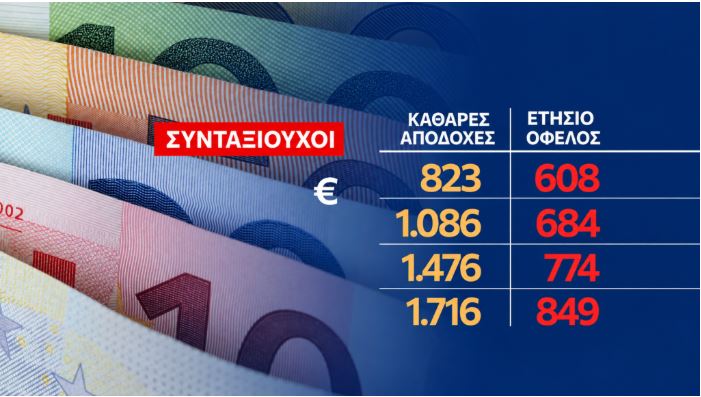
A pensioner with a taxable income of €10,000 and a net monthly income of €823 will receive €208 based on an assumed 2.6% GDP and inflation increase, plus €400 from the November top-up — a total of €608 in additional income throughout 2027, equivalent to approximately 75% of one monthly pension payment.
A pensioner with a taxable income of €14,000 and a net monthly income of €1,086 will receive €284 from the GDP and inflation adjustment, plus €400 from the November top-up — totalling €684, or roughly 63% of one monthly pension.
A pensioner with a taxable income of €20,000 and a net monthly income of €1,476 will receive €374 from the GDP and inflation increase, plus €400 from the November top-up — a combined total of €774. Higher-earning pensioners with a taxable income of €24,000 and a net monthly income of €1,716 will receive a total of €849 in additional income — €449 from the GDP and inflation adjustment and €400 from the November top-up — equivalent to approximately 50% of one monthly pension.
€500 Christmas bonus for civil servants
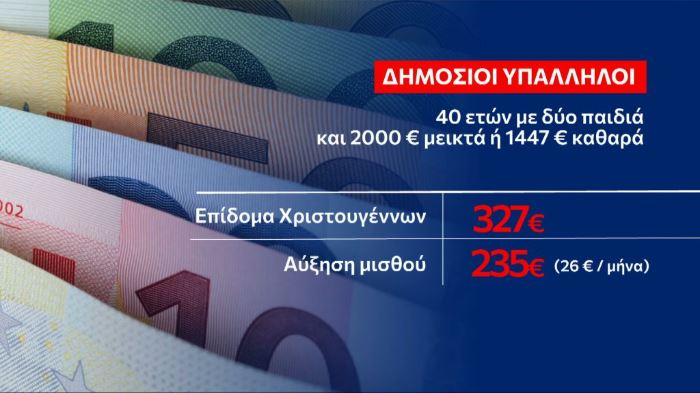
From December 2027, a €500 gross Christmas bonus will be established for approximately 720,000 civil servants paid from the state budget. The net amount is estimated to range from €257 to €389, depending on income level, age, and number of dependent children. The bonus will be counted toward regular and pensionable remuneration and will be paid on a pro-rata basis to those who have only served part of the year.
At the same time, public sector salaries will increase through the linking of pay scales to the minimum wage. With two rounds of increases — in April 2027 and January 2028 — gross pay is expected to rise by a total of €80 per month by early 2028.
Minimum wage to reach €1,000 — Zero tax for large families and farmers
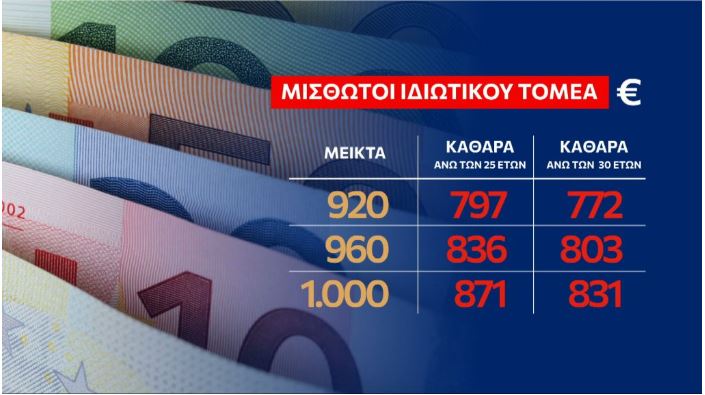
In the private sector, the minimum wage is expected to rise from €920 to €960 in April 2027 and to €1,000 in January 2028. With three consecutive three-year incremental increases, it could eventually reach €1,300. Additionally, from April 2027, social security contributions will be reduced by 0.5 percentage points, with the full reduction passed on to employees.
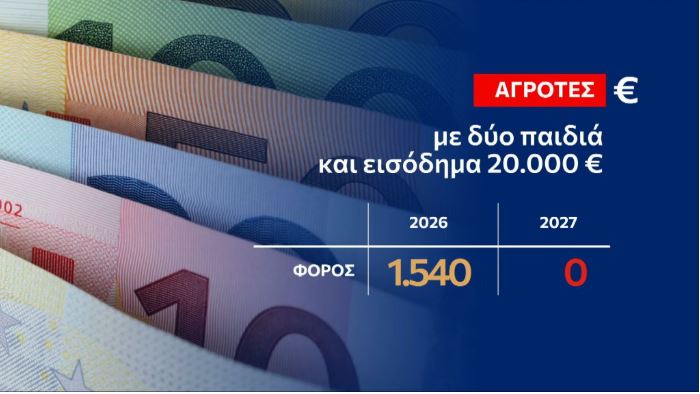
From 1 January 2027, the tax rate will be zeroed out on income up to €20,000 for families with three or more children and for full-time farmers. For a salaried employee with three or more children earning €20,000, the annual tax saving is estimated at €620, rising to €1,800 at an income of €30,000.
For farmers, the measure affects approximately 47,000 full-time agricultural producers. Combined with the existing tax credit, the tax burden could be eliminated entirely for incomes of up to around €22,000, while at higher income levels the relief could reach as much as €2,900.
What self-employed professionals stand to gain
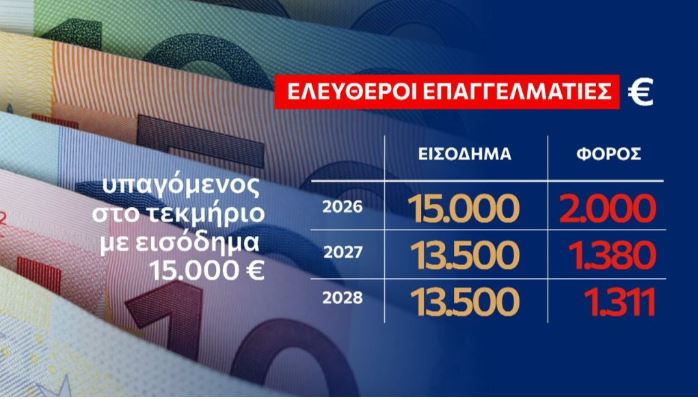
Significant changes are also coming to imputed income calculations. For compliant self-employed professionals, surcharges linked to payroll costs and above-average sectoral turnover will be abolished. Most eligible individuals are estimated to save around €1,000 to €1,500 per year in taxes, while in some cases the relief could reach €2,500 to €4,000.
At the same time, the advance tax payment for sole traders will be reduced from 55% to 50% starting from the 2027 tax year.
Rent rebate expansion and “My Home 3” programme
On the housing front, the income thresholds for the rent rebate scheme are being broadened to cover a larger number of tenants. Teachers, doctors, and nurses serving in regional areas will be eligible for a double rent rebate.
Meanwhile, the “My Home 3” programme, with a total budget of €2 billion, is being expanded. The maximum age limit is being raised from 50 to 55 years, the maximum loan amount from €190,000 to €230,000, and the maximum property market value from €250,000 to €300,000.
A new savings fund for children
A dedicated investment account for children is being introduced, which families can open during the first two years of a child’s life. For every euro deposited by the family, the state will contribute a matching euro, up to a maximum state contribution of €1,200 per year, with the cap set to increase incrementally every five years.
Interest and capital gains will be tax-free, and both capital-guaranteed products and higher-risk investment options will be available.
Social housing and heating allowance
The social package also includes the construction of 2,350 social housing units for approximately 7,000 vulnerable citizens, as well as the upgrade of 15 student halls of residence to benefit around 5,600 students.
Further measures include an increase in the heating allowance for 780,000 eligible recipients, a social electric vehicle leasing scheme for 12,500 households, full subsidisation of personal mobility aids for 13,200 people with disabilities, and an increase in the daily meal allowance for students receiving free catering to €3.
The new package will therefore be rolled out gradually from late 2026, primarily throughout 2027 and 2028, combining immediate cash boosts with permanent income increases and long-term tax relief measures.