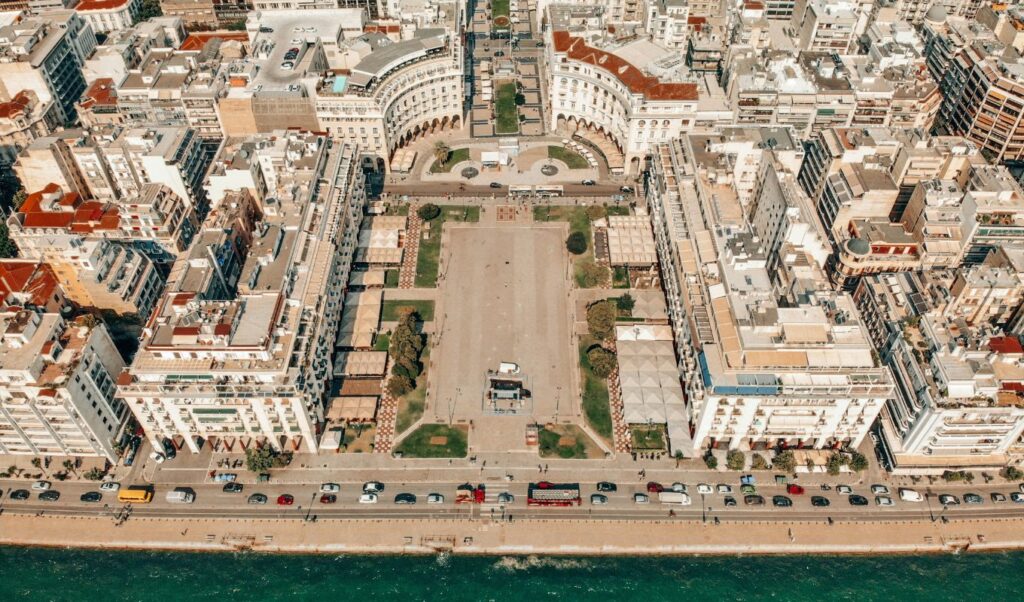
The list of energy projects to be unveiled by the Prime Minister at the Thessaloniki International Fair (TIF) is set to be finalized by the end of August, as the government moves to lock in investments to be funded through the new European escape clause. The first step was taken when Finance Minister Kyriakos Pierrakakis formally submitted Greece’s request to the European Commission to extend the existing national escape clause to also cover projects that strengthen the country’s energy resilience.
Read also: Energy escape clause: What it means for Greece, which investments it unlocks, and the benefits for the economy
This development paves the way for a new investment programme expected to exceed €1 billion by 2028. According to the government’s economic team, investments to be activated through the energy escape clause are estimated at €350–400 million per year over the 2026–2028 period, amounting to a total package of approximately €1.1 billion. The spending will be drawn from national resources but will be excluded from the cap on net primary expenditure growth set out under the new European fiscal framework — up to 0.3% of GDP annually and up to 0.6% cumulatively through 2028. However, these expenditures will continue to be counted toward both the primary balance and public debt.
During negotiations with Brussels, the Greek government had pushed for even greater fiscal flexibility, initially estimating it could secure around €1.5 billion in fiscal space for the same period. The European Commission’s final proposal falls short of that target, but it nonetheless enables significant projects to proceed without breaching the expenditure ceiling set under the new Stability and Growth Pact.
This new opportunity stems from the broadening of the national escape clause, which until now applied exclusively to defence spending. It has now been extended to include measures that strengthen the resilience of the European energy system and accelerate the transition away from fossil fuels, giving member states greater flexibility to push ahead with critical energy investments.
According to the Ministry of National Economy and Finance, the investments to be included under the clause will cover renewable energy storage projects, energy efficiency programmes, building energy upgrades, and critical energy infrastructure aimed at enhancing the security and resilience of the country’s energy system. The final selection and specification of individual projects will be carried out in the coming weeks in coordination with the relevant ministries.
Sources indicate that by the end of August, the selection of projects that will form the energy component of the government’s announcements at the Thessaloniki International Fair will be complete. These will primarily be mature, ready-to-implement interventions, designed to launch quickly and deliver a strong development impact while simultaneously boosting energy security and expanding the share of renewable energy sources.
For the government’s economic team, the energy escape clause represents an additional financing tool — complementing ESPA (EU structural funds) at a time when the Recovery and Resilience Facility is winding down — with the goal of accelerating investments that will reduce energy costs and strengthen the competitiveness of the Greek economy.